
Vandaag of morgen in huis

Kwaliteit gegarandeerd

Welkomstaanbiedingen ontgrendelen: GRATIS bezorging | Tot 80% korting | Gratis 30 dagen JoyPlus-proefperiode
Download de app
A pair of Joma football boots may look convincing on screen, but the right choice mainly depends on the playing surface and your style of play. Boots designed for artificial grass will not automatically perform well on natural grass. Likewise, comfortable indoor football shoes are not intended for outdoor pitches.
Most disappointing purchases usually come down to three common pitfalls:
The sole is the first technical detail to check. These abbreviations provide a practical guide:
Also check the pitch rules. Some indoor venues only allow shoes with a non-marking sole. For outdoor use, it is not advisable to use an indoor model as an all-purpose football boot.
Do not just look for the words ‘football boots’; check the full type designation. For example, a Joma Super Copa 2401 AG is intended for artificial grass, while a Joma Super Copa 2401 FG is described as being for firm natural grass pitches. The studs are not simply interchangeable.
For regular play on short artificial grass, a Joma TF football boot model may be more practical. According to the product information, the Joma Top Flex 2531 TF has a turf-oriented rubber outsole, a reinforced toe and an EVA insole.
For adults, Joma men’s football boots are available in sizes ranging from 40 to 45, depending on the model and stock availability. Ideally, measure your feet at the end of the day, wearing the socks you use when playing football.
Pay attention to these points:
Some models are listed in specific sizes, such as 42, 42.5, 43.5 or 45. Always check the product page rather than relying solely on the model name.
A leather upper can feel supple and offer direct contact with the ball. Synthetic materials are often easy to clean and can provide a lightweight feel. The product descriptions for various Joma models also mention VTS perforations for ventilation, a reinforced toe or additional heel support.
These are product specifications, not a guarantee of a particular level of performance. According to Joma’s own information, these constructions are designed for ventilation, protection or support. In practice, the fit remains the deciding factor.
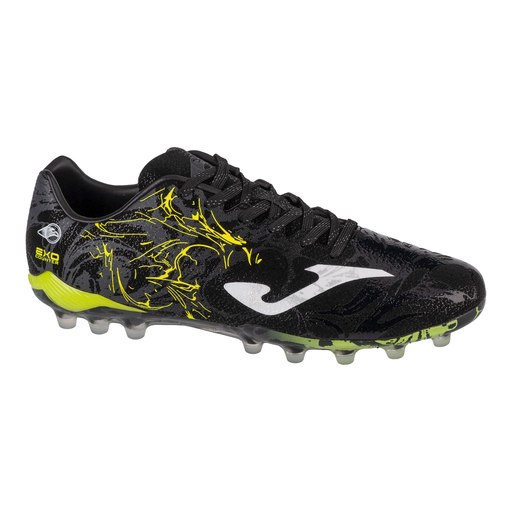
Why it suits this profile: This model is designed for artificial grass and has a synthetic upper. That makes it a straightforward choice for beginners who mainly train on Dutch artificial-grass pitches.
The AG designation makes the intended use clearer than a general boot with no playing-surface specification.
AG sole, lightweight construction and Exo Counter technology according to the product description.

Why it suits this profile: The Top Flex range is suitable for futsal and training. This model combines a leather upper with ventilation perforations, a reinforced toe and a rubber TF outsole.
The product information clearly specifies the TF sole and futsal use, so you will not accidentally choose this model for natural grass.
Flexible Fibratec leather upper, PULSOR cushioning and DURABILITY rubber according to the product details.
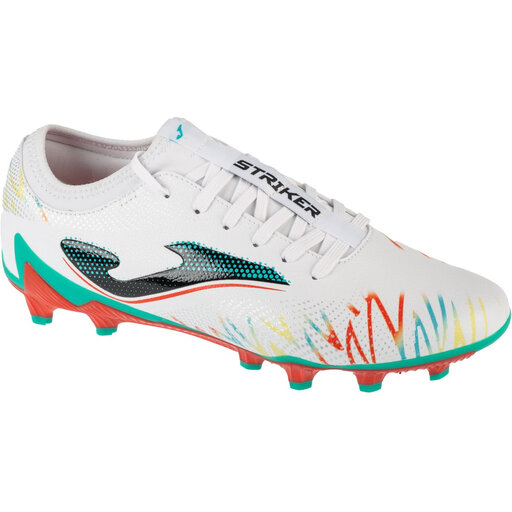
Why it suits this profile: For players who train or play matches on firm natural grass pitches. The FG sole and low-profile, lightweight construction are designed for this type of use.
The FG specification helps prevent you from choosing an artificial-grass or indoor model for a firm natural-grass pitch.
FG sole, synthetic leather upper, One Piece construction and Exo Counter according to the product description.

Why it suits this profile: These indoor football shoes are designed for futsal and indoor football, with a non-marking rubber sole, flexible upper and reinforced toe.
The IN designation and non-marking sole clearly distinguish this model from studded shoes designed for outdoor pitches.
Leather upper, VTS ventilation, Phylon midsole and rubber indoor sole according to the product specifications.
We have put together a complete, up-to-date list of products that fully meet these strict selection criteria and the applicable European safety regulations.
Clean your Joma football boots after every training session with a soft, slightly damp cloth. Remove mud and grass before they dry. Allow the boots to dry at room temperature and do not use a radiator, hairdryer or direct sunlight. High heat can damage materials, adhesive bonds and leather.
Only use FG, AG, TF or SG boots on the surface they were designed for. This helps keep the sole and studs usable for longer. Store indoor models somewhere dry and do not use them outdoors on rough surfaces.
For youth players, the ball is also important alongside the boots. A size 4 football generally has a smaller circumference than a size 5 and is often chosen for youth players aged approximately 8 to 12. Always check your club’s age and size recommendations.
Yes, there are models with an AG or TF sole that, according to their product information, are designed for artificial grass. Check what type of artificial grass is used at your sports ground and follow the manufacturer’s recommendation. An FG model is not automatically suitable for every artificial-grass pitch.
FG stands for Firm Ground and refers to firm natural-grass pitches. AG stands for Artificial Ground and is designed for synthetic pitches. The main difference lies in the shape, length and distribution of the studs. Choose the sole based on the surface you regularly play on, not just its colour or the model name.
Measure both feet in millimetres and compare the longer foot with the size chart on the product page. Try the boots on with football socks and make sure there is enough room around the toes without the heel slipping. If you are between two sizes, follow the specific sizing guidance for the model in question.
