
Vandaag of morgen in huis

Kwaliteit gegarandeerd

Welkomstaanbiedingen ontgrendelen: GRATIS bezorging | Tot 80% korting | Gratis 30 dagen JoyPlus-proefperiode
Download de app
A pair of Joma football boots may look convincing in photos, but that says little about whether they are suitable for your pitch. At sports grounds across the Netherlands, you often switch between artificial grass, natural grass and sometimes a hard training surface. The wrong sole can mean less grip, faster wear or an uncomfortable fit.
Joybuy Product Recommendation Officer therefore filters the most important product specifications and common purchasing pitfalls. This lets you compare Joma Super Copa football boots, Joma Aguila Cup football boots and Joma Striker football boots based on practical features rather than just colour or marketing copy.
A sole with prominent studs is not automatically suitable for every pitch. AG football boots are designed for artificial grass and generally have more, shorter studs that distribute pressure. FG football boots are intended for firm natural grass, where longer studs can grip the ground.
Do not use FG boots as standard on artificial grass. The studs may feel less comfortable and the sole may wear more quickly. Conversely, an AG sole does not always provide the grip you need on wet or soft natural grass.
Your usual shoe size is only a starting point. Football boots should fit securely, but must not squeeze your toes. Measure both feet at the end of the day, wearing the football socks you use when playing.
The Joma models available include size 40, size 41, size 42 and size 45 football boots. When a size chart gives measurements in millimetres, foot length is more important than the EU number alone. The difference between size 40.5 and 41 can be noticeable with a narrow fit.
Lightweight football boots can feel comfortable during quick changes of direction, but low weight does not tell you everything about fit or stability. Also check the upper, heel construction, fastening and insole.
A synthetic upper is generally easy to maintain. According to the product description, leather may mould more closely to your foot, but it requires regular care and should not be left wet for long periods.
For many training sessions in the Netherlands, football boots for artificial grass are a practical choice. Look for the AG marking, which stands for Artificial Ground. According to the product specifications, the Joma Super Copa 2402 AG and Super Copa 2401 AG are made for artificial grass. The models feature a synthetic upper, rubber sole and lace fastening.
Always check the type of artificial grass you play on. For example, a club may use different generations of artificial grass. If in doubt, follow the venue’s requirements.
Football boots for natural grass with an FG sole are designed for a firm surface. According to their product information, the Joma Super Copa 2404 FG, Super Copa 2401 FG, Aguila Cup 2518 FG and Striker 2502 FG are associated with firm ground.
FG does not mean a sole suitable for every type of weather. A different stud pattern may be more suitable on very soft, muddy pitches. Always consider the current pitch condition and check whether the club or competition has specific rules.
The models in this selection use materials including synthetic leather, synthetic materials, eco-leather and natural leather. According to the product description, leather football boots can feel flexible, while synthetic versions often require less maintenance.
The following applies to all materials:
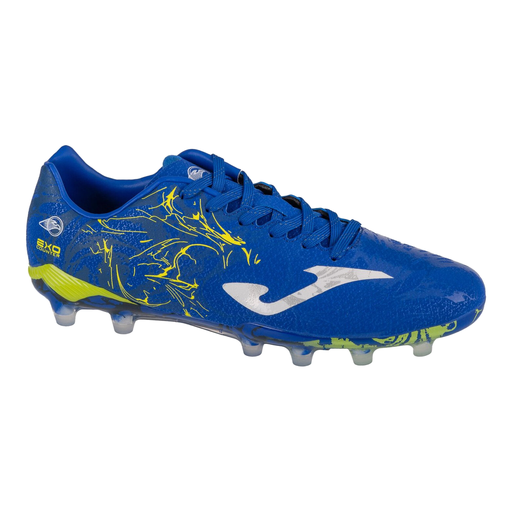
Why it suits this profile: An accessible choice for recreational players who train or play matches on firm natural grass. The size 41 is clearly stated, and the model has a synthetic upper.
The FG marking makes the intended use clearer than a general description such as ‘football boot’.
Synthetic upper, rubber sole, padded insole and lace fastening.
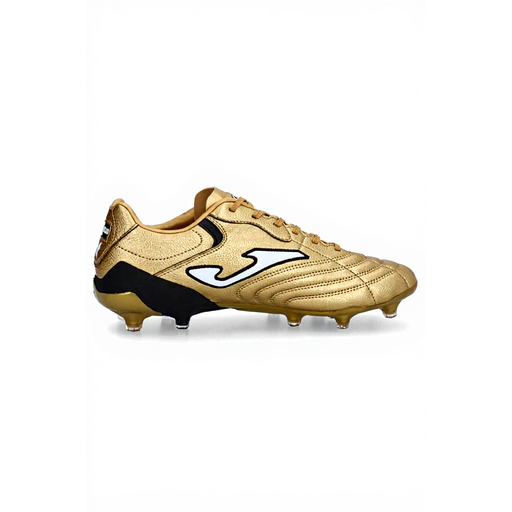
Why it suits this profile: Suitable for players who value a leather upper and a classic fit for firm natural grass.
The product information mentions natural leather, an FG sole and care instructions; always check these details on the product page when purchasing.
Leather upper, anatomical insole, padded collar and rubber FG sole.
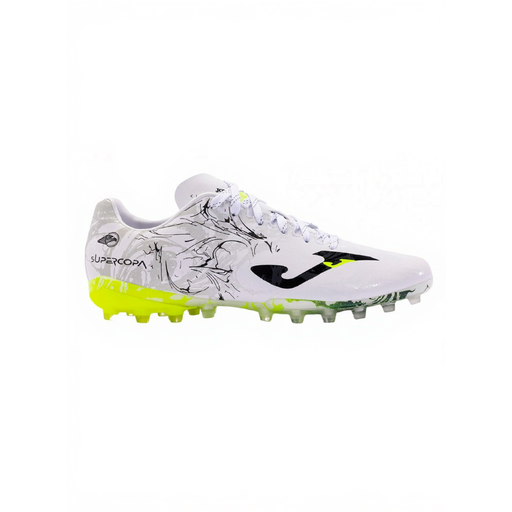
Why it suits this profile: A logical option for adults who mainly play on artificial grass and are looking for a lightweight model with a standard fit.
The AG specification helps prevent you from choosing an FG model for synthetic pitches. Use the boots on the stated surface.
AG sole, synthetic upper, rubber sole and size 43.
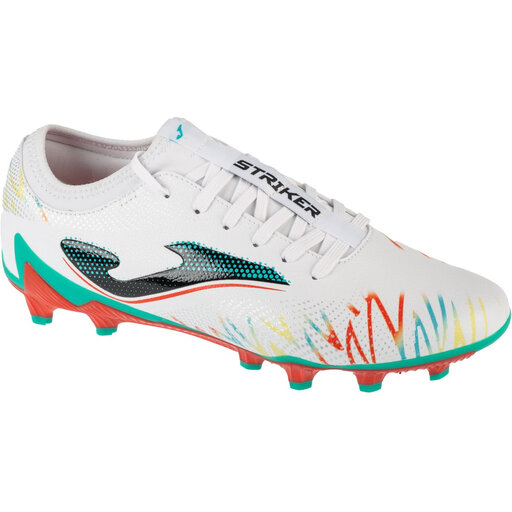
Why it suits this profile: Designed for players who make quick movements on firm natural grass and prefer a low-profile feel.
The product name and specifications explicitly mention FG. This makes the choice for natural grass easy to verify.
Lightweight design, synthetic leather upper, FG sole and lace fastening.
For men’s football boots and women’s football boots, the key checks are the same: foot length, width, heel hold and room around the toes. Even if a model is labelled for women or men in the product title, you should still check the actual sizing.
For younger players, the boot is not the only important consideration. A suitable ball can also help with training:
According to the product information, the Longsail training balls are available in sizes 3, 4 and 5 and come with a pump, needle and storage bag. For example, see the Longsail size 3 football, size 4 or size 5.
We have put together a complete, up-to-date list of products that fully meet these strict selection criteria and the applicable European safety regulations.
That depends on the sole. Choose a model with an AG specification for artificial grass, such as certain Super Copa 2401 and 2402 models. Also check the product page and the rules of your sports venue.
Their lifespan depends on playing hours, surface, care and fit. Do not use AG boots regularly on natural grass, or FG boots as standard on artificial grass. Allow boots to dry naturally and replace them when the sole, studs or fastening show clear signs of wear.
Measure both feet in millimetres while wearing football socks and compare the longer foot with the size chart. Pay particular attention to the sizes you are considering, such as 40, 41, 42 or 45. The heel should be held securely, while your toes should not press against the front.
