
Vandaag of morgen in huis

Kwaliteit gegarandeerd

Welkomstaanbiedingen ontgrendelen: GRATIS bezorging | Tot 80% korting | Gratis 30 dagen JoyPlus-proefperiode
Download de app
Choosing a new pair of Joma football boots can seem straightforward: pick your size, choose a model and place your order. But most disappointing purchases aren’t down to the brand; they happen because of the wrong sole or a fit that causes problems once you’re playing. Adult players who alternate between training and matches should check the product specifications against the conditions they play in before buying.
The abbreviation on the sole tells you which surface the boots are designed for. FG stands for Firm Ground and is generally intended for firm natural-grass pitches. AG is designed for artificial grass. TF means Turf and usually refers to short, hard artificial turf.
So a pair of Joma FG football boots isn’t automatically suitable for every artificial-grass pitch. If the studs aren’t suited to the surface, the grip may feel different and the sole may wear out more quickly. Always check the recommended pitch type in the retailer’s product information.
Lightweight football boots can feel comfortable during short sprints and quick changes of direction. However, not every lightweight model offers the same heel support or fit. Check the fastening, the construction around the heel and the upper material too.
For example, the Joma Super Copa 2401 FG is listed as having an Exo Counter construction. According to the product description, this is designed to provide extra support and a more secure fit around the heel. Treat this as a product specification, not a guarantee of a particular playing performance.
A colour that looks good in a photo tells you little about how comfortable the boots will be. A size 44 boot can also feel different from one model to another because of the shape of the upper and the amount of lining. Check whether the fit is described as regular, and compare your foot length with a size chart if one is available.
Use this simple guide:
Do you play on both natural grass and artificial grass? One pair may not always be the best solution. Choose a sole suited to the surface you play on most often. For a wider range, you can also browse our selection of moulded-stud artificial-grass football boots.
The upper affects how the boots feel when you’re controlling the ball, cleaning them and wearing them for long periods. The models in this range include synthetic material, synthetic leather, eco-leather and textile. A synthetic or eco-leather upper is practical if you want to clean your boots with a soft cloth after use. According to the product information, the Top Flex TF models combine synthetic material and textile.
Check the insole too. Several models are listed with a padded insole or polyurethane foam. This may help make the boots feel comfortable, but it’s no substitute for choosing the right size.
Most of the models mentioned have a regular fit and lace-up fastening. Tighten the laces with your foot fully inside the boot, then check that your heel doesn’t lift. There should be enough room around your toes without your foot sliding forwards.
The size information provided for the Joma Super Copa 2401 FG includes foot length in millimetres. Measure your feet at the end of the day, compare both feet and use the larger measurement as your guide. Going up half a size isn’t automatically more comfortable: too much room can make your foot move around inside the boot.
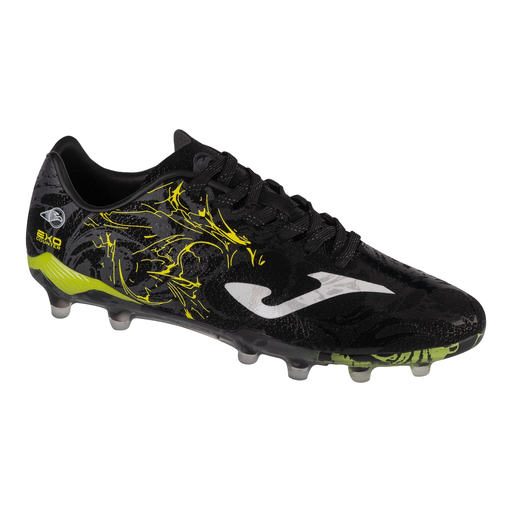
Why it suits this type of player: A straightforward FG model for anyone who mainly plays on firm natural-grass pitches and wants a regular fit with laces.
The FG label makes the intended use clear. The product details list an eco-leather upper, a rubber sole and Exo Counter support.
Regular fit, lace-up fastening, eco-leather upper and low-cut design.
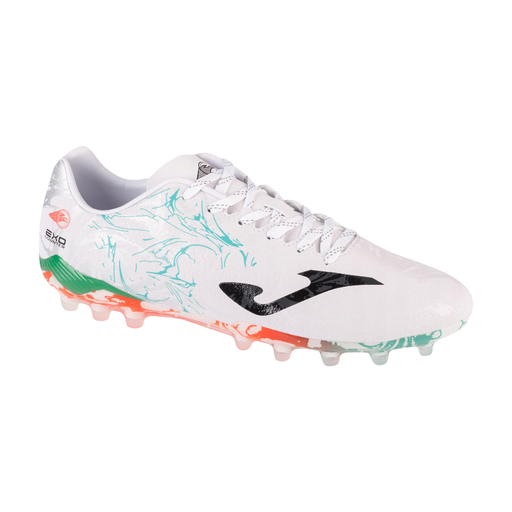
Why it suits this type of player: For players who value a lightweight synthetic upper, a padded insole and a low-cut design for natural grass.
The product information specifically states Firm Ground and advises against use on artificial grass or hard surfaces.
Synthetic leather upper, rubber FG sole and regular fit.
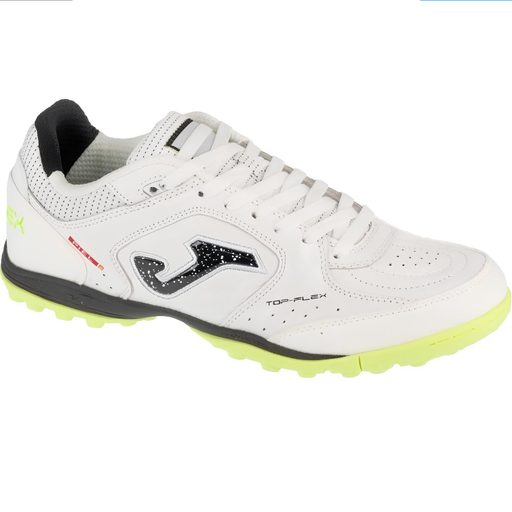
Why it suits this type of player: A focused choice for players who mainly train on turf or short artificial grass and want a flexible, lightweight boot.
The TF label helps you avoid buying an FG model for a turf pitch. The product description recommends cleaning with a soft brush or damp cloth.
Rubber TF sole, synthetic textile upper and padded insole.

Why it suits this type of player: For adults who play on natural grass and value a low-profile, lightweight design with a sock construction.
The product specifications list FG, a regular fit and lace-up fastening, so you can check the pitch type and size details before buying.
FG sole, synthetic leather upper, sock construction and size 45.
We’ve put together a complete, up-to-date list of products that meet these strict selection criteria and the applicable European safety regulations.
After every training session, remove sand, grass and dirt with a soft brush or cloth. Don’t use a washing machine, bleach or strong cleaning products unless the product label expressly says you can. Leave the boots to dry at room temperature, away from radiators and direct sunlight. Otherwise, wet boots may become stiffer or lose their shape.
Check the sole, studs, seams and laces regularly too. For these product listings, the statutory guarantee in the European Union is at least two years; your exact rights depend on the circumstances and the national rules that apply.
Yes, but choose a model marked AG or TF, depending on the type of artificial grass. AG is designed for artificial-grass pitches, while TF is suited to turf and short artificial grass. According to the product information, FG models are intended for firm natural grass.
The models mentioned usually have a regular fit. However, the internal shape varies between ranges. Measure your foot in millimetres, check the size chart and adjust the laces before making a decision. If you’re between sizes, check the returns policy and the specific product information.
It depends on how often you play, the pitch type, how well you care for them and how much they’ve worn. Replace them when the studs are clearly worn down, the sole starts to come away, the upper tears or the boots no longer feel stable. If you often play on artificial grass, you can help reduce wear by choosing a model with the right AG or TF sole.
