
Creator filming shiny jewellery
Wants metal and stones to remain visible during a demonstration without distracting hotspots. As Nikon USA explains, diffusion and light placement are important considerations.


With shiny jewellery, the size and position of the visible light source often matter more than a high stated power rating. Nikon USA explains how diffusion can soften the light and make the light source appear larger. Choose a compact, movable light if you mainly want to fill in a small shadow alongside window light, or a light with suitable diffusion if you need more control over reflections. Also check the space, light modifier, power supply and colour in a test recording: a light output measured with a standard reflector doesn’t tell you what a softbox will deliver in your set-up.
Wants metal and stones to remain visible during a demonstration without distracting hotspots. As Nikon USA explains, diffusion and light placement are important considerations.
Wants to adjust shadows and match the light colour in the recording as daylight changes. Models from amaran and Godox offer different ways to adjust brightness or colour temperature.
Needs a light that fits alongside the camera and work surface, while taking into account reflections from a small light source. Ulanzi highlights compact mounting options for the VL49 RGB; Nikon USA explains why the size and position of the light matter.
A good fit if: you want to supplement window light with a little fill and move the light while filming.
Bear in mind: a small light source can appear as a distinct reflection on polished metal.
A good fit if: you want to use a larger visible light source and have room for the light, modifier and set-up.
Bear in mind: check the mount and included accessories; diffusion also affects how much light reaches your subject.
Reflections can affect the visible surface and detail of jewellery on camera. Nikon USA describes diffusion and the size of the light source as ways to soften the light.
| Consideration | What to look for | Who should prioritise this? |
|---|---|---|
| Reflections and detail | Check whether a suitable softbox or diffusion can be used, and whether the light can be positioned outside the unwanted reflection angle. | I want to reduce distracting hotspots on metal and stones while keeping the jewellery clearly visible. Around 40% of consumers put reflection control first. |
| Changing window light | Check whether the exact model is dimmable and lets you adjust the colour temperature; assess the result in a test recording. | If daylight changes while I’m recording, I want to be able to adjust the fill light. Around 30% of consumers give this flexibility top priority. |
| Space around the work surface | Check the mounting options, whether you’ll need a stand, and how much clear space there is for your hands and camera. | I want to move my hands and camera freely without the light getting in the way. Around 20% of consumers make saving space their main consideration. |
| Power and recording noise | Compare the run time at your intended brightness and check the power requirements; also listen for fan noise in a test recording. | For longer demonstrations, I don’t want to run out of power unexpectedly or record distracting noise. Around 10% of consumers make power and recording noise their top priority. |
The reflection from the light source also affects how shiny jewellery looks. A lux rating measured with a standard reflector doesn’t tell you what the same light will deliver with diffusion.
First choose the light source you want, then check the mount, compatible accessories and the results in a test recording.
A larger light modifier and a stand may require extra space and accessories for your set-up.
A compact light source is easy to position, but it can appear as a distinct reflection on polished metal.
Check the reflection as you move the jewellery and light into the positions you plan to use for filming.
For the Ulanzi VL49 RGB, Ulanzi lists a range of 2500–9000 K, while a Joybuy listing gives 2500–9500 K.
Before buying, check the full model name and the specifications of the version being offered.
The COB 60x S is a compact bi-colour point light with a Bowens mount for attaching a compatible light modifier.
The SL60IIBi suits a set-up where dimming, adjustable colour temperature and a Bowens light modifier are desired.
The RC 60B is a portable option if a battery matters more to you than a fixed mains-powered set-up.
The VL49 RGB is a small rechargeable fill light for a compact filming space.
These Joybuy products are compact lights for adding illumination to video and product shoots. With shiny jewellery, the size and position of the light source remain important considerations.
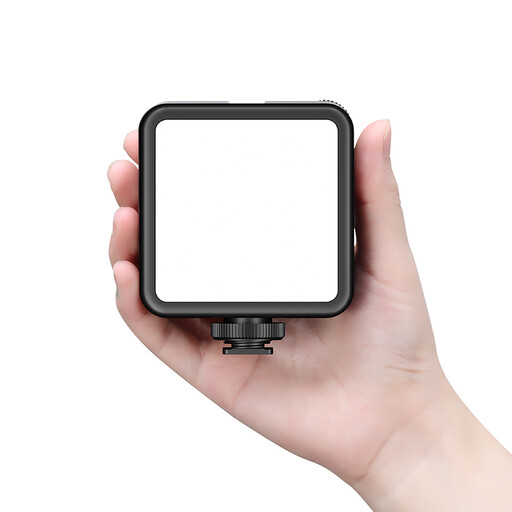 No image available
A compact option for adding light alongside window light.
The product information lists 81 LEDs, USB-C charging, a cold-shoe mount, and adjustable brightness and colour temperature.
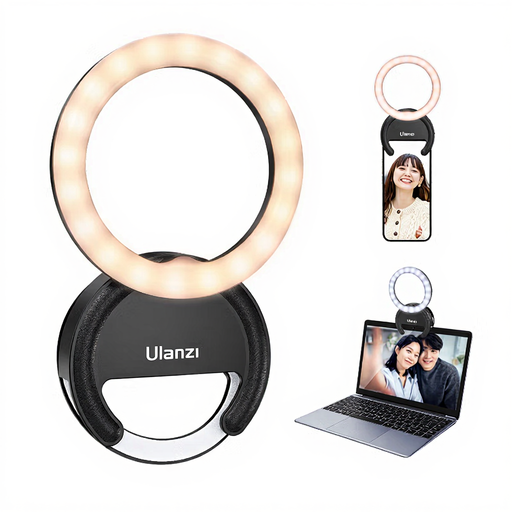 No image available
A phone light to consider if you film with a smartphone and want a clip-on mount.
The product information lists three colour temperatures, from 3000K–7000K, and five brightness levels.
 No image available
A portable fill light for a compact filming set-up where you want to use different mounting options.
The product information lists a 500 mAh battery, up to 1.5 hours of illumination, IPX4 water resistance, magnetic mounting and a 1/4-inch thread.
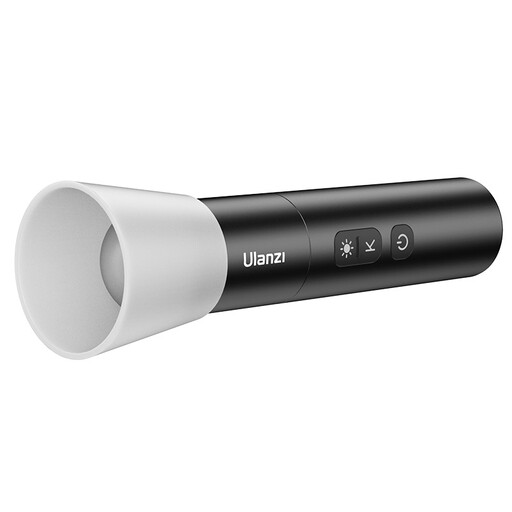 No image available
A portable option to consider if you want to switch the beam from spot to flood.
The product title lists 2000K–5500K, four brightness levels and a 2000 mAh battery; the product information gives a weight of around 187 g and USB-C charging.
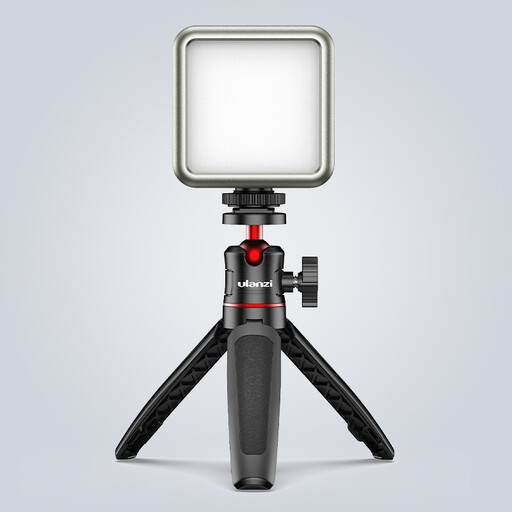 No image available
A compact light to consider if space is limited; a small light source won’t automatically give you the same reflection control as a large softbox.
The product title lists a 2000 mAh battery and 2500K–9500K. Ulanzi gives a range of 2500–9000 K for the VL49 RGB, so check the specifications for the exact version.
It can, if the opening leaves enough room for your hands and camera. Nikon USA describes a light tent as a way to soften light around small pieces of jewellery, but the examples given are for flash photography. So check whether you can reach the jewellery easily and keep the camera angle you want.
Not directly. Godox gives the SL60IIBi’s light output at 1 metre with a standard reflector; this isn’t the same set-up as a light with a softbox. Assess your chosen light modifier and position in a test recording.
Compare your planned recording time with the run time at the brightness you need, and check the requirements for external power. SmallRig lists a maximum of 45 minutes at full power and 75 minutes in ECO mode for the RC 60B; separate requirements apply for a suitable USB-C PD power supply.
Not in every case. The Netherlands Government website says that you generally have 14 days to change your mind when buying at a distance, and lists some exceptions. Check the type of purchase, the seller and the terms that apply to your order.
For products covered by harmonised EU rules that require CE marking, the manufacturer uses the marking to declare that the product complies with those rules. According to the European Commission, CE marking isn’t required for every product. It isn’t an independent assessment of light quality, so check the marking and product information for the version you want to buy.