What should you look for when choosing?
First, test whether your current device can capture the smallest details you need clearly and at a large enough size. If it can’t, compare a compact camera with macro mode against a mirrorless camera and a lens suited to your jewellery and lighting set-up.
The percentages below relate to consumers choosing a camera set-up for handmade jewellery sold through an online shop. Each percentage reflects the main purchasing need in the relevant row.
| Consideration |
What should you check? |
Who might place more importance on this? |
| Magnifying small details |
Check the maximum magnification of the exact lens and its compatible mount. If possible, take a test shot of your smallest piece of jewellery. |
If I want to show engravings, clasps or small settings in close-up, I look at both the lens and the framing. Around 29% of consumers prioritise capturing fine details. |
| Reflections and colour |
Allow space for diffused lighting and test colour reproduction using images of your own materials. |
When I photograph shiny metal or gemstones, I want to control reflections and show colours consistently across a series. Around 29% of consumers prioritise lighting and colour. |
| Consistent product photos |
Consider whether you can position the camera steadily and use the same lighting and focus for subsequent products. |
When photographing a series of unique items, I want to be able to repeat a set workflow without setting everything up again for each shot. Around 24% of consumers prioritise a repeatable photo series. |
| Complete set-up |
Compare what you already own with the full kit contents and any separate lens, tripod and lighting requirements. |
If I first want to find out what my current equipment can do, I don’t want to buy a complete set unnecessarily. Around 18% of consumers prioritise keeping the total purchase to a minimum. |
The magnification stated applies to the specific lens, not automatically to the camera body or every kit. Canon Nederland lists 0,5× for the RF 85mm F2 Macro IS STM; Nikon Nederland gives 1:1 for the NIKKOR Z MC 50mm f/2.8, and Sony Netherlands gives 1:1 for the E 30mm F3.5 Macro. These are lens specifications, not a comparison of the final image quality.
Cameras at Joybuy
This product selection includes a camera for photography. Before buying, check that its focusing and framing are suitable for the smallest details of your jewellery.
 No image available
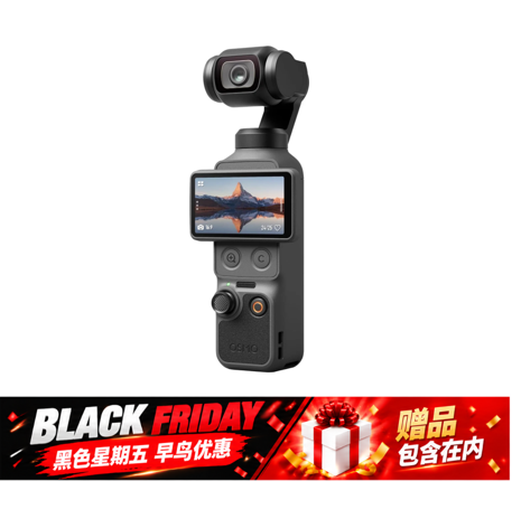
DJI Osmo Pocket 4 Standard Combo
The product title describes this model as a pocket gimbal vlog camera; use a test set-up to assess whether its focusing and framing are suitable for small pieces of jewellery.
The product title lists a 1″ CMOS sensor and 2× lossless zoom. It also mentions 4K/240fps video, 3-axis stabilisation, 107 GB of built-in storage and a 2″ rotatable screen.
View at Joybuy
Frequently asked questions
Do you need to buy a macro lens straight away for small pieces of jewellery?
Not necessarily. First test your current device with a stable set-up and good lighting. If the details don’t appear large and sharp enough in the image, compare the magnification of a specific compatible macro lens with what you want to photograph.
How can you keep a series of photos of shiny jewellery consistent?
Keep the position of the jewellery and camera, as well as the lighting set-up, as consistent as possible, and check reflections and colour in test shots. Canon Nederland documents focus bracketing on the EOS R50. For subjects with depth, consider whether a workflow using several focus points and post-processing would suit you.
Do the consumer cooling-off period and statutory consumer guarantee automatically apply to a camera for your online shop?
No, not automatically. Check whether you’re buying as a consumer or as a business, and which terms apply. The Chamber of Commerce explains that businesses have less consumer protection and that small businesses may be able to rely on consumer law in certain circumstances; ACM ConsuWijzer’s guidance on the statutory guarantee relates to consumer purchases.
Can you make jewellery look more attractive in your online shop photos than it does in real life?
No. The Netherlands Authority for Consumers and Markets warns sellers that they must not mislead consumers. Make sure your photos and product information don’t give a false impression of the jewellery on offer; the rules don’t prescribe a particular camera model.
Does a CE mark mean a camera is suitable for jewellery photography?
No. The European Commission describes CE marking as a declaration that a product complies with the rules that apply to it, not as a quality mark for macro performance or photo quality. Assess the suitability of the specific camera and lens separately.


