
Maker focusing on small details
You might photograph fine textures or clasps, for example, and want to know how large they will appear with your chosen lens before you buy.


Start with a test shot: if your current camera or smartphone already captures the details you want at a large enough size, a stable setup and controlled lighting may matter more than buying a new camera body. For very small details, consider a mirrorless camera with a suitable macro lens; compare both magnification and working distance. If you want a three-dimensional piece of jewellery to be sharp from front to back, also check how the camera and lens handle focus bracketing.
You might photograph fine textures or clasps, for example, and want to know how large they will appear with your chosen lens before you buy.
You mainly have to contend with reflections or changing light in a home setup; switching cameras won’t automatically change those shooting conditions.
You want to photograph several pieces of jewellery using a repeatable setup and capture enough sharpness across a three-dimensional product.
Choose this option: if a test shot already shows the details you need at a sufficiently large size and in sharp focus.
Bear in mind: a stable position and diffused light are still important for consistent photos.
Choose this option: if you need to fill the frame with small components or want to choose the lens and shooting settings yourself.
Bear in mind: the macro lens may be sold separately; a short working distance can leave less room for lighting.
Choose this option: if you need a ring or another three-dimensional piece of jewellery to be sharp from front to back at close range.
Bear in mind: the sequence consists of several shots; combining them may require an in-camera function or post-processing.
| What to consider | What to check before buying | Who is this most important to? |
|---|---|---|
| Filling the frame with small details | Check the maximum magnification and working distance of the exact lens, as well as the camera body's mount. Minimum focusing distance is not the same as the space in front of the lens. | If I want fine textures or clasps to appear large in the frame, I want to know what the lens can actually capture. Detail magnification is the top priority for around 33% of consumers. |
| Reflections and consistent lighting | Take a test shot with your intended background and lighting setup; also check whether the lens leaves enough room to diffuse the light. | With shiny jewellery, I want to be able to control reflections and changing light in my home studio. For around 27% of consumers, managing reflections and lighting comes first. |
| Keeping the whole piece of jewellery in focus | Check whether the exact camera offers focus bracketing or focus stacking, which lens is suitable and whether you need software to combine the images. Canon describes focus bracketing as taking shots at different focus distances. | If I want a ring to be sharp from front to back, the focusing method matters. Depth of field is the top priority for around 20% of consumers. |
| The complete setup | Compare what’s included in the kit with what you already own, and check whether you need an additional suitable lens, support or lighting. | I want to avoid finding that the body alone isn’t enough for my jewellery photos. The complete equipment setup is the top priority for around 20% of consumers. |
Magnification also depends on the lens you use. A camera kit doesn’t automatically include a macro lens, and lighting and a stable setup affect the shot too.
Compare the complete body-and-lens combination and check exactly what’s included in the kit.
A separate macro lens and, potentially, a tripod or lighting may be part of the setup.
A lens may be able to focus while leaving little room between the subject and the front of the lens for diffused light.
Check the working distance from the front of the lens and compare it with the space available in your home studio.
You may need a different lens or a change to your lighting setup to leave enough space.
Focus bracketing takes several shots at different focus points; combining them into one image is a separate step.
Check that the feature works with the exact body-and-lens combination and use a stable setup. Canon recommends a sturdy tripod to minimise movement between shots.
Taking a sequence takes extra time and may require image-stacking software or post-processing.
These brands offer mirrorless camera and macro options that you can compare by body, lens and shooting workflow; the specifications quoted are from the manufacturers.
The EOS R50 uses an RF mount; consider the body alongside a separate RF macro lens.
The Z50II and the separately considered NIKKOR Z MC 50mm f/2.8 are an option for anyone considering the Z system.
The ILCE-6400 uses E-mount; consider the body alongside your chosen E-mount macro lens.
The OM-5 Mark II offers an option for using focus stacking with a separate M.Zuiko macro lens.
Camera options at Joybuy that are relevant to this topic. For each model, check whether the lens or camera offers enough close-focusing capability and room for your lighting setup.
 No image available
For jewellery photography, check whether the shooting distance and lighting setup suit the details you want to capture.
The product name lists a 1″ CMOS sensor, 4K/240fps, 3-axis stabilisation, 2× lossless zoom, 107 GB of built-in storage and a 2″ rotatable screen.
 No image available
For jewellery close-ups, check whether the camera offers the magnification and focusing distance you need.
The product name lists 5K, 80 MP and 18× zoom.
 No image available
Before choosing this camera for small jewellery details, check its close-focusing capability and whether there’s room for diffused light.
The product name lists 12× optical zoom, 4K and 64 MP.
 No image available
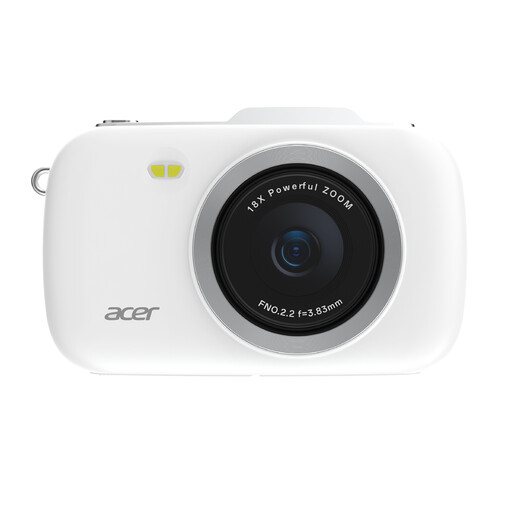
For jewellery photos, check whether the lens or camera can focus close enough to your subject.
The product name lists 80 MP and 18× zoom.
 No image available
The included zoom lens is part of this version; check whether the combination offers the magnification and working distance you need for your jewellery.
According to the product information, a compatible SD card and adapter/charger are not included.
It depends on the magnification of the exact lens included and the size of your jewellery. Check what’s in the kit and, if possible, take a test shot; the macro capabilities of a different lens tell you nothing about the lens in your kit.
No. Sony distinguishes between the distance from the subject to the sensor and the working distance between the subject and the front of the lens. Compare the working distance with the space you need for your lighting setup.
Keep the camera stable and use the same background and lighting setup. For focus bracketing, Canon recommends a sturdy tripod to minimise movement between shots; combining the images is a separate step or camera feature.
According to Business.gov.nl, business purchases are not covered by the statutory right of withdrawal that applies to eligible distance sales to consumers. Before ordering, check whether you’re buying as a private individual or a business, and which terms apply to your purchase.
Canon warns that changing lenses can allow dust to reach the sensor and describes professional sensor cleaning as an option. Follow the maintenance instructions for your camera model before touching the sensor.