A compact camera may be enough for quick close-ups if test shots show the smallest details clearly. For regular work capturing tiny engravings or textures, a mirrorless camera with a suitable macro lens is a good choice when you want to tailor the magnification and focusing method. For example, Canon lists focus bracketing for the EOS R50 and up to 1.4× magnification for the RF 100mm F2.8L Macro IS USM. Whichever option you choose, check lens compatibility, sharpness across the entire piece of jewellery and how you can control light on shiny surfaces.
Which setup is right for you?
Maker of miniature details
If you want to capture engravings, hammer marks or fine textures in clear, recognisable detail, pay particular attention to lens magnification and precise focusing. Canon Netherlands explains why macro photography calls for extra focusing precision.
Online shop photographer
If you photograph jewellery with shiny surfaces, a repeatable setup, sharpness and controlled lighting are important when reviewing your images. Orbitvu Netherlands recommends using diffused light that is not too strong.
Maker of quick close-ups
If you want to take a detailed close-up quickly with minimal extra equipment, test whether the close-up mode makes the smallest detail large enough in the frame. OM SYSTEM Netherlands says the TG-7’s microscope mode can focus from 1 cm.
What should you look for when choosing?
Upgrade your current mirrorless system
A good fit if: you already have a suitable camera body and mainly need more magnification for small details. Check the lens mount and lens magnification first.
The trade-off: a macro lens is a separate purchase. At high magnifications, the shallow depth of field calls for precise focusing or focus bracketing.
Build a mirrorless camera setup with a macro lens
A good fit if: you regularly photograph small pieces of jewellery and want to tailor your lens choice and focusing method to different pieces. Canon lists RF and RF-S lens support and focus bracketing for the EOS R50.
The trade-off: check the exact camera body and lens combination, and what is included in the kit. A camera body or standard kit lens does not automatically make a complete macro setup.
Use a compact camera with a close-up mode
A good fit if: you want to take close-ups quickly without changing lenses and can check with test shots that the detail appears large enough. OM SYSTEM says the TG-7 can focus from 1 cm in microscope mode.
The trade-off: a short focusing distance does not tell you how much of the jewellery will be in focus or how much room you will have to position the light.
| What to consider |
What should you look for? |
Who is this important for? |
| Magnification of fine details |
Check the maximum magnification of the exact lens, its mount and the size of the smallest detail. |
If you want a small engraving or texture to fill the frame, you’ll want to know how much space the detail will take up in the image. Around 36% of consumers say magnifying fine details is their top priority. |
| Reflections and colour reproduction |
Consider whether you can position diffused light and set the white balance for your usual lighting setup. |
With shiny metal or gemstones, you’ll want to control harsh highlights and assess colours consistently across images. Around 29% of consumers put control of lighting and reflections first. |
| Sharpness and consistency |
Check whether the exact camera offers focus bracketing or another suitable focusing method; a sequence may require several shots. |
If you want both the setting and the band to be sharp, it helps to have a method you can repeat for different pieces of jewellery. Around 21% of consumers say all-over sharpness and consistency are their top priorities. |
| Ease and size of the setup |
Test whether a close-up mode can capture the smallest detail while leaving enough room for your lighting. |
If you want to work quickly with minimal extra equipment, first check whether a simple setup captures enough detail. Around 14% of consumers put ease of use and a compact workflow first. |
Common buying mistakes
-
Looking only at the megapixel count
How large a small detail appears in the image depends partly on the lens magnification. Close-ups also require you to consider the shallow depth of field.
Start with the smallest detail you want to show. Check magnification, the lens mount and the focusing method before comparing camera resolution.
-
Assuming a camera kit is a complete macro setup
A lens mount does not tell you which lens is included in a kit. Shiny jewellery also needs careful lighting.
Check exactly what is included in the offer and try a test setup with your own materials.
-
Confusing a 1 cm focusing distance with unlimited working space
When shooting close to a piece of jewellery, you also need enough room to position the light as you want.
Assess a test shot using your intended framing and lighting setup. Don’t choose solely on the basis of the shortest stated focusing distance.
Camera brands to compare
Canon
The RF system includes mirrorless cameras and interchangeable RF macro lenses, including models suited to a macro setup.
- Canon Netherlands lists RF and RF-S lens support and focus bracketing for the EOS R50. For the RF 100mm F2.8L Macro IS USM, Canon lists up to 1.4× magnification.
- These details apply to the models listed. Check which lens is included in a kit and whether the focusing method suits your setup.
Nikon
The Z system includes the NIKKOR Z MC 50mm f/2.8 and the NIKKOR Z MC 105mm f/2.8 VR S.
- Nikon Netherlands lists 1:1 macro photography for the 50mm lens and life-size reproduction for the 105mm lens.
- Lens specifications alone do not tell you which focus-stacking features are available on each Nikon camera body. Check the features of the exact camera separately.
Sony
The FE 90mm F2.8 Macro G OSS is a macro lens for cameras with an E-mount.
- Sony Netherlands lists up to 1:1 magnification and compatibility with full-frame and APS-C cameras with an E-mount.
- The lens specifications do not confirm which focus-bracketing sequences or features are available on every Sony camera body.
OM SYSTEM
The range includes both the TG-7 compact camera with microscope mode and the OM-1 Mark II mirrorless camera with focus stacking.
- OM SYSTEM Netherlands says the TG-7 can focus from 1 cm in microscope mode and that the OM-1 Mark II has in-camera focus stacking.
- Focusing from 1 cm does not guarantee suitable lighting or enough working space. For a mirrorless setup, you’ll need to choose a lens separately.
Panasonic
The LUMIX S system includes the S-E100 100mm F2.8 MACRO for a compatible L-mount setup.
- Panasonic Netherlands lists up to 1× magnification for this lens.
- Check that the exact camera and lens work together for the type of setup you want.
Cameras at Joybuy
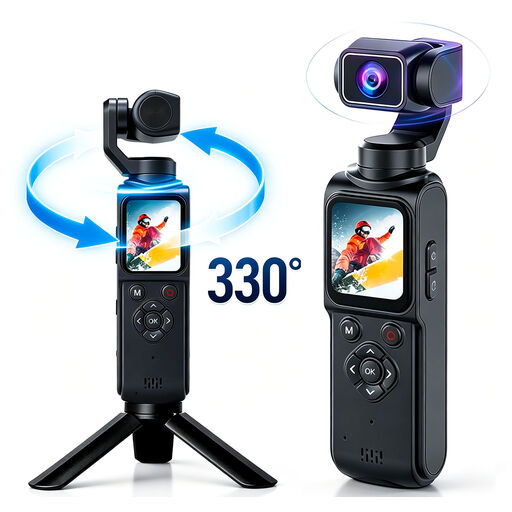
This selection includes compact action and vlog cameras. If you want to capture fine details in jewellery, check that the focusing distance and focusing options suit the smallest detail you want to photograph before making your choice.
 No image available
Compact 4K camcorder with 330° rotating lens, 1.72-inch touchscreen and wireless transfer, memory card not included
For jewellery photography, check whether the close-up capabilities are suitable for the smallest detail you want to capture.
The product name lists 4K, a 330° rotating lens and a 1.72-inch touchscreen. No memory card is included.
Joybuy
 No image available
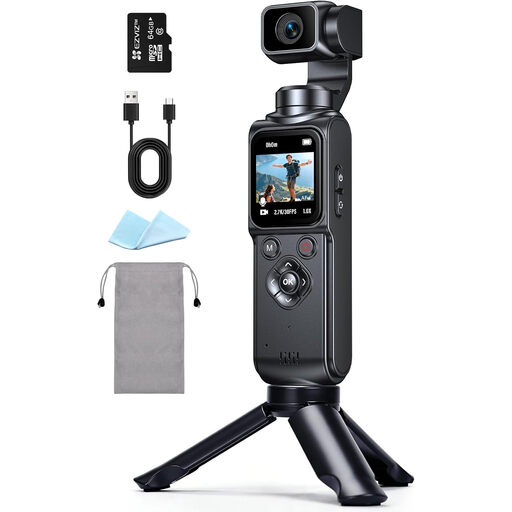
Compact 4K vlog camera with 330° rotating lens, 1.72-inch touchscreen and wireless transfer, memory card not included
Before choosing this camera for jewellery photography, check with a test shot that it can capture your chosen detail sharply.
The product name lists 4K, a 330° rotating lens and a 1.72-inch touchscreen. No memory card is included.
Joybuy
Frequently asked questions
Does a short minimum focusing distance mean the whole piece of jewellery will be sharp?
No. A short focusing distance does not mean the whole piece of jewellery will appear sharp; Canon Netherlands points out that close-ups can have a shallow depth of field. Check sharpness across the entire subject and see whether a suitable focus-bracketing sequence is needed.
Do I have to combine images from a focus-bracketing sequence myself?
It depends on the exact camera and the method you choose. Focus bracketing takes a sequence of shots; some cameras can also combine images in-camera. Check both features separately for the model you’re considering.
How can I reduce harsh reflections on polished metal?
Start by changing the position and softness of the light, then review a test shot. Orbitvu Netherlands recommends diffused, not-too-strong light for jewellery; this photography advice does not specify a particular lamp.
Who can help if a product is faulty, and do online purchases always come with a 14-day cooling-off period?
For a consumer purchase, the Dutch government says the seller must provide a solution if there is a problem with a product. A 14-day cooling-off period applies to many distance purchases, but there are exceptions; check the terms that apply to your purchase.


