
Detail photographer
You want a small clasp to look clear and prominent in the image. Magnification and choosing the right lens are important considerations.


First, see whether your current camera or phone can capture the smallest clasp clearly and at a large enough size; a new camera body won’t automatically solve a lack of magnification. If you need more detail, assess the combination of camera body and macro lens, the level of sharpness you want across the clasp, and the space your window-light setup requires.
You want a small clasp to look clear and prominent in the image. Magnification and choosing the right lens are important considerations.
You work by a window and want to manage reflections and changing daylight without losing sight of the detail in the clasp. Shopify Netherlands discusses reflections and lighting as key considerations in jewellery photography.
You want different depth planes of a clasp to appear sharp, and may want to consider taking several shots using focus stacking.
Choose this when: the clasp is already clear enough at the size you need.
Bear in mind: achievable magnification and focusing vary by camera; check a test shot first.
Choose this when: you want a small clasp to fill a large part of the frame.
Bear in mind: 1:1 is a lens specification; the camera body and lens are separate choices, and the working distance matters too.
Choose this when: you want to show several depth planes of a stationary clasp in sharp focus.
Bear in mind: the camera body and lens must be compatible, and the subject must remain still throughout the sequence.
Choose this when: you also take wider jewellery shots and 1:2 is enough for your clasps.
Bear in mind: according to Canon, the Canon lens mentioned has a maximum magnification of 1:2, not 1:1.
| Consideration | What should you check? | Who should consider this? |
|---|---|---|
| Magnification | Compare the lens’s maximum reproduction ratio and take a test shot of your smallest clasp at the output size you need. | If your clasp is small and needs to take up a large part of the frame, prioritise magnification; around 36% of consumers say this is their top priority. |
| Window light and reflections | Assess reflections in a test shot and check that the distance from the lens leaves room for your lighting setup. | If shiny metal reflects window light, you’ll want to be able to adjust the positions of the camera, window and jewellery; around 29% of consumers give lighting control top priority. |
| Depth of field | Check sharpness across the entire clasp; a smaller aperture can increase depth of field, but lets in less light. | If several depth planes of the clasp need to be sharp, weigh depth of field against the available light; around 21% of consumers put this first. |
| Complete setup | Check whether your current camera is suitable. If not, compare the camera body, lens mount and required lens as a complete setup. | If you first want to know whether your existing equipment is suitable, consider the complete setup rather than just a new camera body; around 14% of consumers prioritise the suitability and cost of the setup. |
For close-ups, the lens’s magnification matters too. So a new camera body alone won’t automatically give you the close-up that fills the frame.
Compare the complete combination of camera body and compatible macro lens before you choose.
Magnification ratios vary from lens to lens. Canon specifies a maximum of 1:2 for the RF 35mm F1.8 MACRO IS STM; the Nikon, Sony and OM SYSTEM lenses mentioned are specified at 1:1.
Check the ratio of the specific lens and test it with your smallest clasp at the size you need.
A wider aperture lets in more light, but gives you less depth of field. As a result, part of the clasp may fall outside the plane of focus.
Check the whole clasp in a test shot. If needed, try a smaller aperture or see whether your camera body and lens support focus stacking.
The OM-5 Mark II may be worth considering if you plan to use focus stacking on a stationary clasp. The M.Zuiko Digital ED 60mm F2.8 Macro is on the compatibility list for this feature.
The Z50II is a camera body with a Z mount. The NIKKOR Z MC 50mm f/2.8 is a separate lens for close-ups.
The EOS R50 with the RF 35mm F1.8 MACRO IS STM is one possible combination if you also take wider jewellery shots and 1:2 is enough.
The α6700 with an E mount can be paired with the APS-C SEL30M35 lens.
The products shown are compact cameras for vlogging and photography. Before buying, check specifically that their focusing and close-up capabilities are suitable for small jewellery clasps.
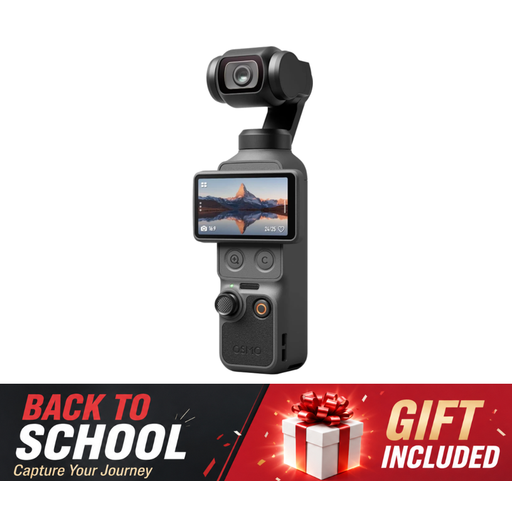 No image available
The product title describes this camera for photography; check whether its close-up capabilities suit your clasps.
1″ CMOS sensor, 4K/240fps, 3-axis stabilisation, 2× lossless zoom, 107GB built-in storage and a 2″ rotatable screen.
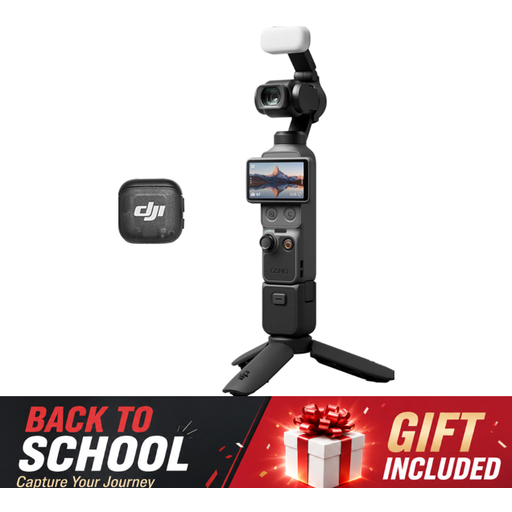 No image available
The product title describes this camera for vlogging and photography; check whether its close-up capabilities suit your clasps.
1″ CMOS sensor, 4K/120fps, 3-axis stabilisation, face and object tracking; microphone included.
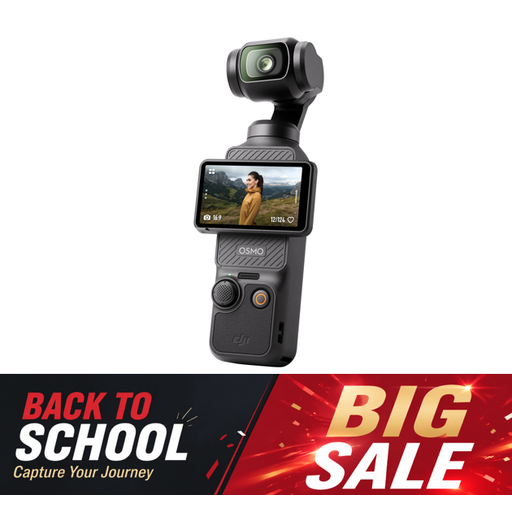 No image available
The product title describes this camera for vlogging and photography; check whether its close-up capabilities suit your clasps.
1″ CMOS sensor, 4K/120fps, 3-axis stabilisation, autofocus, face and object tracking, and a 2″ rotatable touchscreen.
First, take a test shot of your smallest clasp with your current camera, at the size you need. Move the camera and jewellery around to assess reflections, then see whether magnification or sharpness is lacking.
No. A wide aperture lets in more light, but gives you less depth of field. Try a smaller aperture for greater sharpness across the clasp. If that isn’t enough, you could consider focus stacking with a compatible camera body and lens.
Check that both the camera body and lens are compatible, and keep the jewellery still throughout the sequence. OM SYSTEM lists the M.Zuiko Digital ED 60mm F2.8 Macro as compatible with the OM-5 Mark II and states that processing crops about 7% from the original image edges.
According to the Dutch Government, when buying at a distance you will often have a 14-day cooling-off period; exceptions and the nature of the seller matter. You are also entitled to a product that meets reasonable expectations, and the seller is your point of contact if there’s a problem. This information about consumer purchases does not necessarily apply to business purchases.