Who is this choice for?

Maker with a small photo table

You want to take close-ups without a large camera and lens setup, while leaving room to control shine with lighting. Shopify Netherlands highlights the importance of reflections and lighting when photographing jewellery.

Jewellery maker capturing fine details

You want to capture engravings, settings or textures clearly, so you’re paying attention to magnification and sharpness across the piece. Canon and Nikon’s product specifications show that, for the mirrorless camera setups mentioned, magnification depends on the separate lens.

Maker with an existing mirrorless camera

You want to check whether a compatible macro lens can deliver the close-ups you need before buying a new camera body. Sony, Canon and Nikon specify macro lenses for their respective mounts.

What are the main buying considerations?

Compact camera with a close-up function

Choose this option: if you don’t want to set down or change a separate lens. OM SYSTEM lists shooting from 1 cm and focus stacking for the Tough TG-7; Ricoh Imaging Europe lists a digital microscope function from 1 cm for the PENTAX WG-90.

Bear in mind: the camera can get close to the jewellery, so you’ll still need to consider space for soft lighting and controlling reflections.

Mirrorless camera with a macro lens

Choose this option: if you want to choose lenses to suit both detailed and wider shots. Canon lists a maximum magnification of 1:2 for the RF 35mm F1.8 MACRO IS STM lens; Nikon lists 1:1 for the NIKKOR Z MC 50mm f/2.8.

Bear in mind: macro magnification applies to the specific lens, not automatically to the camera body or a standard kit lens. Also check that there’s room for lighting around the lens.

Use an existing compatible camera

Choose this option: if you already own a compatible Sony camera with an E-mount. Sony lists 1:1 magnification and a minimum focusing distance of 0,16 m for the FE 50mm F2.8 Macro.

Bear in mind: the lens specifications apply only with a compatible camera body; the focusing distance isn’t the same as the working distance in front of the lens.

Buying consideration What to check before buying Who it matters most to
Setup on a small table Use your table dimensions to work out where the camera, jewellery and diffuser can go. The minimum focusing distance isn’t the working distance in front of the lens. I have limited table space and want to leave room for soft lighting beside the jewellery. Around 33% of consumers prioritise a compact setup.
Fine details and depth of field Compare the magnification of the actual lens and check whether your chosen setup supports the focus-stacking method you want to use. I want to capture small details such as engravings, settings or textures clearly. Fine details are the main buying consideration for around 27% of consumers.
Reflections on shiny jewellery Work out whether there’s room for a diffuser and a steady camera position; take test shots of your own metals and stones. When photographing shiny metal, I want to be able to control distracting reflections, not just focus close up. Around 20% of consumers prioritise controlling reflections.
Compatibility and the complete setup Check the exact lens mount, what’s included in the offer, and which lighting or support equipment you already have. I want to know whether my current camera body works with the macro lens and what else I need. Compatibility and the complete setup matter most to around 20% of consumers.

Common buying mistakes

  • Looking only for the word ‘macro’ on the camera box

    A magnification specification may apply to a particular lens, not to the camera body or standard kit lens. The Canon and Nikon macro magnifications mentioned apply to specific lenses.

    Check the complete combination of camera body, mount and included lens. You may need a separate compatible macro lens.

  • Choosing the shortest shooting distance without planning your lighting

    Focusing close up won’t automatically solve reflections on jewellery. The camera and lighting can also take up space around your subject.

    Sketch out your setup to scale on your table and take test shots of your own jewellery. Check whether you have room for a diffuser and the camera position you want.

    You may need a diffuser or a different camera position to control reflections.

  • Comparing compact and mirrorless cameras using individual specifications

    A compact camera has a built-in lens; the mirrorless cameras mentioned rely on separate lenses for their macro capabilities. A camera body on its own doesn’t tell you what close-ups the complete setup can achieve.

    Compare complete, compatible setups and take into account what you already own.

Camera brands to consider

OM SYSTEM

The Tough TG-7 is a compact camera for anyone looking for a built-in lens and close-up functions in one device.

  • OM Digital Solutions lists shooting from 1 cm and focus stacking for the TG-7.
  • These functions don’t prove that reflective metal will be captured well without additional lighting.

PENTAX

The WG-90 is a compact camera with a digital microscope function and built-in macro LEDs.

  • Ricoh Imaging Europe lists shooting from 1 cm and six macro LEDs.
  • The presence of LEDs alone doesn’t tell you whether the light will suit every piece of shiny jewellery.

Canon

The EOS R50 with the separate RF 35mm F1.8 MACRO IS STM lens makes for an expandable RF mirrorless camera setup.

  • Canon Netherlands lists an RF mount for the EOS R50 and a maximum magnification of 1:2 for the RF macro lens.
  • The body alone, or a kit with a different lens, won’t automatically offer this lens’s macro magnification.

Nikon

The Z50II can be paired with the separate NIKKOR Z MC 50mm f/2.8 lens for macro photography.

  • Nikon lists a Z mount for the camera body and 1:1 magnification for the lens.
  • For extreme close-ups, the lens gets close to the subject; check that your setup still leaves room for lighting.

Sony

The FE 50mm F2.8 Macro is a lens option for owners of a compatible Sony camera with an E-mount.

  • Sony lists 1:1 magnification and a minimum focusing distance of 0,16 m for this lens.
  • This is a lens, not a complete camera setup; the minimum focusing distance isn’t the same as the working distance in front of the lens.

Cameras at Joybuy

This selection includes compact and pocket cameras. Check each model to see whether its close-up capabilities and the space available for lighting suit your jewellery and table setup.
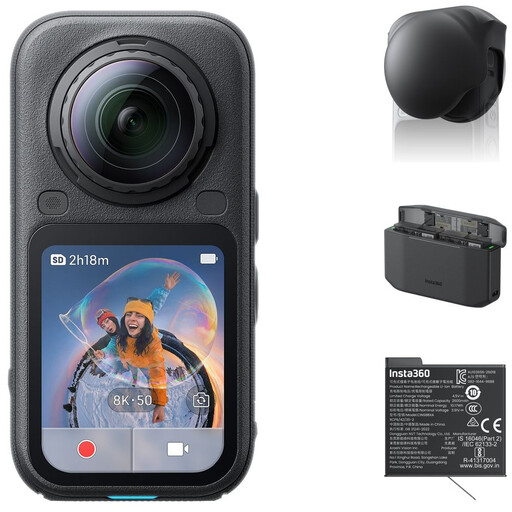
Insta360 X6 All-in-One Bundle with Standard Bundle, Lens Cap, Xtreme Battery and Fast Charge Case

Insta360 X6 All-in-One Bundle (Standard Bundle + Lens Cap + Xtreme Battery + Fast Charge Case)

The product title describes a 360° camera. For close-ups of small pieces of jewellery, check whether the framing and focusing distance suit your setup.

The bundle name lists a Standard Bundle, Lens Cap, Xtreme Battery and Fast Charge Case.

View product
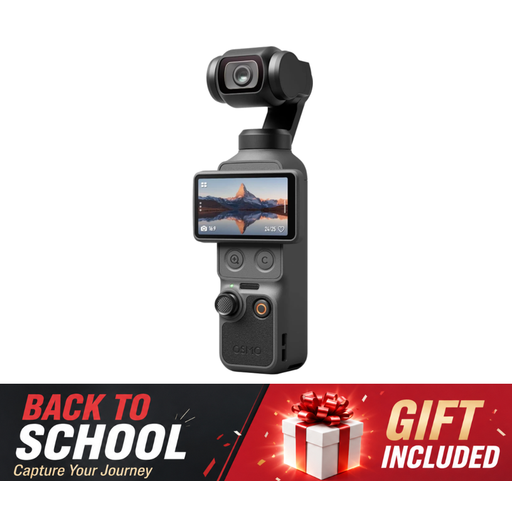
DJI Osmo Pocket 4 Standard Combo pocket gimbal camera

DJI Osmo Pocket 4 Standard Combo

The title describes a pocket gimbal camera. Before choosing, check whether its close-up capabilities suit the fine details of your jewellery.

The title lists 1″ CMOS, 4K/240fps, 3-axis stabilisation, 2× lossless zoom, 107GB of built-in storage and a 2″ rotatable screen.

View product
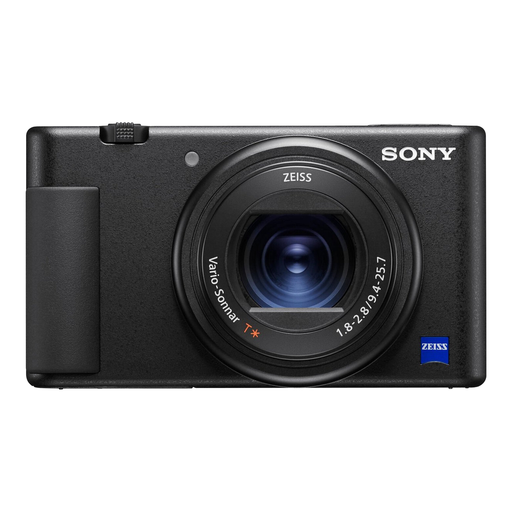
Sony ZV-1 compact camera

Sony ZV-1 Compact Camera

The product description calls it a compact, lightweight camera, which could be useful when working space is limited. Also check whether its close-up capabilities suit your jewellery.

View product

Frequently asked questions

Is a minimum focusing distance of 1 cm the same as having 1 cm of working space in front of the camera?

No. The minimum focusing distance doesn’t tell you how much clear working space remains in front of the lens. Consider the distance alongside the size of your own jewellery, and check that there’s also room for lighting.

How can I get a small piece of jewellery sharp from front to back?

Keep the camera and jewellery steady, and look into focus stacking if your model supports it. According to the OM SYSTEM Tough TG-7 manual, the camera combines shots taken at different focus positions. Don’t assume another model has the same function.

What are my rights regarding returns and warranties when buying a camera online?

According to ACM ConsuWijzer, when you buy online as a consumer you generally have 14 days after delivery to change your mind, with some exceptions. You’re also entitled to a product that meets the expectations you could reasonably have; this doesn’t mean there’s one fixed statutory warranty period of exactly two years. If you’re buying for your business, check which consumer rights apply to your contract.

Can I use heavily edited jewellery photos for a Dutch online shop?

According to the Netherlands Authority for Consumers and Markets, your offer to consumers must not give a misleading impression through inaccurate or misleading information, or by leaving out important information. So check that edits still accurately represent the material and relevant product features; the ACM doesn’t set a specific editing limit for cameras or photos.
