For overview shots of jewellery, try your existing phone or camera first with a stable, well-lit set-up; you don’t automatically need a new camera. If you want to capture engravings, settings or textures clearly, compare a small mirrorless camera with a suitable macro lens, considering both magnification and the space left for lighting. A compact camera with a fixed lens is easier to carry, but take a test shot to check that the finest detail looks sharp and large enough at your chosen zoom setting.
Who is this buying guide for?
Detail photographer
You want to show engravings, clasps or textures clearly. So, don’t just consider magnification: think about the space in front of the lens for your lighting, too. Shopify Netherlands highlights reflections and lighting as important considerations when photographing jewellery.
Photographer with a small worktable
You want to use your camera in the same limited space each time. So, assess the camera, lens, subject and lighting together; the Consumentenbond describes mirrorless cameras as cameras with interchangeable lenses.
Online shop owner creating a regular series of photos
You take both overview and detail shots and want to be able to repeat your lighting and composition. Canon Netherlands recommends paying attention to camera settings and lighting when photographing products.
What should you look for?
When photographing jewellery, the camera, lens and lighting need to work together as one set-up. Being able to focus close up doesn’t, by itself, tell you whether there’ll be enough room to light your subject properly.
| What to consider |
What should you look for? |
Who is this most relevant for? |
| Capturing fine details |
Compare the maximum magnification, the working space in front of the lens and the mount of the exact combination. Sony lists 1:1 magnification and a minimum working distance of 2.4 cm for the E 30mm F3.5 Macro; Nikon lists a maximum reproduction ratio of 0.67× for the NIKKOR Z DX MC 35mm f/1.7. |
If I want to fill the frame with engravings or settings, I need to know how much room will be left for lighting. Around 31% of consumers prioritise detail. |
| Camera and lighting on a small table |
Measure the available space and consider the distance from the front of the lens when composing your shot. Sony gives a focusing distance of around 8 cm at the wide-angle end and around 100 cm at the telephoto end for the RX100 VII, so check the zoom setting you intend to use. |
At a small workstation, I need room for the camera, jewellery and soft lighting without making the set-up impractical. Around 25% of consumers mainly take this limited space into account. |
| Consistent focus and colour |
Check that you can position the camera steadily and repeat your lighting and white balance. OM SYSTEM lists Focus Stacking for compatible combinations; Canon mentions focus bracketing for the EOS R50. |
For repeat online shop photography, I want the images to look consistent and the details to stay sharp. Around 25% of consumers prioritise consistency across a series of photos. |
| Complete kit and ease of getting started |
Check what’s included in the exact kit and whether you’ll need to buy a macro lens separately. The Canon EOS R50 kit 5811C013 includes an RF-S18-45mm; the RF 35mm F1.8 IS Macro STM is a separate lens with a maximum magnification of 1:2. |
If I want to get started with a single purchase, I need to know in advance exactly which lens is in the box. Around 19% of consumers place the greatest importance on what’s included and how easy it is to get started. |
Common buying mistakes
-
Assuming a kit zoom is the macro lens being discussed
The Canon EOS R50 kit and Sony ZV-E10 II kit come with standard zoom lenses; these are not the same as the separately mentioned macro lenses.
Before buying, check the full model name, lens mount and contents of the exact kit.
-
Assuming that close focusing always gives you usable macro shots
The listed focusing distances for the Sony RX100 VII vary considerably between wide angle and telephoto. The minimum distance alone doesn’t tell you whether an engraving will look large enough at the zoom setting you want to use.
Assess a test shot of the finest detail at the zoom setting you actually intend to use.
-
Forgetting about lighting when working at a short distance
The listed minimum working distance in front of the Sony E 30mm F3.5 Macro is 2.4 cm. With so little space, it can be tricky to light the jewellery properly, too.
Before choosing a lens, plan where the lens, jewellery and soft lighting will go on your worktable.
Camera brands and macro lenses to compare
Canon
For a small mirrorless camera set-up with a separate lens for close-ups.
- Canon lists focus bracketing for the EOS R50. According to Canon, the RF 35mm F1.8 IS Macro STM has a maximum magnification of 1:2.
- The EOS R50 kit mentioned includes an RF-S18-45mm lens, not the RF macro lens. A magnification of 1:2 is not the same as 1:1.
Sony
For anyone comparing a compact camera with a fixed lens to a mirrorless camera with an interchangeable lens.
- According to Sony, the E 30mm F3.5 Macro offers 1:1 magnification.
- The listed minimum working distance for this macro lens is 2.4 cm. The focusing distance of the RX100 VII varies depending on the zoom setting, and the ZV-E10 II kit includes a different lens from the macro lens mentioned.
Nikon
For a Z-mount mirrorless camera with the NIKKOR Z DX MC 35mm f/1.7 as a separate option for detail photography.
- Nikon lists a maximum on-sensor reproduction ratio of 0.67× for this macro lens.
- Nikon states that 0.67× gives an equivalent field of view to 1:1 in FX format; it isn’t an optical 1:1 reproduction ratio on the sensor. Also check which lens is included with the Z50II version you choose.
OM SYSTEM
For anyone assessing the OM-5 Mark II with the separate M.Zuiko Digital ED 30mm F3.5 Macro as a complete macro set-up.
- OM SYSTEM lists Focus Stacking for compatible combinations. The manufacturer gives the camera’s weight as 418 g including battery and card, and the lens’s weight as 128 g.
- How it works depends on camera and lens compatibility; assess them together as a set.
Cameras at Joybuy
Below are compact cameras for anyone who values a small set-up. The product information doesn’t confirm whether they’re suitable for close-ups of fine jewellery details, so check that they’ll work for your subject and lighting.
 No image available
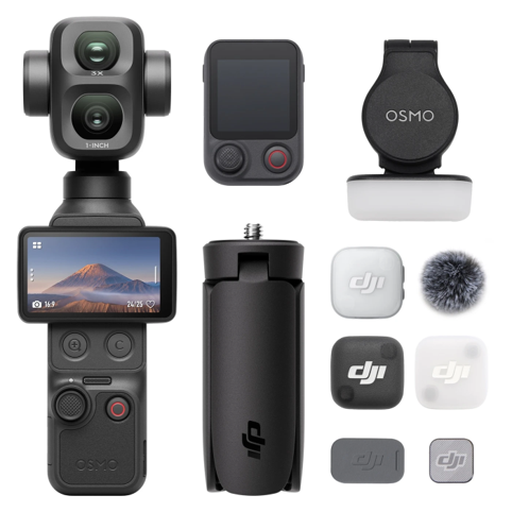
Osmo Pocket 4P Vlog Combo, black
View product
 No image available
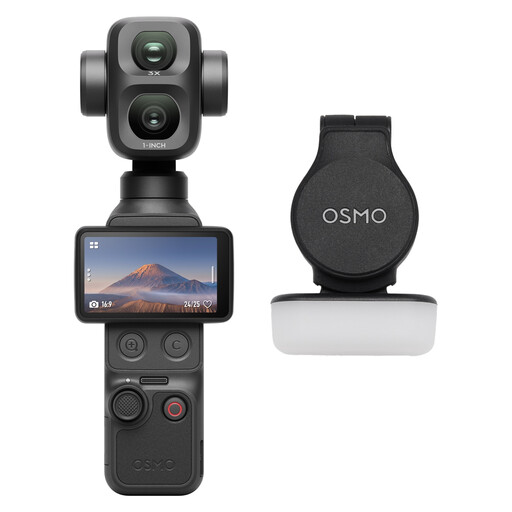
Osmo Pocket 4P Standard Combo, black
The product description lists a 1-inch CMOS sensor, a 20mm f/2.0 lens and 4K video.
View product
 No image available
DJI Osmo Pocket 4 Standard Combo
The product name lists a 1″ CMOS sensor, 4K/240fps, 3-axis stabilisation and 2× lossless zoom.
View product
 No image available
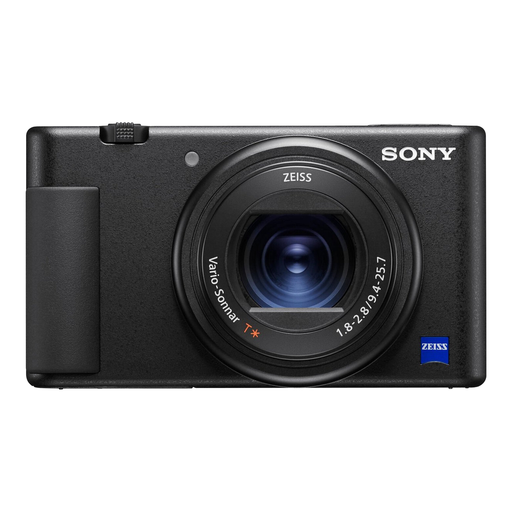
Sony ZV-1
A compact camera may suit a small set-up; check separately whether its close-up capabilities meet your needs for the finest details you want to photograph.
The product description lists optical zoom, a tilting screen, 20 Mpx and JPEG and RAW formats.
View product
Frequently asked questions
Do I need a separate camera for overview shots of jewellery?
Not necessarily. Shopify Netherlands also describes taking photos with a suitable phone you already own. Assess your own test shots for sharpness, reflections and colour; very small details may need a suitable macro lens.
Why isn’t the minimum focusing distance enough to choose a macro lens?
Because magnification and the working space in front of the lens also matter. Sony lists a minimum working distance of 2.4 cm for the E 30mm F3.5 Macro; remember to allow room for your lighting.
How can I keep a series of product photos consistent?
Keep the background, camera angle and lighting as consistent as possible, and check reflections and colour for each piece of jewellery. If you want to stack images for greater depth of field, first check that the exact camera and lens combination supports this feature.
What should I check about what’s included and the warranty when buying a camera online?
Check which lens is actually included with the kit you’ve chosen; a kit zoom doesn’t mean a macro lens is included. According to the ACM, the statutory guarantee is separate from any manufacturer’s warranty. The Dutch Government states that, in many cases, distance purchases come with a 14-day cooling-off period; check the terms that apply to your purchase.


