
Vandaag of morgen in huis

Kwaliteit gegarandeerd

Welkomstaanbiedingen ontgrendelen: GRATIS bezorging | Tot 80% korting | Gratis 30 dagen JoyPlus-proefperiode
Download de app
Looking to buy jasmine rice for everyday meals, curry or nasi? You’ll soon come across a wide range of similar-looking bags. Terms such as “premium”, “AAA” and “authentic” sound appealing, but they do not always tell you enough about the origin, contents or suitability for your kitchen.
The key differences usually come down to three things: origin, pack size and information about the rice grain. By checking these details carefully, you can avoid paying too much for a small pack or buying a large bag that does not match your household’s consumption.
“Premium”, “AAA” and “fragrant rice” are used on packaging as descriptions of quality. They are not automatically a guarantee of a particular type of rice or product characteristic. Thai Hom Mali rice refers to jasmine rice from Thailand, but always check whether the packaging specifically states 100% Thai Hom Mali.
Some products only state “jasmine rice” or “fragrant rice”. These may still be suitable choices, but the origin and grain can differ. A product from Cambodia, Vietnam, China or Thailand will not necessarily have the same aroma and texture.
An 18 or 20 kg bag often offers a lower price per kilo, but it is not practical for every household. Rice takes up space and needs to be properly sealed after opening. For a smaller household, a 4.5 or 5 kg bag may be more convenient, even if the price per kilo is slightly higher.
For restaurants, caterers and larger families, a pack of 10 kg jasmine rice, 18 kg jasmine rice or 20 kg may be more efficient. So compare the price per kilo with your usual consumption.
Product descriptions often mention a soft, slightly sticky texture and a floral aroma. These are characteristic qualities of fragrant rice, but the final result also depends on rinsing, the water-to-rice ratio, cooking time and storage. Treat brand claims as product information rather than a guaranteed result.
Start by checking the ingredients list. The products mentioned, for example, state 100% jasmine rice, 100% Thai Hom Mali Jasmine Rice or 100% Long Jasmine Rice. A short ingredients list makes it clear that no other types of rice have been added.
The origin is also relevant:
Jasmine rice is generally long-grain rice. Once cooked, the grain becomes soft and slightly sticky, without the same loose texture as basmati rice. This makes white jasmine rice suitable for:
Rinse the rice according to the instructions on the packaging and, wherever possible, follow the recommended water ratio. Instructions may vary by brand and product.
A 4.5 or 5 kg bag is usually manageable for a household that eats rice regularly. A 10 kg pack is suitable for larger households or frequent use. For hospitality and catering, 18, 20 or 20+1 kg bags are practical when there is enough suitable storage space.
Store unopened rice in a cool, dry place away from direct sunlight. Once opened, a well-sealed food container helps keep out moisture, odours and pests. Always check the best-before date and do not use a product if its packaging is damaged.
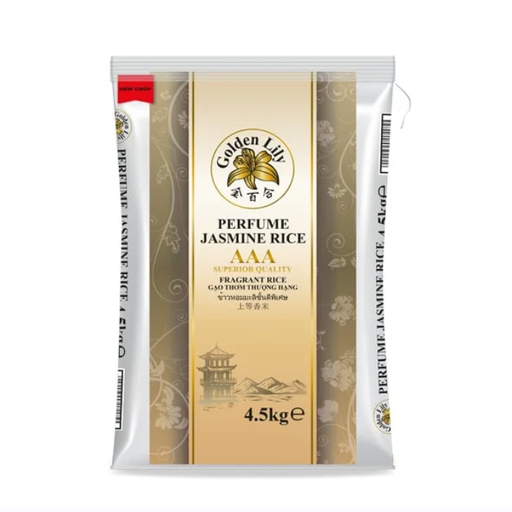
Why it suits this profile: The 4.5 kg pack is suitable if you cook rice regularly but do not want to build up a bulk supply. According to the product description, the rice becomes soft, slightly sticky and aromatic when cooked.
You do not have to choose an 18 or 20 kg bag straight away. The product information lists rice as the ingredient and provides clear storage instructions.
4.5 kg family-size pack; suitable for rice, porridge and everyday meals.
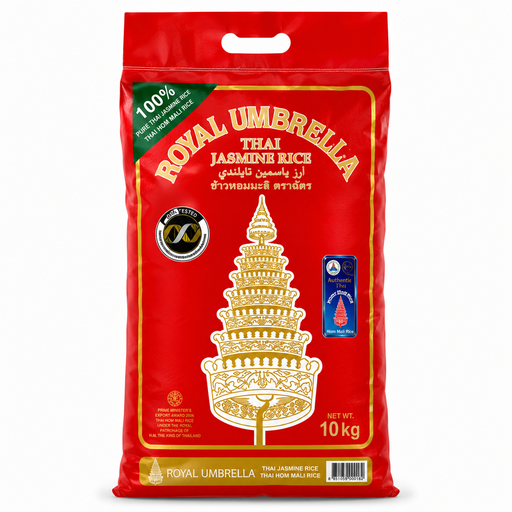
Why it suits this profile: This 10 kg pack contains 100% Thai Hom Mali rice from Thailand. According to the product description, the cooked rice is soft and fluffy, making it suitable for curries, stews and grilled meals.
The ingredients and origin are clearly stated, so you do not have to rely solely on terms such as “premium”.
100% Thai Hom Mali; 10 kg for families or regular use.
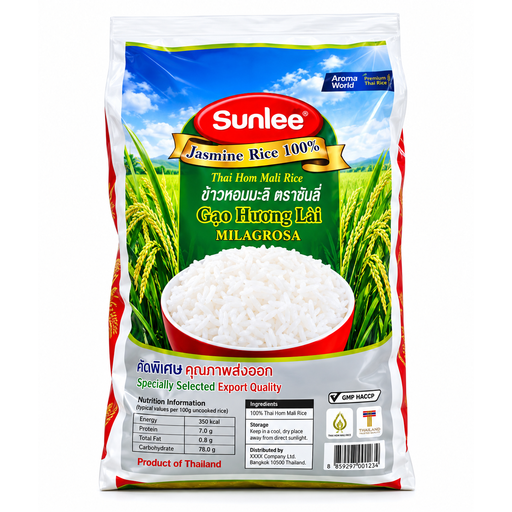
Why it suits this profile: This bulk pack is intended for restaurants, catering businesses and large families. According to the product description, it is long-grain rice with a soft texture and naturally sweet flavour.
The large quantity suits high-volume use, so you need to order smaller bags less often. However, check beforehand that you have enough dry storage space.
18 kg bulk pack; according to the product information, suitable for steamed rice, fried rice and Asian dishes.
We have put together a complete, up-to-date list of products that fully meet these strict selection criteria and the applicable European safety regulations.
Choose an aromatic long-grain variety that becomes soft and slightly sticky when cooked. Thai Hom Mali rice is intended for Thai and other Asian dishes, according to the product descriptions from several brands. Check the water ratio on the packaging, as too much water can make the rice mushy.
Unopened white jasmine rice generally has a long shelf life. The exact date is shown on the packaging. Once opened, it is best stored in a cool, dry and airtight container. Before use, check for moisture, an unusual smell or damaged packaging.
That depends on the price per kilo, special offers and how much rice you use. A large bag can be cost-effective for families, restaurants and caterers. For smaller households, a 4.5 or 5 kg pack may be more practical, as you will use the rice sooner and it is easier to store.
