
Vandaag of morgen in huis

Kwaliteit gegarandeerd

Welkomstaanbiedingen ontgrendelen: GRATIS bezorging | Tot 80% korting | Gratis 30 dagen JoyPlus-proefperiode
Download de app
Jasmine rice is popular with lovers of Thai curry, stir-fries and rice bowls. Yet many bags look very similar. Differences in origin, grain quality, packaging and pack size ultimately determine how much aroma and convenience you get.
If you focus only on words such as “premium”, “AAA” or “Hom Mali”, you may end up paying more without knowing exactly what is in the bag. With these practical checks, you can make a more informed choice between Thai jasmine rice, Cambodian jasmine rice and different pack sizes for home use or catering.
Terms such as AAA, “premium” and “selected” sound convincing, but they cannot always be compared directly between brands. So focus particularly on information that can be measured:
A product labelled “AAA jasmine rice” does not automatically have the same characteristics as another bag carrying the same description.
Thai Hom Mali rice comes from Thailand. Cambodian jasmine rice comes from Cambodia. Both varieties are sold as fragrant, long-grain rice, but the aroma, grain structure and moisture content can vary depending on the brand and harvest.
If you are looking for a particular flavour, it is worth checking the origin rather than relying solely on the name “jasmine rice”.
An 18 kg or 20 kg bag of jasmine rice, or even a 10 kg pack, may seem good value. This is particularly practical for restaurants, caterers and large families that prepare rice regularly. For a small household, however, such a bag takes up a lot of space and the rice must be stored in a properly sealed container.
For occasional use, 1 kg, 4.5 kg or 5 kg bags of jasmine rice are often easier to manage.
Pay attention to the difference between:
According to product information from Royal Umbrella, Sunlee and several other brands, their Hom Mali variety consists of 100% Thai Hom Mali jasmine rice. Other products are labelled simply “jasmine rice” or “white rice”. Therefore, always check the ingredients list and country of origin.
Jasmine rice is a type of long-grain rice, but the grains do not have to remain completely dry and separate after cooking, as is the case with some basmati rice. Product information often describes a soft, fluffy or slightly sticky texture.
For consistent results:
For example, Royal Tiger states a cooking ratio of approximately one part rice to one part water, while Golden Naga recommends a ratio of one to 1.2–1.5 for a specific pack. This difference shows why general cooking charts are not always sufficient.
Choose the pack size according to how much you use:
For large bags, consider your storage space and whether you can lift them comfortably. A smaller bag that is properly sealed may be more practical than a large pack left open for months.
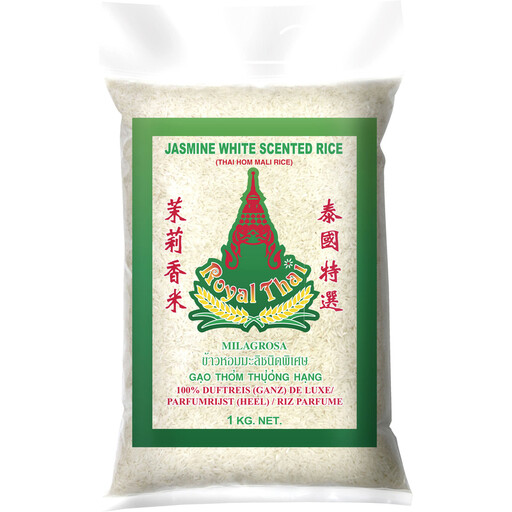
Why it suits this profile: The 1 kg pack is ideal if you want to try jasmine rice without immediately building up a large stock. The product information states Thailand as the origin and describes the rice as long-grain.
The manageable pack size reduces the risk of overstocking and makes it easy to assess the purchase based on its origin and ingredients.
1 kg, Thailand as the country of origin and 100% jasmine rice according to the product information.
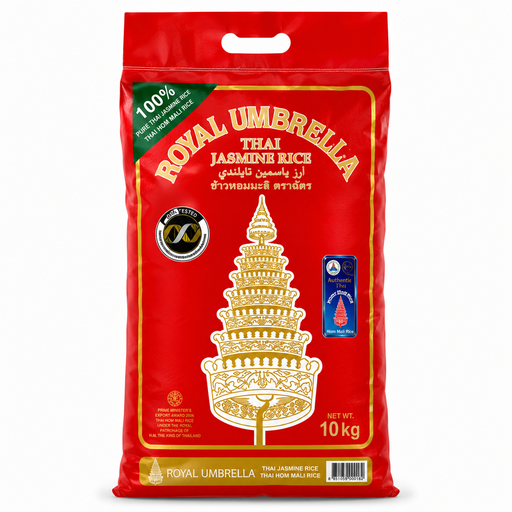
Why it suits this profile: This Thai Hom Mali rice is aimed at shoppers who value its origin and an aromatic rice variety but do not need an 18 or 20 kg bag.
The product listing explicitly states 100% Thai Hom Mali jasmine rice, making its origin easier to verify.
Thai origin, 10 kg net weight and a product description indicating a soft, fluffy texture after cooking.
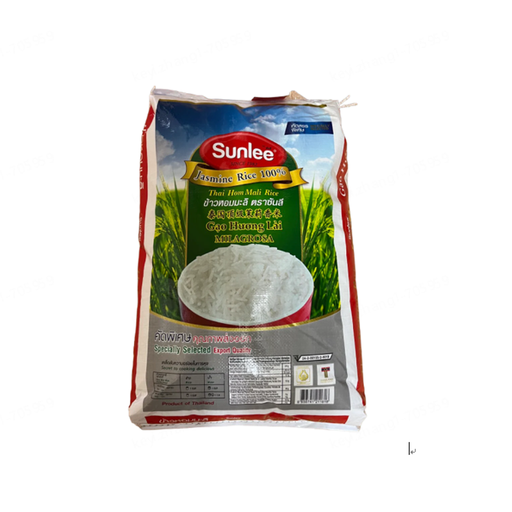
Why it suits this profile: The bulk pack is intended for restaurants, caterers, large families and other users who regularly prepare rice for Asian dishes.
The large pack suits regular consumption, so you do not need to buy small packs as often. However, storage in a dry, sealed space remains essential.
18 kg, Thai Hom Mali rice, long grains and suitable for steamed rice and fried rice according to the product information.
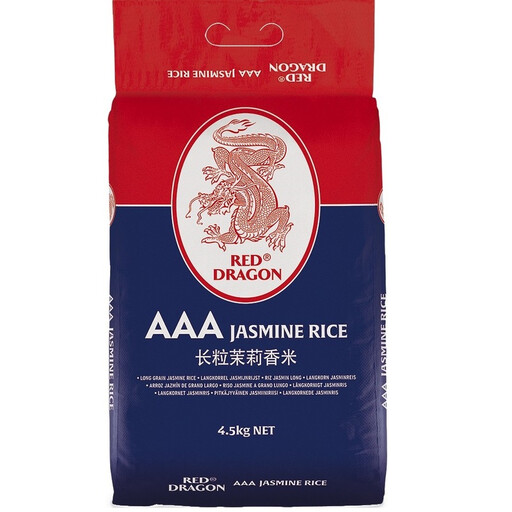
Why it suits this profile: The 4.5 kg bag is a practical middle ground for families and home cooks who regularly use fragrant rice and want to compare Cambodian rice with Thai varieties.
The product information states Cambodia as the origin, 100% Cambodian jasmine rice and a clearly specified net weight.
4.5 kg, long grains and suitable for stir-fries, curries and rice bowls.
We have put together a complete, up-to-date list of products that fully meet these strict selection criteria and the applicable European safety regulations.
No. Both are types of long-grain rice, but jasmine rice is generally described as softer and slightly stickier after cooking. Basmati usually remains more separate and has a different aroma. The choice depends on the dish and your preferred texture.
As a general guide, allow approximately 75 to 100 grams of uncooked rice per adult. You will often need less for a side dish; for a rice bowl or a meal with few other ingredients, a larger portion may be more suitable. Always follow the cooking instructions on the pack you have chosen.
Store the rice in a cool, dry place away from direct sunlight. Seal the bag carefully or transfer the rice to a clean, airtight storage container. Check the packaging and best-before information before use. With an 18 kg or 20 kg bag, dividing the rice between several containers is practical, as this prevents the entire stock from being exposed to moisture each time.
