
Vandaag of morgen in huis

Kwaliteit gegarandeerd

Welkomstaanbiedingen ontgrendelen: GRATIS bezorging | Tot 80% korting | Gratis 30 dagen JoyPlus-proefperiode
Download de app
Jasmine rice is popular with fans of Thai and Southeast Asian cuisine. It is known for its fragrant grains, soft bite and slightly sticky texture after cooking. Yet not every pack labelled “jasmine rice”, “AAA” or “Hom Mali” is automatically the same choice.
If you only look at the front of the bag, you could pay too much, choose impractical packaging or buy rice that does not suit your dish. With these checks, you can compare Thai jasmine rice, Cambodian jasmine rice and other types of long-grain rice in a practical way.
Words such as “premium”, “AAA” and “aromatic” only tell you something when the packaging also provides clear details. Always check:
A brand claim about fragrance, texture or quality is not a universal guarantee. According to the brand’s own information or the product description, for example, a type of rice may be described as soft, fluffy or fragrant. Treat this as a product feature to compare, not as a guaranteed result in every kitchen.
A 10 or 18 kg bag can be good value if you eat rice often, prepare meals in advance or run a professional kitchen. For a smaller household, however, this type of packaging can be inconvenient. Rice takes up space and, once opened, must be stored somewhere dry, sealed and protected from moisture.
Choose a size that you will use within a reasonable period. For many households, 1 kg, 4.5 kg or 5 kg are practical intermediate sizes. A large bag makes most sense when you serve rice regularly.
Jasmine rice is long-grain rice, but its cooking properties also depend on the variety, origin, processing and ratio of rice to water. Thai Hom Mali rice is often chosen for curries because of its fragrance. Cambodian jasmine rice also works well in rice bowls, stir-fries and everyday meals.
Also consider the difference between other Asian rice varieties. Japanese rice is generally fuller and stickier, basmati has a different aroma, and black glutinous rice is intended for dishes where a dark colour and firm, sticky texture are desirable.
The origin helps you compare products more effectively, but it does not determine the final cooking experience on its own. On Joybuy, you can find rice from Thailand, Cambodia and Vietnam, among other places.
Always check the ingredients list alongside the name. “100% jasmine rice” or “100% Thai Hom Mali rice” is clearer than a general description such as “aromatic rice”.
The packaging should suit your consumption and storage space. A 1 kg bag is manageable for a family that alternates between different types of rice. Sizes from 4.5 to 5 kg are useful for families that eat rice several times a week. A 10 or 18 kg bag is mainly suitable for heavy users, restaurants and catering businesses.
Store opened rice according to the product information: somewhere cool and dry, away from direct sunlight. Seal the bag properly or use a storage container with a lid. Before buying, check that the packaging is undamaged.
You should generally rinse jasmine rice before cooking. Use the water ratio stated on the packaging, as this can vary from one product to another. For example, Golden Naga Thai Jasmine Rice gives a ratio of approximately one cup of rice to 1.2 to 1.5 cups of water. Other rice may require a different amount.
Leave the rice to rest for a few minutes after cooking. This helps distribute the moisture evenly. Use jasmine rice for:
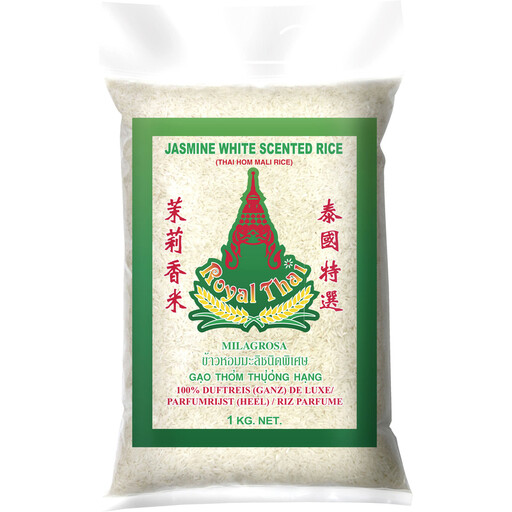
Why it suits this profile: The 1 kg pack is ideal if you want to try jasmine rice first or alternate it with other types of rice.
The net weight is clearly stated, and the product information lists Thailand as the origin and 100% jasmine rice as the ingredient.
1 kg, Thai origin, long grains and, according to the product description, suitable for Asian and international dishes.
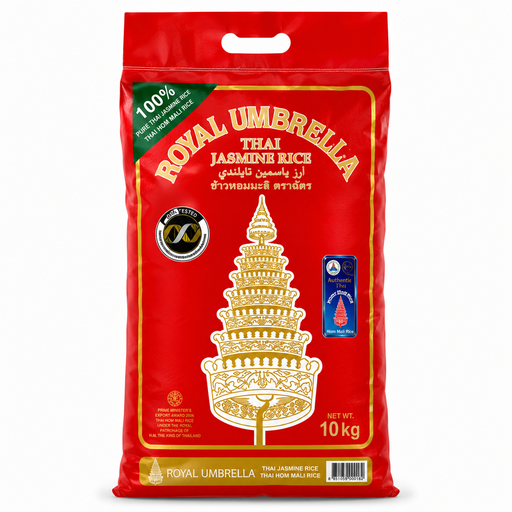
Why it suits this profile: This size is aimed at people who regularly cook Thai meals and value the Hom Mali designation.
The product details separately state 100% Thai Hom Mali jasmine rice, the weight and the Thai origin.
10 kg bulk pack, long-grain rice and, according to the product description, intended for curries, stews and grilled dishes.
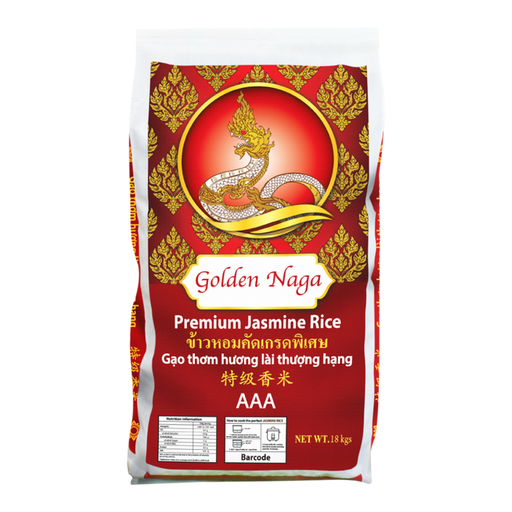
Why it suits this profile: The 18 kg bag is suited to restaurants, caterers and large households that prepare rice frequently.
The packaging states the net weight of 18 kg, a shelf life of 24 months and Cambodia as the country of origin.
100% white rice according to the ingredients list, a bulk pack and suitable for regular use.
We have put together a complete, up-to-date list of products that fully meet these strict selection criteria and the applicable European safety regulations.
Use the packaging as your starting point, then adjust the preparation to suit your rice cooker or pan. A practical method:
If you cook rice in advance for meal prep, cool it quickly and store it covered in the fridge. Always follow the food safety instructions on the packaging and use cooked rice within a suitable storage period.
Not every pack uses the same designation. Hom Mali is a name that may appear on Thai jasmine rice. Therefore, check the full product label, ingredients list and country of origin. A product labelled only “jasmine rice” provides less information about the specific variety.
Both Thai and Cambodian jasmine rice can be used with curry. Look for soft, fragrant long-grain rice if you want a rice that pairs well with creamy or spicy sauces. The exact texture depends on the variety, how it is rinsed and the amount of water used.
Check the best-before date on the packaging. How long rice remains usable after opening is mainly affected by moisture, heat and how well you seal the bag. Store the rice somewhere cool and dry, away from direct sunlight and in a tightly sealed container.
