
Vandaag of morgen in huis

Kwaliteit gegarandeerd

Welkomstaanbiedingen ontgrendelen: GRATIS bezorging | Tot 80% korting | Gratis 30 dagen JoyPlus-proefperiode
Download de app
Japanese teacups without handles pair well with sencha, matcha and Chinese gongfu tea. Without a handle, you hold the cup differently and get a better sense of how hot the drink is. At the same time, this type of cup requires careful consideration. An attractive glaze alone tells you little about capacity, ease of use or maintenance.
A 160 ml cup holds more than enough for a small serving of tea on paper. In practice, you will rarely fill a cup right to the brim. So check whether the stated capacity applies to each cup rather than the entire set. A set of four 160 ml teacups therefore means approximately 160 ml per cup, not 640 ml per individual cup.
A textured exterior can feel pleasant to hold, but may require more maintenance. Rough surfaces can make water or tea stains more noticeable. A smooth, glazed interior is generally easier to clean. Also check whether hand washing is recommended to keep the decoration or texture looking its best for longer.
A product description may state that a ceramic cup is suitable for use in the microwave and dishwasher. That does not automatically mean that a decorative outer layer will look the same indefinitely. For some models, hand washing is recommended even when dishwasher use is permitted. Also look out for warnings about sudden changes in temperature, such as filling a cold cup with boiling water.
For traditional tea drinking, 160 ml teacups are a practical size. They are suitable for small servings of sencha, green tea, oolong and sake. If you prefer to serve a slightly larger drink, a 205 ml cup may be more convenient. Larger mugs of 300 to 480 ml are mainly suitable for coffee, infusions or a long tea-drinking session, but have a different shape and appearance from Japanese teacups without handles.
Ceramic teacups retain heat reasonably well and feel sturdy. Porcelain is a ceramic material that often has a finer appearance. Check the specific product details: terms such as “jade porcelain” or “mutton fat jade porcelain” do not always describe a universally recognised material category.
For items that come into contact with food, it is sensible to look for information about the glaze used. The product information for the TEANAGOO models states that the ceramic is lead- and cadmium-free. This is a product specification provided by the seller, so always check the current product page and instructions for use before ordering.
A cup without a handle is usually held at the side or underneath. A ridged or rock-like exterior can provide extra grip, but may also be more difficult to clean. A smooth interior helps when rinsing away tea stains.
Also pay attention to temperature warnings. Ceramic can break if dropped or exposed to severe thermal shock. Do not use a cup if you notice cracks, chips or other damage.
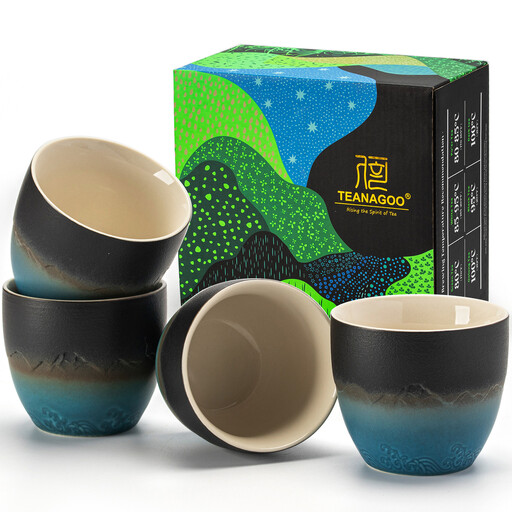
Why this suits the profile: The set contains four handleless 160 ml cups. This is a manageable size for everyday green tea, your first matcha session or a small tasting with guests.
The capacity, number of pieces and material are clearly stated. The product information recommends hand washing to preserve the textured exterior.
Porcelain ceramic, smooth glazed interior, four pieces per box and, according to the product description, suitable for use in the microwave and dishwasher.
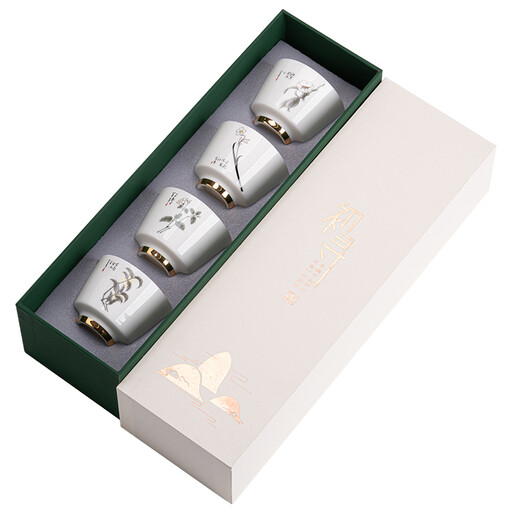
Why this suits the profile: This four-piece porcelain set will appeal to enthusiasts who pay particular attention to the material name, appearance and coordinated presentation on the tea table.
The set format ensures that individual cups do not look mismatched. However, check the current product page for capacity, dimensions and care instructions.
Four-piece set with porcelain named in the product title; suitable for comparison with other Japanese or Chinese teacups.
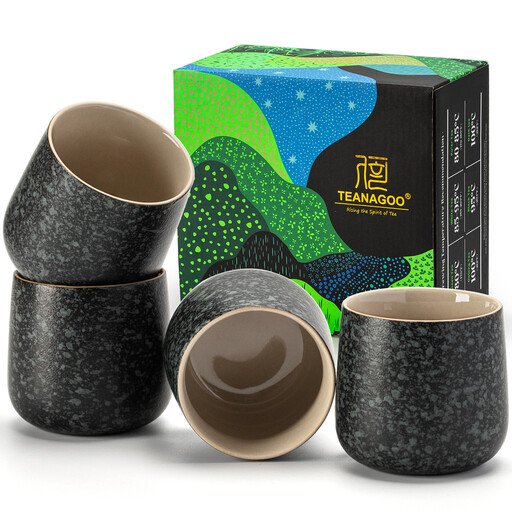
Why this suits the profile: The 205 ml capacity offers a little more room for sencha, genmaicha, matcha or a small coffee. According to the product description, the set is also suitable for sake.
The capacity per cup and number of pieces are specified. Hand washing is recommended to preserve the exterior texture, despite the stated dishwasher function.
Porcelain ceramic, smooth interior, 205 ml capacity and, according to the product information, suitable for use in the microwave, dishwasher, oven and freezer.
We have put together a complete, up-to-date list of products that fully meet these strict selection criteria and the applicable European safety regulations.
Rinse new cups with warm water and a mild washing-up liquid before using them for the first time. Do not pour hot tea straight into an ice-cold cup, and do not place a hot cup immediately on a very cold surface. This simple step reduces the risk of thermal shock.
For matcha, teacups without handles are mainly suitable for serving the prepared drink. For whisking, many enthusiasts use a wider matcha bowl, giving the bamboo whisk enough room to move. A 160 ml cup then works well as a serving size.
If you are looking for Chinese or Asian teacups for several rounds of gongfu tea, it is better to choose several small cups than one large mug. Check that a set of 4 or set of 6 really has the same capacity per cup. For tea and sake, a neutral, smooth interior can be practical, as it makes the colour and clarity easier to see.
Yes, provided that the material and care instructions make them suitable. Ceramic and porcelain are breakable, so check the cup regularly for cracks or damage. A model described as microwave- and dishwasher-safe may be more convenient, but hand washing can help preserve the finish for longer.
160 ml is a common practical size for small servings of green tea, oolong, matcha latte and sake. If you prefer a larger drink or also want to use the cup for coffee, consider a model of around 205 ml.
That depends on the shape, diameter and exterior texture. According to the product description, a textured exterior can provide extra grip. Do not overfill the cup and take care when handling hot ceramic. If in doubt, a model with a wider base or subtle texture is a sensible choice.
