
Vandaag of morgen in huis

Kwaliteit gegarandeerd

Welkomstaanbiedingen ontgrendelen: GRATIS bezorging | Tot 80% korting | Gratis 30 dagen JoyPlus-proefperiode
Download de app
A Japanese tea cup set without handles is ideal for sencha, genmaicha, matcha and Chinese tea. Its compact shape feels different in the hand from a regular mug and creates a calm look on the table. However, not all Asian tea cups are equally practical for everyday use.
Pay particular attention to three common pitfalls:
Below, you can read which features matter and which popular options suit different situations.
Capacity determines how you use the cups. 160 ml tea cups are suited to a traditional serving style, where you pour several small cups of tea. They take up little space and are suitable for a tea ceremony or tasting.
A capacity of around 200 ml offers a little more flexibility for everyday use. If you mainly drink matcha, sencha or Chinese tea, either size can work well. For coffee, milk-based drinks or a large infusion, a cup of 300 ml or more is more practical.
Pay attention to the difference between the stated capacity and the amount you can pour comfortably. Do not fill a cup right to the brim when serving hot tea.
Ceramic tea cups are popular for their sturdy appearance and wide choice of glazes. Porcelain is also a ceramic material, but is generally associated with a finer, lighter finish. The product name and description may use both terms, so check the exact material specification.
For everyday use, these points are relevant:
According to TEANAGOO’s product information, the 160 ml cups are made from porcelain ceramic and are free from lead and cadmium. This is a claim from the brand’s product specification; always check the current information on the product page before buying.
Dishwasher-safe tea cups are convenient when you use the set frequently. Microwave-safe tea cups are practical for reheating a drink, but watch out for metallic details such as gold-coloured rims. These are not automatically suitable for microwave use.
Even when a product states that it is suitable for dishwasher or microwave use, it is still sensible to take care:
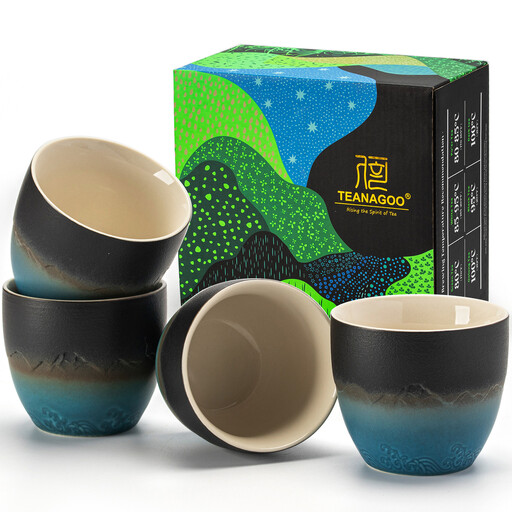
Why it suits this profile: This set of four Japanese tea cups combines a modest capacity with features designed for regular use. The cups are intended for Japanese and Chinese tea and have no handles.
The 160 ml capacity is clearly stated, and the product description mentions both microwave and dishwasher use. Hand washing is recommended to preserve the texture.
Set of four, porcelain ceramic, smooth glazed interior and a blue gradient with a textured exterior.
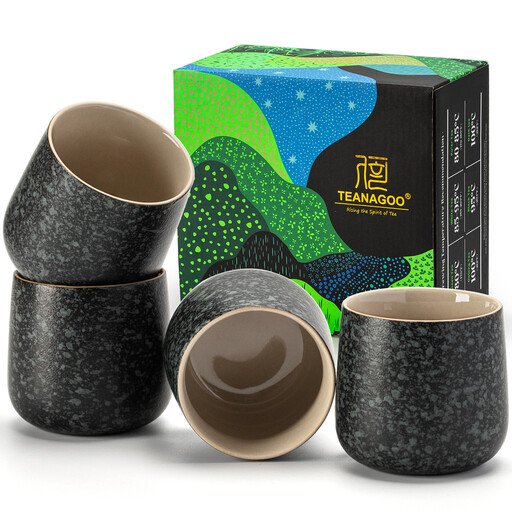
Why it suits this profile: The 205 ml capacity gives you slightly more room than a small 160 ml tea cup. It is well suited to drinking sencha, genmaicha, matcha or sake every day.
The description specifies a smooth, transparent glazed interior and includes care warnings for the textured exterior.
Set of four, porcelain ceramic, microwave- and dishwasher-safe according to the product information, plus suitable for oven and freezer use according to the stated specifications.
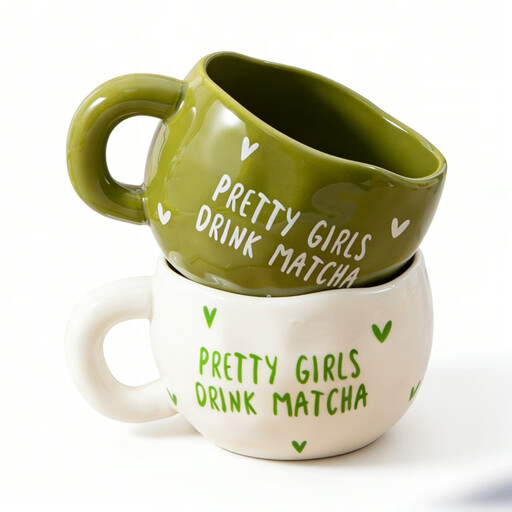
Why it suits this profile: A set of two is ideal for anyone who enjoys matcha together or is looking for a smaller set for a regular serving occasion.
The number of cups is stated in the product name. This means you will not buy a four-piece set when you specifically need two matcha cups.
Designed for matcha and supplied as a set of two. Check the current capacity and care information on the product page before buying.
The terms overlap, but do not always refer to the same type of model. Japanese tea cups without handles are often compact and cylindrical or slightly tapered. Chinese tea cups may be smaller and are often used with a gaiwan or small tea set. Matcha cups are usually wider, allowing you to use a bamboo whisk.
So choose based on how you will use the cups, rather than the name alone:
A set without handles becomes hot on the outside. Use a saucer, hold the cup lower down and do not serve the drink too hot. Ceramic can also break if dropped or exposed to significant temperature changes.
We have put together a complete, up-to-date list of products that fully meet these strict selection criteria and the applicable European safety regulations.
Yes, provided the material and care requirements suit your routine. If you use them frequently, choose a smooth interior and check that dishwasher and microwave use are explicitly stated. Bear in mind that the exterior may become hot.
This varies by model. 160 ml is a compact size for several small servings. Models of around 200 ml offer more room for everyday use. Always check the stated capacity, as product photos can make it difficult to judge the size.
Some are, while others are not. Check the product specifications and any warnings. A textured glaze, hand-painted decoration or metallic rim may benefit from hand washing, even when the manufacturer permits dishwasher use.
