
Vandaag of morgen in huis

Kwaliteit gegarandeerd

Welkomstaanbiedingen ontgrendelen: GRATIS bezorging | Tot 80% korting | Gratis 30 dagen JoyPlus-proefperiode
Download de app
Buying Japanese soft drinks seems straightforward until you have to choose between ramune, a fruity soda or a multipack. Product photos often show an eye-catching bottle, but reveal little about the contents, sugar content, bottle opening or storage method. As a result, you may end up paying mainly for the packaging, buying more than you can drink or choosing a flavour that is not right for the occasion.
With these practical selection points, you can compare Japanese ramune soft drinks and other sparkling Japanese beverages based on verifiable product information.
Ramune is known for its traditional bottle sealed with a glass marble. This makes opening it fun, but the packaging does not tell you whether you are buying a classic bubblegum flavour, melon, lychee, strawberry or sakura. Always check the flavour name and ingredients.
The HATA Original Ramune is described as having a bubblegum flavour. According to the product information, the melon, lychee and strawberry varieties each have their own aroma and colouring. If you are looking for a less sweet or more neutral sparkling drink, it may be better to explore another product category.
A 200 ml bottle is convenient for a single serving, but a box containing 30 bottles takes up considerably more space. When buying Japanese soda, check:
A single bottle is suitable for a birthday, film night or gift hamper. A multipack makes more sense for catering businesses, events or households where the drink is served regularly.
A fruit name does not automatically mean that the drink contains a large amount of fruit juice. Some ramune varieties mainly use flavourings, sugar, glucose-fructose syrup, carbon dioxide and food acids. For example, the product information for HATA Lychee Ramune lists carbonated water, sugar, glucose-fructose syrup, citric acid, lychee flavouring and colouring E133.
Read the label rather than relying solely on the front of the bottle. According to the information for various ramune products, the sugar content is around 8 to 10 grams per 100 ml, but the exact composition varies by flavour.
Compare the nutrition table per 100 ml. This prevents you from comparing a 200 ml bottle with a 330 ml can without taking the difference in serving size into account. For example, HATA Original Ramune lists 35 kcal and 8.5 grams of sugar per 100 ml. HATA Strawberry Ramune lists 39 kcal and 8.2 grams of sugar per 100 ml.
These are product details, not a health assessment. If you want to limit sugar or certain additives, it is sensible to check the current packaging before opening the drink.
A soft drink in a glass bottle requires a different opening method from a can. With ramune, you first remove the pull tab and then press the stopper down, allowing the marble to fall into the special chamber in the neck. Open the bottle on a flat, stable surface and hold the stopper down for a few seconds.
The product information advises parental supervision for young children. Do not try to remove the marble from the bottle. Also check that the seal is undamaged before use.
The product listings advise storing Japanese soft drinks in a cool place, away from direct sunlight and excessive heat. Once opened, the bottle should be refrigerated and consumed within the period stated on the packaging. Ramune is generally served chilled; this makes the carbonation more noticeable and suits the usual serving method.
Also pay attention to the country of origin. HATA Original and HATA Strawberry Ramune are listed as being made in Japan. However, not every sparkling drink with a Japanese appearance comes from the same place. Always check the product page and label.
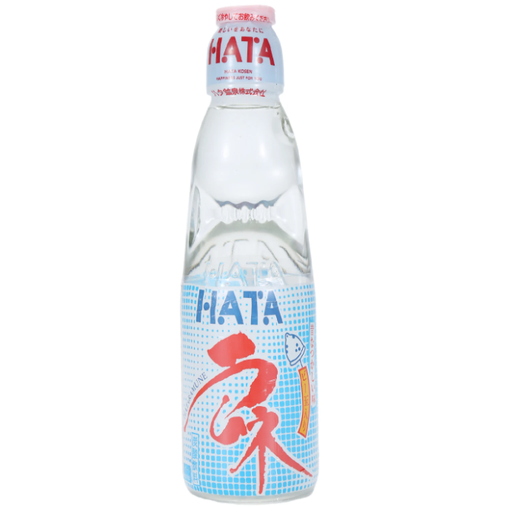
Why it suits this profile: A single 200 ml bottle offers an easy introduction to classic ramune and means you do not have to buy a large selection of flavours straight away.
The product name clearly identifies the classic bubblegum flavour, while the contents are stated as 200 ml. This gives you a more concrete idea of the flavour than an arbitrary fruit name would.
Traditional marble-sealed bottle; product information lists 35 kcal and 8.5 grams of sugar per 100 ml.
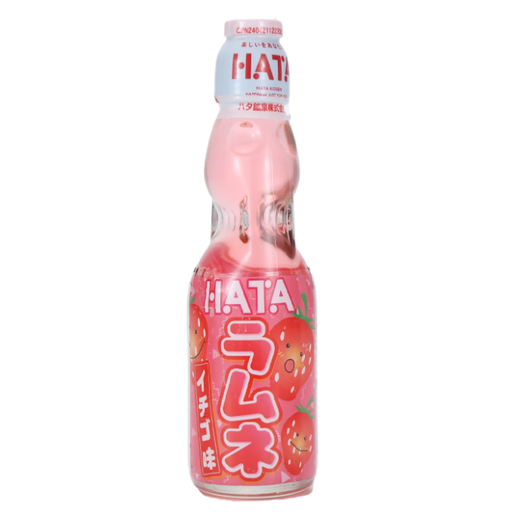
Why it suits this profile: This fruity soft drink combines a strawberry flavour with a glass bottle and traditional marble opening for a memorable serving experience.
The flavour, 200 ml contents and ingredients are listed separately. This lets you check the strawberry flavour and E129 colouring rather than relying solely on the packaging.
Made in Japan according to the product information; 39 kcal and 8.2 grams of sugar per 100 ml.
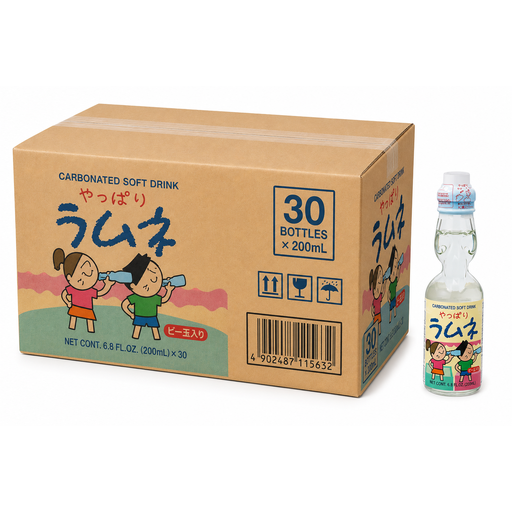
Why it suits this profile: A box of 30 bottles is practical for hospitality businesses, Japanese-themed evenings and households that serve ramune regularly.
The packaging clearly states 30 items of 200 ml each. You can estimate the total quantity and storage requirements in advance instead of looking only at the price per bottle.
30 bottles of 200 ml; product information lists 39 kcal and 9 grams of sugar per 100 ml.
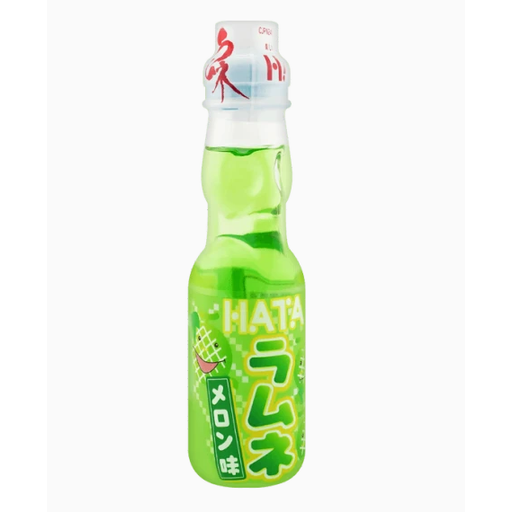
Why it suits this profile: The sweet-and-sour melon flavour and 200 ml format make this a fun drink for a party, barbecue or Japanese meal.
The product description explicitly mentions the melon flavour, carbonation and 200 ml contents. Always check the current packaging before buying.
Fruity, sweet-and-sour flavour according to the product description; 200 ml serving size.
We have put together a complete, up-to-date list of products that fully meet these strict selection criteria and the applicable European safety regulations.
Place the bottle upright on a flat, stable surface. Remove the pull tab and press the stopper down until the glass marble falls into the recess. Keep the stopper pressed down for a few seconds, then drink carefully. Do not try to remove the marble.
The exact shelf life is stated on the packaging. Store unopened bottles in a cool, dry place away from direct sunlight. Once opened, ramune should be refrigerated and consumed within the stated period. Always check the seal and label before use.
This depends on the size, packaging and import costs. A single 200 ml bottle of ramune may work out more expensive per litre than a multipack. Compare the price per bottle or per litre, and check the number of items as well. For one-off use, however, a single bottle may be better value than a box that will not be finished.
