
Vandaag of morgen in huis

Kwaliteit gegarandeerd

Welkomstaanbiedingen ontgrendelen: GRATIS bezorging | Tot 80% korting | Gratis 30 dagen JoyPlus-proefperiode
Download de app
Buying Japanese soft drinks online may seem straightforward, but product pages do not always make it immediately clear what you will receive. Is it a 300 ml bottle or a larger ramune bottle? Is the flavour sweet, fruity or lightly carbonated? And are you buying a single drink or a multipack?
For consumers in the Netherlands, three pitfalls are particularly relevant:
Japanese soft drinks are available in a range of sizes. A 300 ml Japanese soft drink is suitable as an individual serving, for taking on the go or when you want to try several flavours. A 500 ml bottle, such as Hata Ramune peach, is more practical when you are looking for one larger serving.
Also consider the type of packaging:
With a product such as the Hata soft drink 24 pack, it is a good idea to check the total quantity, storage space and expiry information in advance.
Always check the ingredients list when buying Japanese lemonade. According to the product information, HATA KOSEN HATASODA Mango contains carbonated water, sugar, glucose-fructose syrup, citric acid and mango flavouring, among other ingredients. The stated nutritional value is 37 kcal and 9.1 grams of sugar per 100 ml.
According to the product information, Hata Soda White Peach 300ml contains carbonated water, sugar, white pear juice from concentrate, citric acid, natural flavourings and potassium sorbate as a preservative. The stated value is approximately 38 kcal and 9.5 grams of sugar per 100 ml.
Check the current packaging with every order. Product information may change, and the packaging contains the most up-to-date details about:
Store unopened bottles in a cool, dry place away from direct sunlight. Once opened, the drink should be refrigerated according to the product information and consumed within the stated period.
If you enjoy sweet, smooth fruit flavours, consider white peach soft drink, mango soft drink or another fruit variety. Mango generally has a distinctive tropical flavour profile. White peach is often milder and more floral, while ramune is known for its combination of carbonation, sweetness and distinctive bottle shape.
Bear in mind that flavour descriptions cannot guarantee that everyone will experience the same taste. According to the product information, Hata Japanese Ramune Peach Lemonade is described as a refreshing peach-flavoured drink. The ingredients list water, sugar, fructose syrup, carbon dioxide, citric acid and flavourings. The stated nutritional value is 43 kcal per 100 ml.
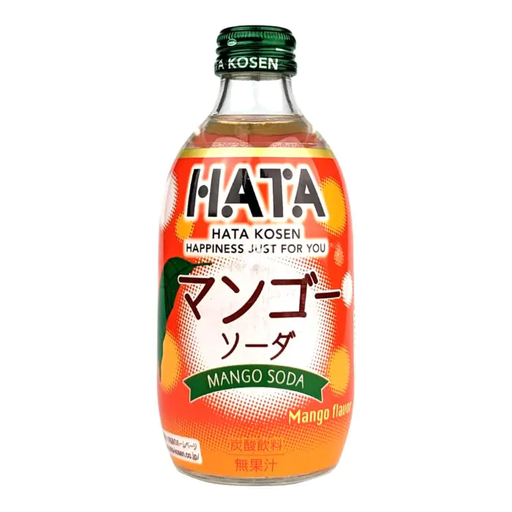
Why it suits this profile: A single 300 ml bottle makes it easy to try Japanese soft drinks for the first time. The mango flavour profile is a good match for anyone who enjoys sweet, tropical drinks.
The volume and nutritional values are clearly stated, so you do not have to rely solely on the flavour name or appearance.
300 ml per bottle; 37 kcal and 9.1 g of sugar per 100 ml according to the product information.
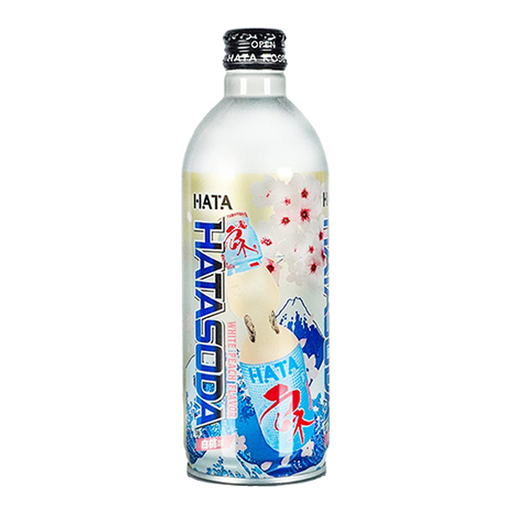
Why it suits this profile: This larger bottle is ideal if you are specifically looking for Japanese ramune with a peach profile and distinctive presentation.
The product page states the volume, ingredients and nutritional values. This allows you to compare products per 100 ml rather than simply judging the bottle.
500 ml volume; peach flavour; according to the product information, none of the 14 major EU allergens are indicated.
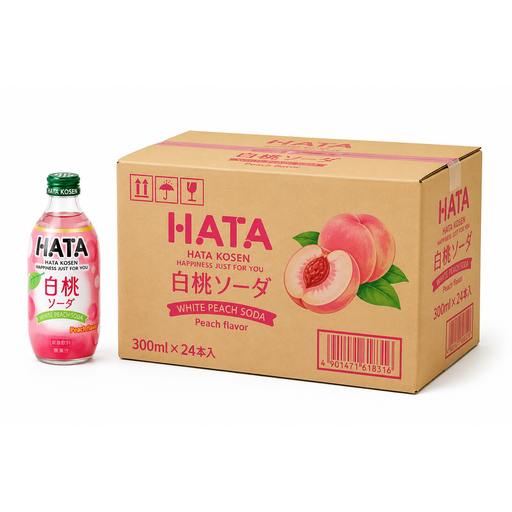
Why it suits this profile: A box of 24 small bottles is ideal for households, parties and anyone who regularly wants to serve a fruity Japanese soft drink.
The number of bottles and the size are clearly stated. This lets you work out in advance how much stock you are buying and where you will store it.
24 glass bottles of 300 ml; white peach flavour; approximately 38 kcal and 9.5 g of sugar per 100 ml according to the product information.
We have put together a complete, up-to-date list of products that fully meet these strict selection criteria and the applicable European safety regulations.
Ramune is a type of Japanese carbonated soft drink, often available in fruity flavours such as peach. Japanese lemonade is a broader term that may also cover other soft drinks. So check the product name, volume and ingredients.
The exact shelf life is stated on the packaging. Store unopened bottles according to the instructions provided, preferably somewhere cool and away from direct sunlight. Once opened, the bottle should be sealed, refrigerated and consumed within the stated period.
That depends on the sale price, delivery costs and how much you will actually use. A multipack can be practical for a party or regular use, while single bottles are more suitable for trying a flavour such as mango or Hata Ramune peach first. Always check the number of bottles and calculate the price per 300 ml.
