
Vandaag of morgen in huis

Kwaliteit gegarandeerd

Welkomstaanbiedingen ontgrendelen: GRATIS bezorging | Tot 80% korting | Gratis 30 dagen JoyPlus-proefperiode
Download de app
Buying a Japanese soft drink might seem straightforward: pick an eye-catching bottle, choose a flavour and add it to your basket. However, there are clear differences in size, sugar content, ingredients, origin and ease of use. This applies whether you're buying a single Ramune for an anime party, or purchasing Japanese drinks in bulk for a café or office.
What's more, the striking packaging doesn't always tell the full story. So watch out for three common pitfalls:
For personal use, bottles of 200 ml to 300 ml are handy. You can try different Japanese sodas without building up a large stock. For a party, shop or café, a pack of 24 or 30 is more efficient. Look at the total volume, shelf life and storage space.
Ramune often comes in a distinctive codd-neck bottle with a marble as a stopper. That's part of the drinking experience, but it also means the bottle isn't suitable for resealing. Chill the drink beforehand and consume it after opening according to the instructions on the label.
Compare the nutritional information per 100 ml, not just per bottle. For example, the Ramune Mochi Fl from Hatakosen states around 40 kcal and 10 grams of sugar per 100 ml. The Sakura variant states 35 kcal and 8.7 grams of sugar per 100 ml. By putting these values side by side, you can better see what difference a flavour variant actually makes.
Also check whether a product contains fruit juice or is mainly made up of flavourings. The Tomomasu Miyazaki Mango Ji cider lists mango juice, honey, fructose-glucose syrup and flavouring among its ingredients. That makes the product interesting if you're after a tropical taste, but it's not the same as a drink with a high mango content.
Always read the current label. Product information on a webpage may differ from the packaging. Pay particular attention to milk ingredients, gluten, peach and colourings. The Nittoh Instant Royal Milk Tea, for example, lists lactose as an allergen. The AGF Blendy CAFE LATORY Peach Tea lists peach.
Also look at:
According to the product information, ITOEN OI-OCHA green tea contains no added sugar and states 0 kcal and 0 grams of sugar per 100 ml. That's a verifiable product specification, not a general health claim. For other products, recipes and labels may change, so check the packaging before use.
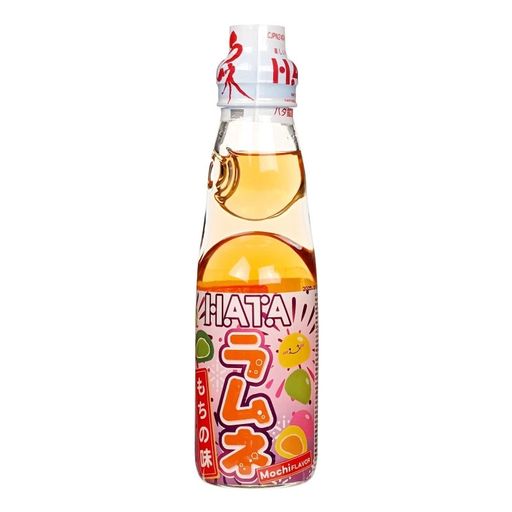
Why this fits the profile: A compact bottle to get to know Ramune soft drink without committing to a large pack straight away. The marble stopper provides the recognisable drinking experience.
The size and stated nutritional values are clear: 200 ml and around 40 kcal per 100 ml. This means you can compare flavour, content and price effectively.
200 ml, carbonated, ingredients based on carbonated water, sugar, flavouring and citric acid; according to the product information, free from the 14 main EU allergens.
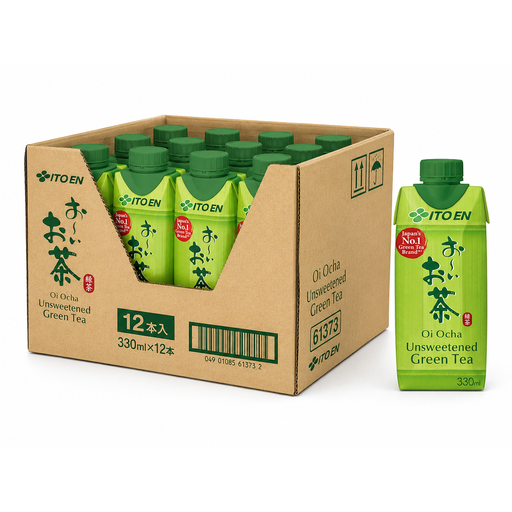
Why this fits the profile: Ideal for anyone looking for a less sweet Japanese drink for daily use, lunch or a chilled tea break.
The product information explicitly states 0 grams of sugar and 0 kcal per 100 ml. So you don't have to rely on a green packet or general terms like "light".
330 ml per bottle, 12 per pack, Japanese green tea and no added sugar according to the stated product specifications.
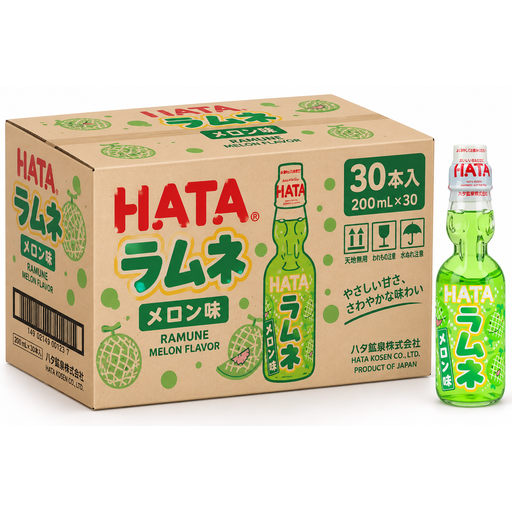
Why this fits the profile: A practical stock for parties, a Japanese speciality shop, events or catering where individual bottles are served quickly.
The bulk pack means you don't have to order individual bottles for every event. The content per bottle remains a manageable 200 ml.
30 bottles, melon flavour and stated nutritional values of 42 kcal and 10.6 grams of sugar per 100 ml. Check the current packaging for the full ingredients list.
For a gift or tasting, the JP Hatakosen Ramune Sakura Soda suits fans of striking packaging and sakura design. If you'd rather try a fruity Japanese fruit drink, take a look at the Tomomasu Miyazaki Mango Ji cider 245 ml. According to the product information, this drink contains 0% alcohol.
For home use, instant varieties are practical. The Nittoh Instant Royal Milk Tea can be made up hot or cold according to the preparation instructions. The Tbest Zitrus Yuzu Tea can be mixed with hot or cold water and can also be used in desserts or on toast. Bear in mind that this yuzu preparation comes from South Korea according to the product information, despite its strong association with Japanese tea and Japanese flavours.
We've put together a full, up-to-date list of products that fully meet these strict selection criteria and comply with current European safety regulations.
Ramune is a carbonated Japanese lemonade in a recognisable bottle with a glass marble as a stopper. The drink is usually sweet and available in flavours such as melon, lychee, strawberry, muscat and sakura.
The shelf life information is on the packaging. Store unopened bottles according to the storage advice, usually cool, dry and out of direct sunlight. Once opened, Ramune should be kept chilled and drunk within the stated period.
No. Check the country of origin for each product. The ITOEN OI-OCHA states Japan as the country of origin. The Oishi Green Tea Honey Lemon is produced in Thailand according to the product information. The term Japanese green tea can therefore refer to the style, the recipe or the origin; the label makes the difference.
