
Vandaag of morgen in huis

Kwaliteit gegarandeerd

Welkomstaanbiedingen ontgrendelen: GRATIS bezorging | Tot 80% korting | Gratis 30 dagen JoyPlus-proefperiode
Download de app
When buying Japanese snacks, shoppers often look first at the flavour and packaging. However, it is mainly the texture, portion size, ingredients and usage warnings that determine whether a purchase is right for you. Colourful packaging can conceal a small portion, while terms such as “fruity”, “vegan” or “light” do not automatically mean that a snack matches your preferences.
In this buying guide, we compare mochi, konjac jelly and other Asian snacks based on verifiable product information. This helps you choose more confidently, whether you want a snack for the journey, a treat to share or a box of Japanese treats for home.
The proportion of fruit juice varies considerably between fruity snacks. According to the product information, Orihiro Prunto Konjac Jelly Peach contains 23% fruit juice from peach and apple. WANT WANT Konjac Jelly Orange, on the other hand, lists 0.1% concentrated orange juice. The fruit flavour therefore comes not only from juice, but also from flavourings and other ingredients.
So check the ingredients list and the QUID declaration: the percentage of a highlighted ingredient.
A low-calorie jelly may contain little energy, yet still include sweeteners, sugars or several thickening agents. For example, Hethstia Konjac Jelly Apple lists 3 kcal per 100 grams and erythritol as a sweetener. WANT WANT Apple lists 89 kcal per 100 grams and 20.5 grams of sugar.
Use the nutritional information as a point of comparison, not as a health claim. Also check the portion size: a 155-gram pouch and six mini portions of 20 grams each are not directly comparable.
Konjac jelly and other chewy snacks are elastic and slippery. Some packs are therefore designed to push the jelly out in a controlled way. Orihiro advises holding the pack with both hands, pushing the jelly out and chewing it in several bites. WANT WANT states that the product is not suitable for young children and must not be swallowed whole.
Always follow the instructions on the packaging. Do not automatically give a jelly snack to young children, even when the portion is small.
Mochi is usually made with glutinous rice flour and has a soft, elastic outer layer. The filling or flavour can range from ramune and grape to mango, coconut or matcha. This makes mochi suitable for lovers of sweet snacks with a satisfying bite.
Konjac jelly has a smooth, springy texture. Some varieties come in individual mini portions, while others are supplied in a squeeze pouch. Choose mini portions for sharing or controlled snacking, and a pouch for use at the office, on a day out or while travelling.
Always check the following before buying:
For allergy information, always follow the packaging. Product details may change, and trace-allergen information is not always provided in full in an online description.
Mochi generally contains a relatively high amount of carbohydrates. Seiki Ramune Mochi lists 220 kcal and 54 grams of carbohydrates per 100 grams. Seiki Kyoho Grape Mochi lists 235 kcal per 100 grams. With a snack containing several individually wrapped pieces, it is useful to calculate how much one piece weighs.
Jelly products may contain little energy per portion, but their sugar content can vary considerably. So compare both per 100 grams and per pack.
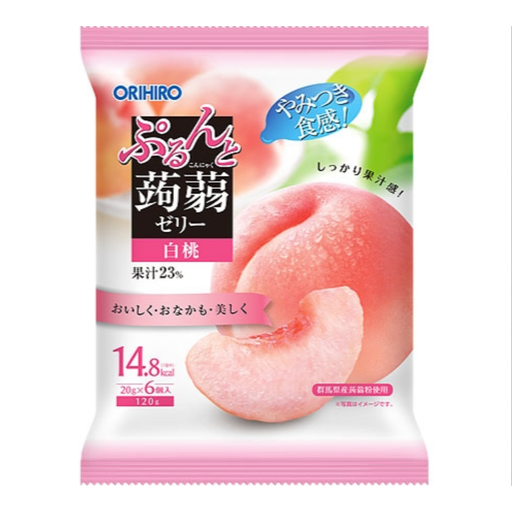
Why it suits this profile: Six separate 20-gram portions make it easy to try Japanese jelly in a manageable way. The peach flavour is combined with 23% fruit juice.
The juice percentage is stated, and the portions are not concealed inside one large pack. However, follow the stated eating instructions.
6 × 20 g, 74 kcal per 100 g and push-out packaging.
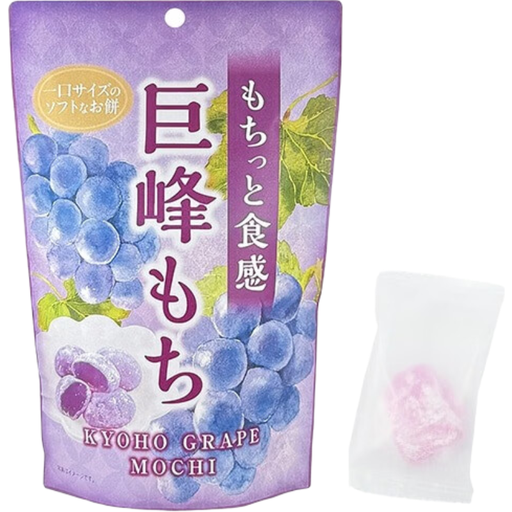
Why it suits this profile: This Japanese mochi combines a soft, chewy texture with Kyoho grape juice. Individually wrapped pieces are practical for enjoying with tea or giving as a gift.
The product information lists the juice separately and does not mention any of the main allergens. Check the current packaging before eating.
130 g, 235 kcal per 100 g and individually wrapped mochi.
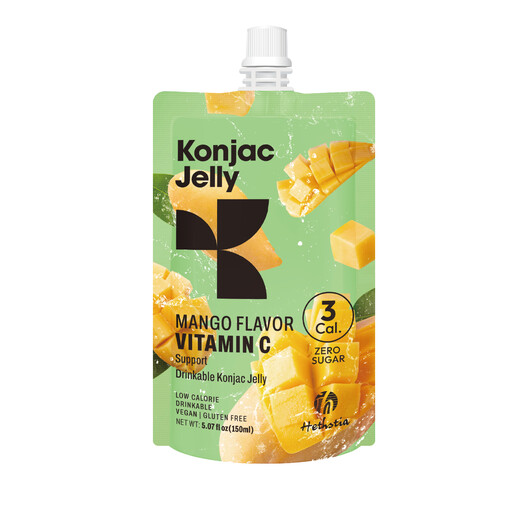
Why it suits this profile: The squeeze pouch is lightweight and ready to use at the office, while travelling or outdoors. The product information lists mango, konjac flour and erythritol.
The portion is one 155 g pouch, so you know in advance how much you are taking with you. According to the description, the product should be refrigerated after opening and used within two days.
155 g, 3 kcal per 100 g according to the product information and a portable squeeze pouch.
We have put together a complete, up-to-date list of products that fully meet these strict selection criteria and the applicable European safety regulations.
Mochi is usually made with glutinous rice flour and has a soft, dough-like texture. Konjac jelly is made with konjac powder and has a smooth, springy texture. Both are chewy snacks, but the eating experience and ingredients are clearly different.
Store unopened products according to the label, usually in a cool, dry place away from direct sunlight. Mochi often needs to be eaten soon after opening. Some varieties must be kept refrigerated. Always check the best-before date, storage conditions and instructions for use after opening.
It depends on the product. Some Fruittella products are labelled as vegan, while various mochi varieties contain gelatine, milk or butter. Hethstia Mango lists collagen peptides and therefore may not fit every vegan choice without further checks. Check the full ingredients list and allergen information before buying.
