
Vandaag of morgen in huis

Kwaliteit gegarandeerd

Welkomstaanbiedingen ontgrendelen: GRATIS bezorging | Tot 80% korting | Gratis 30 dagen JoyPlus-proefperiode
Download de app
A bottle of Japanese ramune soft drink stands out immediately thanks to its glass packaging and the marble in the neck. That is why this Japanese soda is popular with anime fans, Japan enthusiasts, families and party organisers. However, flavours, bottle sizes, ingredients and pack sizes can vary considerably from one product to another.
If you buy ramune without comparing your options, you are most likely to encounter three pitfalls:
The most common size is 200 ml ramune. This is a relatively small portion, making it suitable for a party, treat or tasting session. The bottle is made of glass and sealed with a marble in the neck, also known as a codd-neck bottle.
Some varieties are larger. HATA KOSEN HATASODA White Peach, for example, comes in a 300 ml bottle. This may be a better choice if you want a slightly larger serving, while 200 ml remains a manageable size for an assortment containing several flavours.
When buying boxes, check the total number of bottles. A pack of 30 × 200 ml contains 6 litres of drink. This is appealing to party organisers, gift shops and Asian supermarkets, but check beforehand that you have enough storage space.
The search term strawberry ramune usually refers to a sweet, fruity flavour. Peach varieties often have a softer, confectionery-style aroma. Sakura versions are mainly chosen for their Japanese look and the floral theme of the packaging.
Always check the ingredients list. The available product information includes:
HATAKOSEN Ramune Raspberry, for example, lists colour E129. The product description for HATA KOSEN HATASODA White Peach states that it contains no artificial colourings or preservatives, while the ingredients list does mention potassium sorbate as a preservative. This discrepancy is a reason to check the physical packaging before consuming the drink.
Ramune is a soft drink, not a sugar-free beverage, unless this is clearly stated on the product. The stated values vary by flavour:
The sugar content in the product information is often around 8.5 to 9.7 grams per 100 ml. Use these figures for comparison, but base your final choice on the current packaging. Product information and labels may vary between import batches.
The marble is an important part of the ramune experience, but the bottle requires a little more care than a standard soft drink bottle.
Do not open the bottle at an angle or shake it beforehand. The carbonation pressure can cause the drink to foam. Supervision is advisable when young children are drinking it. The marble is designed to remain inside the bottle; do not try to remove it.
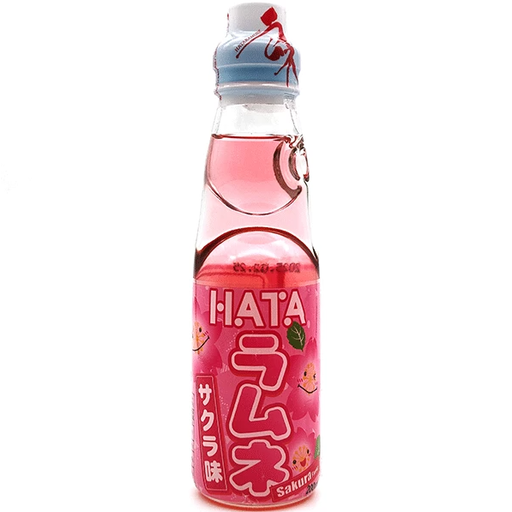
Why it suits this profile: A single 200 ml bottle is an easy way to try ramune without immediately buying a full box.
You do not have to order a large selection of flavours in advance. However, check the ingredients and nutritional values on the label.
200 ml, glass codd-neck bottle, sakura design and approximately 35 kcal per 100 ml according to the product information.
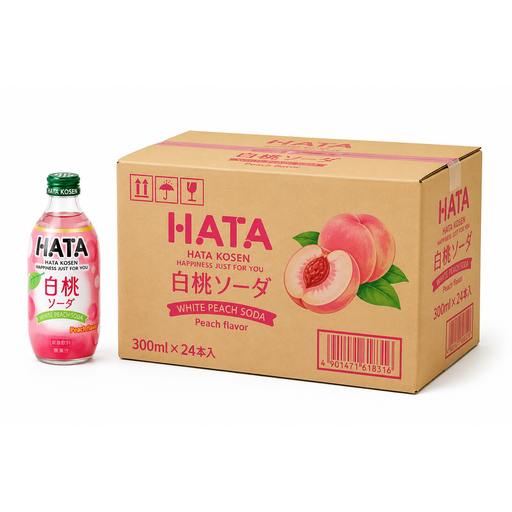
Why it suits this profile: The white peach flavour and larger size are ideal for buyers looking for a recognisable fruit variety for several occasions.
The contents and box size are clearly stated: 24 glass bottles of 300 ml. Check the conflicting information about preservatives on the physical label.
300 ml per bottle, white peach flavour and approximately 38 kcal per 100 ml according to the product description.
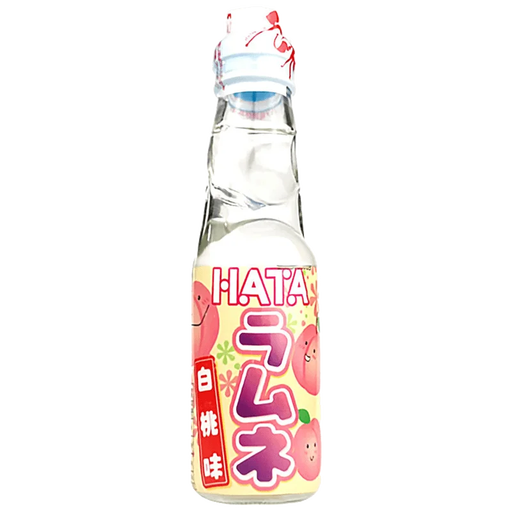
Why it suits this profile: This box is practical for birthdays, Japanese-themed evenings, gift shops and Asian supermarkets.
The packaging makes the total volume clear: 30 bottles of 200 ml. This lets you assess your stock and storage requirements in advance.
30 glass ramune bottles, 200 ml each and a sweet peach flavour according to the product information.
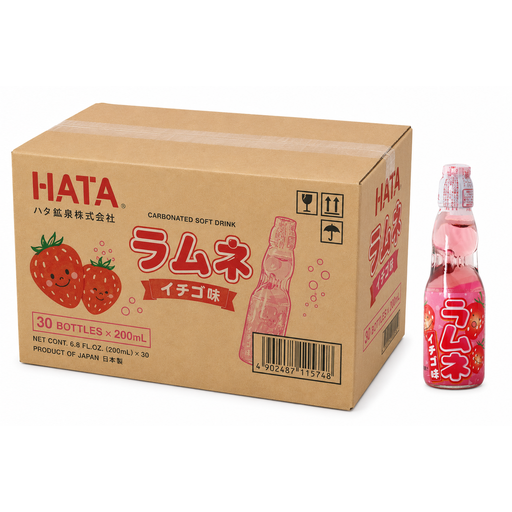
Why it suits this profile: The strawberry flavour is familiar to children and adults alike, and works well as an eye-catching drink on a buffet or party table.
The box contains a set number of identical bottles, so you do not have to rely on loose stock during an event.
30 bottles of 200 ml, strawberry flavour and approximately 47 kcal per 100 g according to the stated nutritional information.
We have compiled a complete, up-to-date list of products that fully meet these strict selection criteria and the applicable European safety regulations.
Place the bottle securely on a stable surface first, then gently press the marble down with the supplied opener. Hold the opener in place briefly after the marble has been released. Open the bottle chilled, and not immediately after shaking it.
The shelf life is stated on the packaging. Store unopened bottles in a cool, dry place away from direct sunlight. Once opened, ramune should be refrigerated and consumed within the stated period. Always check that the seal is intact.
No. Alongside strawberry ramune and peach, you can also find sakura, raspberry and white peach flavours. The flavour, colour, nutritional value and ingredients vary by brand and version. Therefore, check the label of the specific bottle before ordering.
