
当日/次日达

品质保障

开启新人专享福利: 全场免邮 | 低至 2 折 | 免费试用 30 天 JoyPlus 会员
下载 Joybuy
Buying Japanese Ramune seems simple: choose a fruit flavour, add a multipack to your basket and you’re done. However, there are a few points that consumers in the Netherlands often only consider after buying. For example, you might end up with a large box containing one flavour when you actually wanted variety, a glass bottle that is less practical for young children, or a product whose ingredients do not suit your preferences.
In this buying guide, you’ll learn what to look out for when choosing Ramune soft drinks, Hatakosen Ramune and similar Asian soft drinks. This will help you make a more informed choice for home, a party, an anime event or a catering business.
A soft drink in a marble bottle immediately stands out. The glass marble and push-to-open design are part of the classic Ramune experience. However, this also means that you need to open the bottle carefully and place it on a stable surface. Adult supervision is advisable for young children. The marble should remain in the bottle and must not be removed.
If you’re mainly looking for a convenient drink to take on the go, a can or standard bottle may therefore be a better choice. If the Japanese presentation and opening ritual are important to you, glass-bottled Ramune offers a more authentic experience.
Many Hatakosen Ramune packs contain 30 bottles of 200 ml. This is practical for a party, shop stock or a large group, but less suitable if you want to try several flavours first. Always check:
A multipack is not automatically better value if part of it remains unused. For a first order, a smaller pack such as GENKI Ramune Strawberry 200 ml or HATA Strawberry Ramune 200 ml may be more convenient.
Words such as ‘refreshing’, ‘classic’ or ‘fruity’ mainly describe how a product is positioned. For an objective comparison, check the ingredients list, nutritional values, allergens and volume. Some flavours contain colourings. For example, the product information for Hatakosen Ramune Mango states that E102 and E129 may have an adverse effect on activity and attention in children.
The information on the packaging takes precedence. Product packaging and online product information may differ, for example following a recipe or label change.
The most common Ramune size in the range is 200 ml per glass bottle. This is smaller than a 330 ml can, making it suitable as a portion for a snack break or party. A box of 30 bottles contains 6 litres of drink, but also requires sufficient storage space.
Glass gives the bottle a traditional appearance, but makes the packaging heavier and more fragile than a can. Store the bottles in a cool, dry place, away from direct sunlight and high temperatures. Serve Ramune chilled for the flavour and carbonation experience mentioned in the product description.
Ramune is available in a wide range of flavours. Alongside the familiar lemon-style base, options include:
Pay attention to the difference between flavouring and actual fruit or fruit juice. Many Ramune products list an aroma or flavouring among their ingredients. This means something different from a high percentage of fruit juice.
Compare the nutritional information per 100 ml, rather than looking only at the figures for the whole bottle. For example, Hatakosen Ramune Lychee lists 39 kcal and 9.4 grams of carbohydrates per 100 ml. In a 200 ml bottle, the amount is doubled compared with that reference quantity.
Also check sweeteners and allergens. Lotte Milkis Strawberry Soda contains milk components and soya, while various Ramune products are stated, according to the available information, not to contain any of the 14 main EU allergens. For children, guests with allergies or sales in a catering business, checking the current label is essential.
The following selection is based on verifiable details such as volume, packaging, flavour, ingredients and box size.
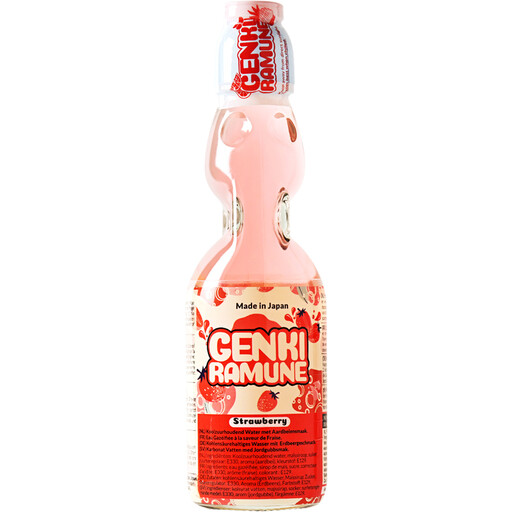
Why it suits this profile: The individual 200 ml bottle makes it easier to try strawberry Ramune without immediately ordering a box of 30.
You’re not committed to a large multipack straight away, so you can assess the packaging, flavour and opening method for yourself.
200 ml, glass marble bottle and strawberry flavour; according to the product information, 39 kcal per 100 ml.
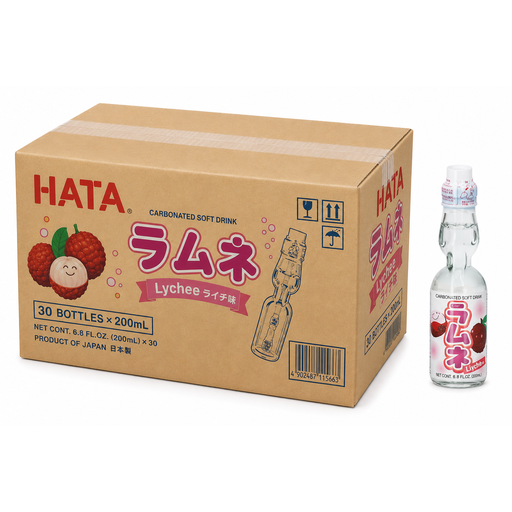
Why it suits this profile: This box is aimed at enthusiasts who want to stock up on one flavour for multiple drinking occasions or build a collection of Japanese soft drinks.
The box size and volume per bottle are clearly stated, so you can work out in advance how much stock you actually need.
30 glass bottles of 200 ml, lychee flavouring and 39 kcal per 100 ml according to the stated nutritional information.
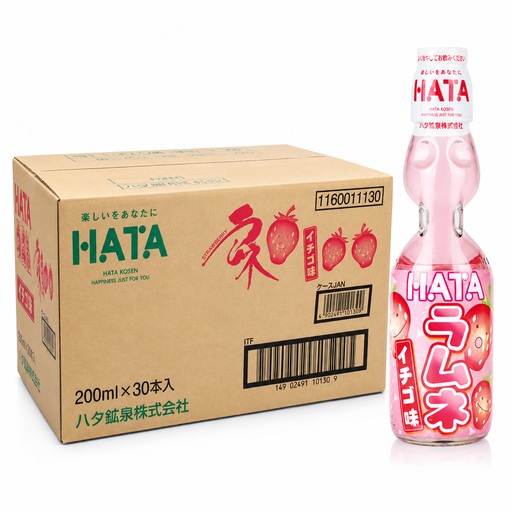
Why it suits this profile: The large multipack is suitable for party organisers, online shops, catering businesses and households that serve Ramune regularly.
The stock quantity is specified per box. This prevents you from ordering too few bottles for an event or having to combine individual packs.
30 bottles of 200 ml, strawberry flavour and a traditional glass bottle with marble stopper.
We’ve put together a complete, up-to-date list of products that fully meet these strict selection criteria and the applicable European safety regulations.
First, place the bottle upright on a flat surface. Remove the seal and use the opener provided to press the glass marble downwards. Keep the plunger pressed briefly, as the carbon dioxide pressure may cause foaming. Do not open the bottle if the seal is damaged.
Store unopened Ramune in a cool, dry place. Once opened, the bottle should be refrigerated and consumed within the period stated on the packaging. The glass bottle and fixed marble stopper make it less suitable for rough transport or use by young children without supervision.
You can order Japanese soft drinks online through product pages offering individual bottles and multipacks. When comparing options, look at the volume, number of items, flavour, ingredients and current information on the label. A box of 30 × 200 ml is practical for a party or business stock, while an individual bottle is often the more sensible choice for trying Ramune for the first time.
Strawberry is an approachable choice if you’re used to fruity soft drinks. Lychee has a distinctly sweet, aromatic character. Mango and pineapple are closer to tropical flavours, while blueberry has a pronounced fruit profile. Taste is personal, so if you’re unsure, order a smaller pack first.
Ramune contains carbonation and often sugar or syrup. Check the nutritional information and ingredients carefully. Some varieties list colourings accompanied by a mandatory warning. Because of the glass marble bottle, adult supervision is advisable when opening it. Always read the current packaging before serving the drink.
