
Vandaag of morgen in huis

Kwaliteit gegarandeerd

Welkomstaanbiedingen ontgrendelen: GRATIS bezorging | Tot 80% korting | Gratis 30 dagen JoyPlus-proefperiode
Download de app
Japanese biscuits are popular with fans of sweet snacks, unusual flavour combinations and handy portion packs. Think matcha, strawberry, milk, chocolate and cherry, as well as wafers and biscuit sticks like Pocky. However, an eye-catching packet doesn't always reflect what's inside. If you order Japanese snacks without checking, you could end up with a small pack, a flavour that tastes different to what you expected, or ingredients that don't suit your household.
With this practical buying guide, you can compare Japanese biscuits, Asian biscuits and cookies using information you can check on the product page and packaging.
Some biscuits are sold in a roomy outer box, while the contents consist of several small sachets. That can actually be handy for school, work or on the go, but it's important to check the net weight and number of portions. A 40g or 45g bag is suitable as a small treat; a multipack of 10 pieces is better when you want to share.
Words like matcha, strawberry or cherry often describe the flavour direction, but not automatically a high proportion of the ingredient. With Oreo Ice Cream Matcha, for example, the quantitative ingredient declaration states 1.5% matcha powder. With other products, a flavour may come from powder, flavouring or concentrated juice. So read the ingredients list if you're specifically looking for matcha biscuits or strawberry biscuits.
A product may be described as "premium", "authentic" or "suitable for everyone", while allergens and nutritional values are less prominently displayed. Always check the product information. Claims from a brand about taste, texture or product experience are formulated according to the brand's product description and should not be seen as an objectively established result.
For many Japanese biscuits and Asian cookies, wheat, milk and soya are relevant allergens. Some products also contain egg, nuts or sulphites. According to the product information, Furuta KAMAYAKI Milk Cookies contain wheat, milk and soya. NIKKO Strawberry Cookies contain wheat and egg, and may contain traces of milk, soya and nuts.
Do you have a food allergy or intolerance? Then don't rely solely on the online product description. The packaging may contain additional or amended information. Check the label before consumption.
The net weight helps you compare different biscuits more fairly. Also pay attention to the packaging:
A small pack isn't necessarily better value. Look at the price per 100g and the number of individual portions.
The nutritional information makes it easier to compare chocolate biscuits, milk cookies and wafers. Products in this category often contain relatively high energy per 100g. Furuta KAMAYAKI Milk Cookies, for example, state 522 kcal per 100g, while Oreo Original states 476 kcal per 100g. See these figures as comparison information, not as a judgement on a product.
Also check sugar, fat, saturated fat and salt. With a multipack, the portion size may be much smaller than 100g, meaning the amount per snack moment works out differently.
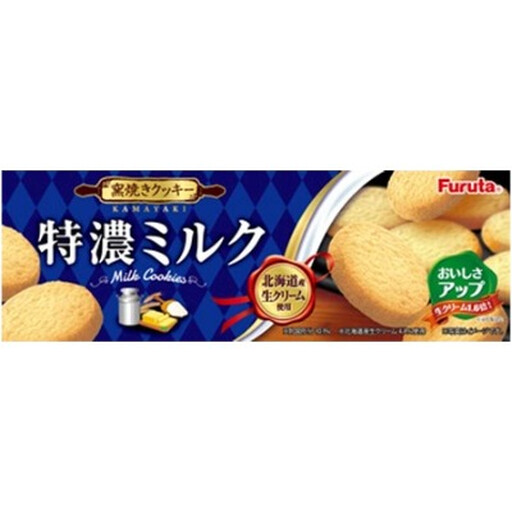
Why this fits the profile: A 92g pack offers a low-barrier way to try milk cookies with a creamy flavour, without ordering a large multipack straight away.
The net weight and nutritional values are stated. Wheat, milk and soya are also clearly listed as allergens.
92g contents, milk as a clear flavour accent and 522 kcal per 100g according to the product information.
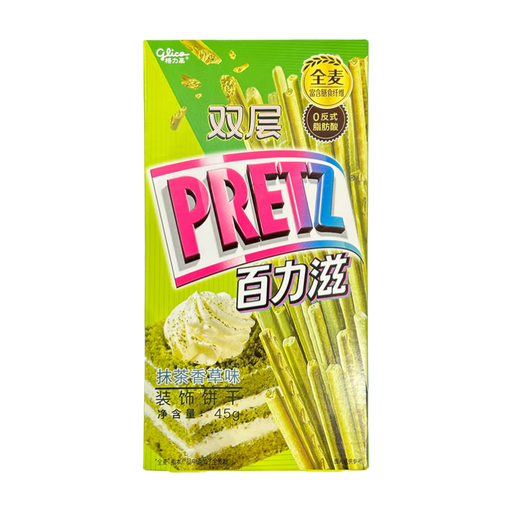
Why this fits the profile: For those looking for a distinctive flavour and who want to compare specifications such as ingredients, weight and portability.
The product information mentions matcha and cocoa powder and states a 45g pack. This means the flavour description can be checked against the label.
Biscuit sticks with matcha and vanilla flavour, 45g per pack and 918 kJ per pack according to the product data.
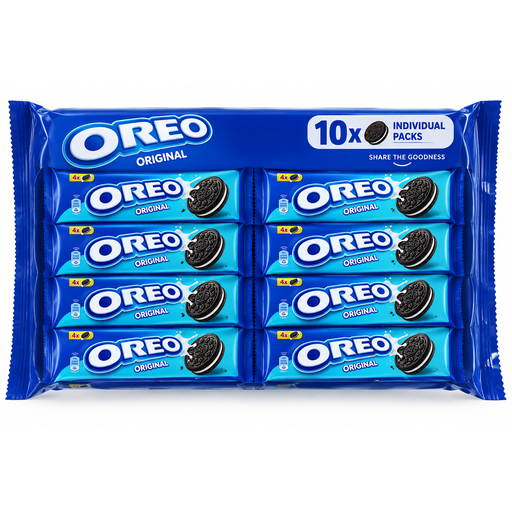
Why this fits the profile: A 10-pack with 66g bags is practical for families, shared supplies, workplaces or multiple snack moments.
The number of packs and weight per bag are clearly stated. So you don't have to rely solely on the size of the outer packaging.
Ten packs of 66g, classic cocoa biscuits with vanilla filling and 476 kcal per 100g according to the product information.

Why this fits the profile: This option combines cocoa biscuits with matcha flavour and is interesting for those who want to try familiar biscuit shapes with a different taste.
The product information states both the matcha content of 1.5% and the net weight of 97g. This helps you better align your flavour expectations.
97g contents, matcha powder in the ingredients list and a combination of chocolate, filling and matcha flavour.
We've put together a full, up-to-date list of products that fully meet these strict selection criteria and comply with current European safety regulations.
Store biscuits according to the instructions on the packaging, usually in a cool, dry place, away from direct sunlight, heat and moisture. Seal an opened bag tightly to keep the biscuits as crunchy as possible. Check the best-before date before use and do not use a pack if it is damaged.
With products that have individual portions, the rest of the pack generally stays better protected. This makes them practical for a desk, school bag or cupboard.
You can buy Japanese biscuits online from a range that includes Pocky biscuits, milk cookies, strawberry biscuits, matcha biscuits and various Oreo variants. Compare net weight, ingredients, allergens and origin rather than just the product image.
Japanese biscuits often stand out through flavour combinations and shapes, such as matcha-vanilla, strawberry-milk, cherry or biscuit sticks with coating. The exact composition varies per product and origin. So always check the ingredients list; a product with a Japanese style or brand name may also have been produced outside Japan.
The shelf life is stated on the packaging. Unopened biscuits remain suitable until the stated date when stored correctly. After opening, moisture and air can affect the texture. So seal the packaging tightly and follow the manufacturer's storage instructions.
