
Vandaag of morgen in huis

Kwaliteit gegarandeerd

Welkomstaanbiedingen ontgrendelen: GRATIS bezorging | Tot 80% korting | Gratis 30 dagen JoyPlus-proefperiode
Download de app
In the Netherlands, a jacket needs to do more than look good. Rain, wind, changeable temperatures, cycling and walking all make choosing one less straightforward. A men's jacket, women's jacket or jacket for young people may look suitable in the product photo, but disappoint in practice because of a restrictive fit, insufficient warmth or inadequate protection from the rain.
Use this guide to compare jackets by intended use, material and practical details. That way, you can avoid buying a winter jacket for mild weather or a lightweight jacket that lets you down in the first heavy shower.
An outer fabric with a DWR finish can make raindrops bead up temporarily. That does not automatically mean the jacket will keep you dry in prolonged rain. Check the product information for sealed seams, a waterproof membrane or a specific hydrostatic head rating. If these details are missing, it’s best to be cautious about wearing the jacket in heavy rain for extended periods.
A puffer jacket or padded winter jacket may feel warm, but warmth also depends on the length, fastening, cuffs and hood. An open hem or lightweight zip can let cold air in. For everyday wear, an adjustable hood, elasticated cuff or high collar is often more practical than simply choosing thicker insulation.
A jacket that fits well without a jumper may feel too tight with a fleece or thick jumper underneath. Check the size guide and pay attention to chest, sleeve and back length. For an outdoor or sports jacket, freedom of movement matters; with a cropped bomber jacket, the balance between the shoulders, sleeves and waist is particularly important.
Many jackets are made from polyester, nylon, polyamide or a combination of these materials. Polyester is commonly used for mid-season jackets, sports jackets and linings. Nylon is often used for a durable outer layer. However, the material alone does not tell you how much protection a jacket offers.
Look out for these product details:
When a brand makes a performance claim, such as “fully waterproof” or “breathable”, this refers to information in the product description. According to the brand's own testing, such performance claims may be based on specific conditions. Always check the exact specifications and care instructions.
A mid-season jacket or bomber jacket is suitable for milder days and as an extra layer. A lined parka, puffer jacket or winter coat is better suited to low temperatures. As well as the insulation, consider:
A lightweight waterproof jacket can be handy in the rain, but it will not necessarily keep you warm enough. Conversely, a warm jacket may not offer good protection from prolonged rain.
A jacket for your daily commute should be practical, with secure pockets, a sturdy zip and a hood that stays in place. For walking or outdoor activities, freedom of movement, ventilation and layering are important. A regular jacket is not the same as certified motorcycle clothing. A protective jacket should have suitable protectors and relevant CE information; check these separately before riding on the road.
Always follow the care label. Some styles can only be hand-washed or must not be tumble-dried. According to the manufacturer's product information, a DWR finish may need care or reproofing.
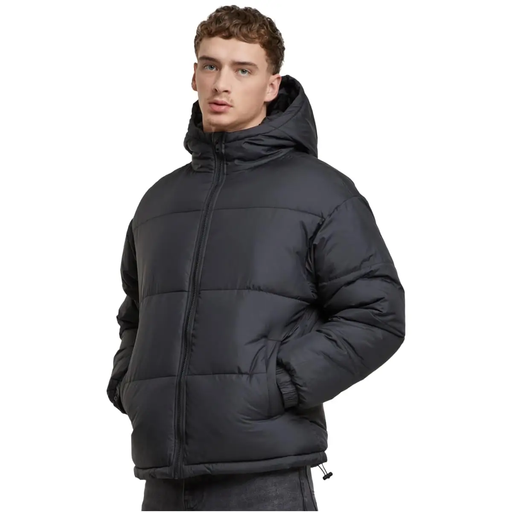
Why it suits this profile: This padded jacket is designed for everyday wear and has a hood. The combination of a polyamide outer layer, polyester filling and polyester lining makes it a straightforward choice if you're looking for a simple winter jacket.
The product information lists the materials, hood and size guide. Do check that the fit leaves enough room for a jumper, and follow the care label.
Polyester filling, a hood and a range of sizes. According to the care instructions provided, the jacket can be machine-washed on a cold setting.

Why it suits this profile: This men's jacket is designed for running, training and outdoor activities. The description mentions DryVent, sealed seams, a hood and zipped pockets.
The construction described offers more than just a water-repellent outer fabric. Before buying, check the current size guide and the care label for the DWR finish.
100% recycled polyester according to the product description, sealed seams, and zipped chest and hand pockets.

Why it suits this profile: This women's jacket is designed as a shell for walking and changeable conditions. The product description mentions an adjustable hood, mesh lining, two zipped pockets and DryVent fabric.
The jacket is described as a shell, so you can adjust the warmth by adding layers. The size guide includes chest and length measurements; use these rather than relying on your usual size alone.
Adjustable hem and hood, elasticated cuffs and a mesh lining, according to the product information.
We've put together a complete, up-to-date list of products that meet these strict selection criteria and the applicable European safety requirements.
Choose a mid-season or outdoor jacket with a hood for mild temperatures and rain. Check whether it has sealed seams and a waterproof construction. For cold days, a lined parka or puffer jacket is more practical, perhaps with a separate rain layer.
Its lifespan depends on the material, how often you wear it, how you wash it and how you store it. A jacket will generally last longer if you follow the care label, do up the zips before washing and let it air-dry if the manufacturer recommends this. Technical jackets may need their water-repellent finish maintained over time.
A sports jacket is usually designed for movement, training or everyday wear. A motorcycle jacket should also protect against abrasion and impact, and must have suitable protectors and relevant certification. So don't use a regular sports jacket as a substitute for certified motorcycle clothing.
