
Vandaag of morgen in huis

Kwaliteit gegarandeerd

Welkomstaanbiedingen ontgrendelen: GRATIS bezorging | Tot 80% korting | Gratis 30 dagen JoyPlus-proefperiode
Download de app
Buying Italian snacks sounds simple, until you are faced with a shelf full of flavours: pesto, tomato, pizza, oregano, cheese and herbs. The packaging can quickly create the impression of an authentic Italian aperitif, but the origin, ingredients and pack size can vary considerably. If you only look at the front of the pack, you may sometimes be paying mainly for the flavour name.
With this practical buying guide, you can compare Italian crisps, Italian nibbles, Italian savoury snacks and sweet treats using verifiable product information. That way, you can find something for an aperitif, film night, children’s party or to share.
A flavour name such as pesto, bolognese or Italian tomato does not automatically tell you where the product was made. Some products are inspired by Italian dishes but are produced elsewhere. For example, China is listed as the country of origin for Lay’s Potato Chips Italian Creamy Tomato Flavor. According to the product information, DELI Di Paolo Grissini Wave Parmigiano Salt is produced in Italy using an authentic recipe.
If you specifically want an Italian product, always check:
Tomato-flavoured crisps do not necessarily contain a lot of tomato. Want Want Lonely God Italian Tomato Flavor contains 1.4% tomato purée according to the product information. The rest of the flavour comes from ingredients including herbs, flavourings, salt, sugar and flavour enhancers.
It is also worth checking the ingredients list for pesto crisps. Brets Pesto Mozzarella Chips lists ingredients including mozzarella, basil, garlic and cheese powder. Pringles Italian Style Pesto contains, among other ingredients, milk derivatives, basil, garlic and flavourings. The name gives you an indication, but the ingredients list tells you what the product actually contains.
A 165 or 200 gram pack may seem convenient for a party, but opened crisps and crackers lose their crunch more quickly. For one or two people, a 45 to 80 gram bag may be more practical. So check the price per 100 grams, the number of portions and how you plan to store the snack.
In the Netherlands and the European Union, the 14 major allergens must be clearly listed when they are present in a product. Pay particular attention to:
The statement “may contain traces of” indicates possible cross-contamination during production. If you have allergies, always rely on the packaging. Online product information can change or may be less comprehensive than the physical label.
A portion is not the same size for every brand. So compare products per 100 grams first, then consider a realistic portion size. For example, Croky Bolognese Chips contains 515 kcal and 1.2 grams of salt per 100 grams. Brets Pesto Mozzarella Chips contains 522 kcal and 1.4 grams of salt per 100 grams.
That does not automatically make a product suitable or unsuitable; it simply helps you compare different Italian savoury snacks fairly. For a sharing platter, you can combine salty crisps with milder Italian crackers or grissini.
The shape determines how you use a snack:
For young children, age recommendations and the instructions on the packaging are important. A snack marked as suitable from 18 months, such as Sore Pizza Style Sticks, should still be served according to the product information and under supervision.

Why it suits this shopper: The compact 70-gram bag is an accessible choice if you want to try a tomato flavour without immediately buying a large pack.
The product format makes the portion and total quantity clear. However, check the label for sulphites, sweeteners and possible traces of allergens.
70 grams, twisted potato snack, tomato flavour and ready to eat.
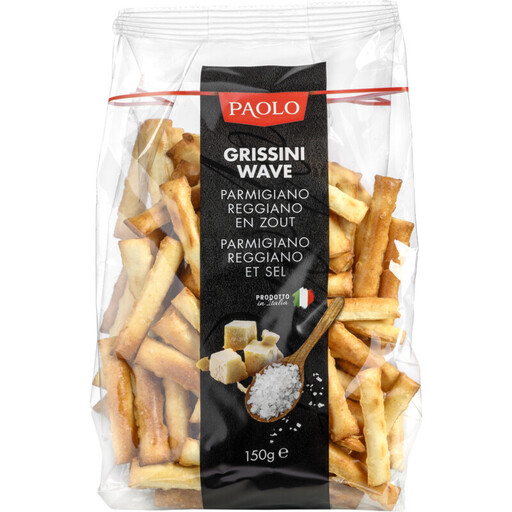
Why it suits this shopper: These grissini, made in Italy with Parmigiano Reggiano and olive oil, are a great match for a sharing platter where origin and ingredients matter.
The product information states that it is made in Italy and contains 7.5% Parmigiano Reggiano PDO. Milk and gluten are listed as allergens.
150 grams, crunchy dipping sticks, 7.5% Parmigiano Reggiano PDO and suitable with or without toppings.
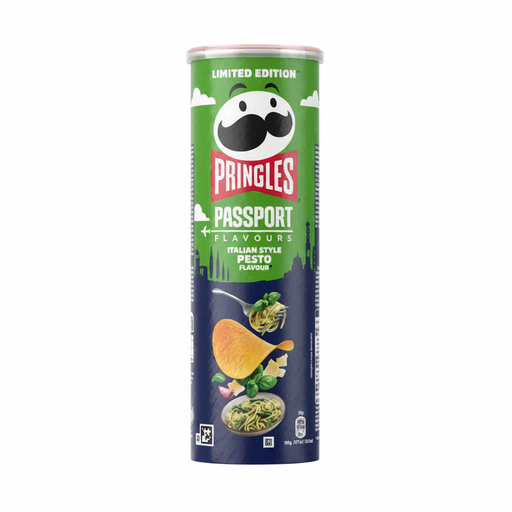
Why it suits this shopper: The resealable tube is practical for multiple snacking occasions, keeping in the pantry and sharing with others.
The packaging protects the stacked crisps better than an open bag. The ingredients list includes milk and gluten; soya may also be present.
165 grams, pesto, garlic and basil flavour, stackable shape and convenient tube for sharing.
For an aperitif with several flavours, a combination works better than three similar bags of crisps. For example, choose:
When buying sweets and sweet snacks, check the sugar content, allergens and portion size. For example, Lutti Scoubidou lists wheat as an allergen and contains 50 grams of sugar per 100 grams. This is important information when putting together snacks for parties with guests of different ages.
We have put together a complete, up-to-date list of products that fully meet these strict selection criteria and the applicable European safety regulations.
Grissini, Italian crackers and crisps flavoured with pesto, tomato or oregano are practical choices for an aperitif. Check in advance that the products you choose are suitable for anyone with allergies. Grissini often contain wheat and gluten, while cheese varieties usually contain milk.
Store unopened snacks in a cool, dry place away from direct sunlight. Seal an opened bag securely or choose packaging that closes more tightly. Always follow the storage instructions on the label and, for the best crunch, preferably eat the product soon after opening.
Compare the net weight, price per 100 grams, ingredients, allergens, nutritional values, country of origin and best-before information. The packaging remains the most reliable source, particularly if you need to avoid gluten, milk, soya or other allergens.
