
Vandaag of morgen in huis

Kwaliteit gegarandeerd

Welkomstaanbiedingen ontgrendelen: GRATIS bezorging | Tot 80% korting | Gratis 30 dagen JoyPlus-proefperiode
Download de app
An ISOFIX i-Size booster seat may seem straightforward at first: secure it, fasten the seat belt and go. Yet parents often buy a model that doesn’t suit their child’s height, is difficult to clean or turns out not to be compatible with their car’s ISOFIX anchor points.
For children aged around 6 to 12, the key things to consider are height, seat-belt positioning and correct installation. Use this guide to distinguish marketing claims from practical product specifications.
Age is, at best, a rough guide. A 125-150 cm car seat needs to suit your child’s height. Children of the same age can be considerably shorter or taller than one another. Always check the stated height range on the label and in the manual.
A booster seat listed as suitable for 125 to 150 cm is intended for the same group as a Group 2/3 ISOFIX child car seat. If your child is under 125 cm, look for a model with a backrest or another type of child restraint system.
ISOFIX secures the booster seat to the car seat, but for many models it doesn’t replace the three-point seat belt. With a backless booster, the car’s seat belt keeps your child in place. The ISOFIX connection can mainly help keep the seat stable when your child isn’t sitting in it.
Always follow the manufacturer’s installation instructions. Also check whether your car has ISOFIX anchor points and whether the seat is suitable for use there.
Terms such as ‘extra thick’ or ‘soft’ don’t tell you much without further details. Instead, look for information you can check, such as dimensions, weight, materials and care instructions. A washable car seat cover, for example, is handy if anything gets spilt, but check whether the cover can be removed completely and follow the washing instructions.
A booster seat with a cup holder can also come in handy on longer journeys, but the cup holder mustn’t get in the way of the seat-belt route or your child’s seating position.
An ECE R129 i-Size booster seat is selected according to your child’s height. For children in this age group, look for a model with a range of 125-150 cm, such as the Jovikids OHHO+ or certain Quasar models.
Before buying, check:
A mention in the product description is useful, but check the official label and manual when the product arrives, too. Read brand claims about protection or test results as information from the manufacturer, not as a general guarantee. According to Jovikids’ own information, the OHHO+ models meet ECE R129 and are intended for children from 125 to 150 cm.
A booster seat with a seat-belt guide helps position the diagonal belt across your child’s shoulder rather than against their neck. The lap belt should sit low across the pelvis. The belt must not be twisted and should lie flat against the body.
Check on every journey that:
A booster seat is only suitable if the belt fits properly in practice. Fit comes before colour, a cup holder or extra padding.
A lightweight booster seat is handy if you switch between cars or want to store it in the boot. According to the product information, the Jovikids OHHO+ weighs around 3 kg and measures 37 × 44 × 23 cm. The listed ISOFIX insertion guides can make it easier to connect.
Also check:
A cup holder is a handy extra, but it’s no reason to choose a model with an unclear seat-belt route.
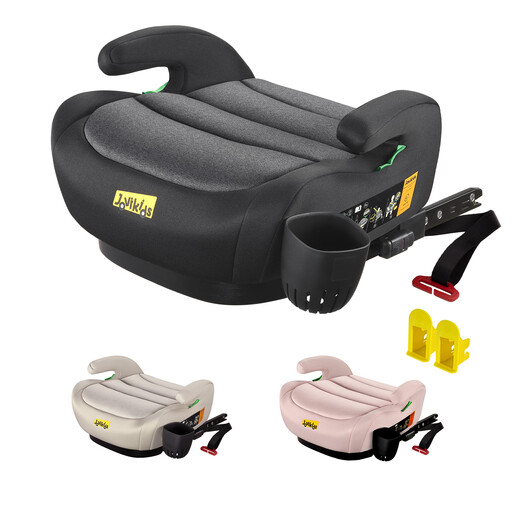
Why it suits this profile: This model combines ISOFIX attachment with a compact design for families looking for a straightforward, practical solution for everyday school and family journeys.
The 125-150 cm height range is clearly stated. The product information also mentions a seat-belt clip, removable cover and ISOFIX insertion guides.
Around 3 kg, removable washable cover, ISOFIX and a cup holder, according to the product description.
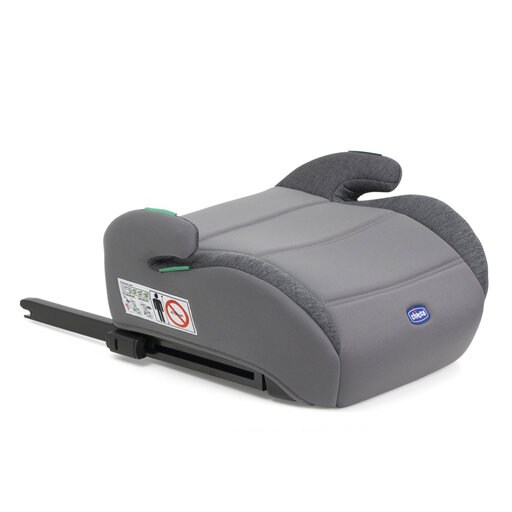
Why it suits this profile: A good choice for parents looking for a clearly specified seat-belt guide, soft armrests and the option of using ISOFIX for additional attachment.
The product details clearly state that a three-point seat belt is required and that ISOFIX is optional. This makes the installation method less open to misinterpretation.
ECE R129/04, 125-150 cm range, seat-belt guide, soft armrests and a removable washable cover.
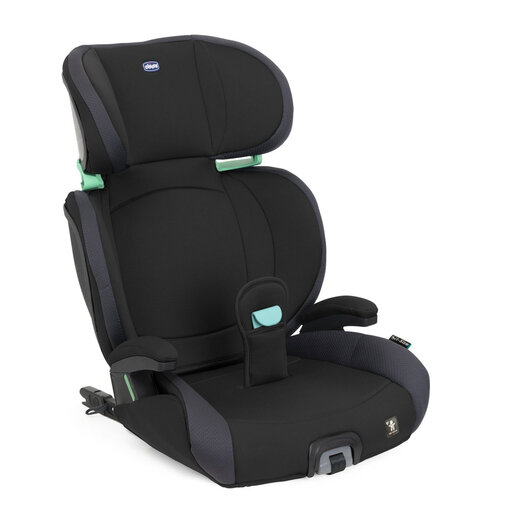
Why it suits this profile: A good choice for families looking for a model with a backrest, adjustable headrest and several installation options for regular, long-term use.
The stated range is 100-150 cm. Check carefully that your child is within this range; for children from 125 to 150 cm, the model offers room to grow.
ECE R129/04, adjustable headrest, two recline positions and use with ISOFIX plus a three-point seat belt or with the seat belt alone.
We’ve put together a complete, up-to-date list of products that meet these strict selection criteria and current European safety regulations.
Not every i-Size model uses ISOFIX. Some booster seats are secured using only the three-point seat belt; others have ISOFIX for added stability. Always check the product manual and your car’s anchor points. For many models, the seat belt remains essential for restraining your child correctly.
Use a booster seat for children from 125 to 150 cm until your child reaches the model’s upper height limit and the car’s seat belt fits them correctly without assistance. Don’t go by age alone. Replace the seat after a serious accident, or if any parts, the seat-belt guide or the attachment are damaged.
The price depends on features such as ISOFIX, an adjustable seat-belt guide, a backrest, the cover and extra comfort features. Compare more than just the price: check the height range, installation method, dimensions and cleaning instructions, too. This helps you avoid buying a budget model that doesn’t suit your car or child and needs replacing later.
