
Vandaag of morgen in huis

Kwaliteit gegarandeerd

Welkomstaanbiedingen ontgrendelen: GRATIS bezorging | Tot 80% korting | Gratis 30 dagen JoyPlus-proefperiode
Download de app
An ISOFIX car seat for children measuring 125–150 cm may seem straightforward to choose at first. But booster seats vary considerably in how they attach, guide the seat belt, provide comfort and can be maintained. For children aged around 6 to 12, age isn’t the only thing that matters: your child’s height and the way the car’s seat belt fits determine whether a model is suitable.
Three common pitfalls are worth looking out for:
Choosing based on age alone
Age guidance is just a guide. Always check the permitted height range, such as 125–150 cm for an i-Size car seat.
Confusing ISOFIX with full seat-belt protection
ISOFIX holds a booster seat in place, but with many models your child is still secured using the car’s three-point seat belt. A fixed connection doesn’t automatically mean the belt fits correctly.
Comfort claims without practical details
An “extra-thick” cushion sounds appealing, but check the dimensions, armrests, belt guide and cover too. A seat that’s too wide for the back seat or difficult to clean may not work well for everyday use.
Choose a model that’s explicitly suitable for your child’s height. An ECE R129 car seat is classified by height rather than weight alone. According to the product information, the models in this selection are designed for children measuring 125 to 150 cm, with a few exceptions that cover a wider range.
Check the product label and instruction manual for:
An older model may still be suitable if it has the correct approval, but always follow the latest product information and instruction manual.
With an ISOFIX booster seat, the connectors attach to the car’s ISOFIX anchorage points. This can help prevent a loose seat from wobbling and make installation easier. Some models use ISOFIX only to secure the seat; your child is then restrained using the car’s seat belt.
Check the following:
Never use an ISOFIX booster seat instead of the three-point seat belt when the instruction manual says the belt is required. Always follow the installation instructions from both the seat manufacturer and your car manufacturer.
Practical features matter for school runs, holidays and families with several children sharing a car. A car seat with a washable cover is easier to maintain than one with a fixed cover. Check whether the cover can be hand-washed or machine-washed, and how it should be dried.
Also check:
According to the product information, the Jovikids OHHO+, for example, has a removable, washable cover, weighs around 3 kg and measures 37 × 44 × 23 cm. These are features you can verify; on their own, they don’t tell you how comfortable every child will find the seat.
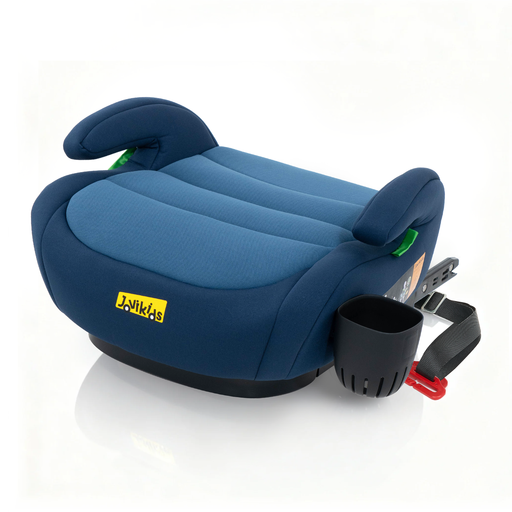
Why it suits this profile: A straightforward ISOFIX booster seat for everyday use, with a compact design and an included belt clip.
The product information specifies both a height range of 125–150 cm and ISOFIX attachment, as well as a belt clip. So you don’t have to rely on an age label alone.
According to the product description: removable, washable cover, weight of around 3 kg, ISOFIX insertion guides and a cup holder.
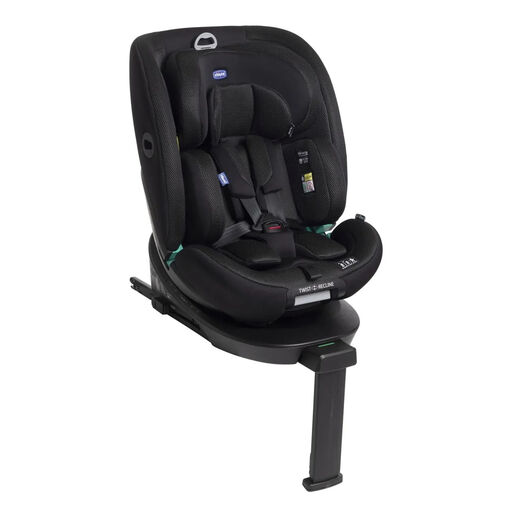
Why it suits this profile: This model is designed for families looking for one car seat to use through much of their child’s growth, from 40 to 150 cm.
The stated height range makes clear that this isn’t a standard booster seat. Be sure to check the correct stage of use: according to the description, the three-point seat belt is used from 100 cm.
According to the product specifications: ECE R129/03, ISOFIX, adjustable headrest, three recline positions and a Side Safety System.
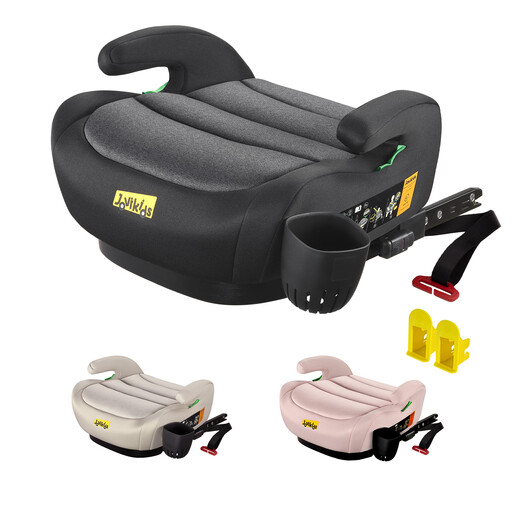
Why it suits this profile: A practical choice for families who drive often, regularly move the seat between cars and value easy care.
The product information lists ISOFIX, a belt guide and a removable cover. This means you can check the attachment, belt position and cleaning requirements in advance.
According to the product description: i-Size R129 for 125–150 cm, thickly padded seat, cup holder, washable cover and a five-year warranty after registration with Jovikids.
We’ve put together a complete, up-to-date list of products that meet these strict selection criteria and current European safety regulations.
Not always. Some i-Size booster seats use ISOFIX as an optional feature and are primarily secured using the three-point seat belt. Other models are specifically designed with ISOFIX connectors. Always check the instruction manual for the specific model and make sure it’s compatible with your car.
That depends on the permitted height range, the condition of the seat and the manufacturer’s instructions. With a model for children measuring 125–150 cm, use it until your child reaches the upper height limit or the belt no longer fits correctly across their shoulder and pelvis. Following a serious accident, a child car seat should be replaced in line with the product warnings, even if there’s no visible damage.
No. The shape of the seat, legroom, armrests and your child’s posture all play a part too. If possible, let your child try the seat and check that the car’s seat belt lies correctly without twisting. Also avoid extra cushions or thick clothing under the belt, as these can affect the fit.
