
Vandaag of morgen in huis

Kwaliteit gegarandeerd

Welkomstaanbiedingen ontgrendelen: GRATIS bezorging | Tot 80% korting | Gratis 30 dagen JoyPlus-proefperiode
Download de app
An i-Size car seat may seem straightforward to choose at first glance. However, models vary considerably in height range, installation and everyday use. For example, a seat that appears suitable from birth will not necessarily fit well in every car. A 360-degree rotating car seat can also be convenient, but only when the ISOFIX fitting, support leg and rotation function are used correctly.
The following pitfalls are common when buying a child car seat:
An ECE R129 car seat is classified according to the child’s height. This makes it easier to compare than simply looking at age or weight. The i-Size designation refers to requirements covering aspects such as fitting, the child’s height and protection in side impacts.
Check the full range:
Always check the product manual. According to the product information for various models in this range, children under 15 months must travel rear-facing. A seat that is suitable from birth therefore does not automatically mean that forward-facing travel is permitted straight away.
A car seat with ISOFIX clips onto the designated anchor points in the car. Some models also use a support leg, while others use a Top Tether. A child car seat for older children may instead be secured with the three-point seat belt.
Check the following before buying:
With a high-back booster seat, the three-point seat belt must lie correctly across the shoulder and pelvis. Never use a lap belt on its own. Thick winter coats or additional cushions can negatively affect the position of the belt.
An adjustable headrest and a suitable newborn insert are practical features, particularly for a car seat suitable from birth. Also look at the recline positions, legroom and how the five-point harness is adjusted.
For everyday use, the following points are important:
A 360-degree rotating car seat can make getting in and out easier. The rotation function is not a substitute for the correct direction of travel, harness adjustment or fitting.
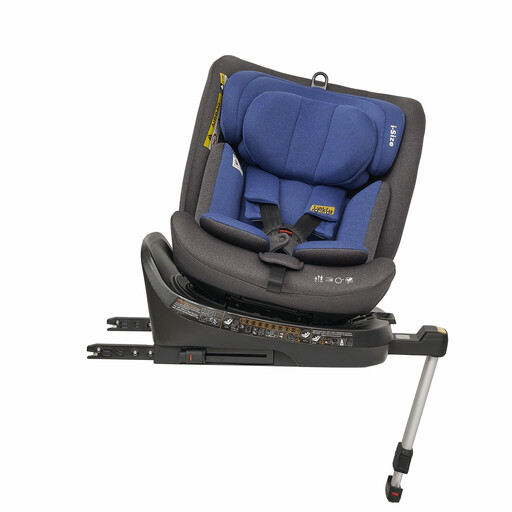
Why it suits this profile: With a stated height range of 40–150 cm, this model is an interesting option for families looking for one child car seat to cover several stages of growth. The seat has ISOFIX, a support leg and a rotation function.
The height range is clearly stated, so you do not have to choose based on age alone. According to the product information, the cover is completely removable and washable.
40–150 cm, 360° rotation, 12 headrest positions and adjustable recline positions according to the product description.
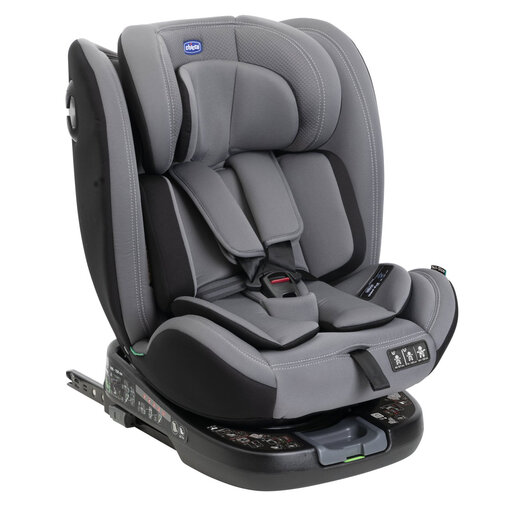
Why it suits this profile: This model combines a range of 40–150 cm with ISOFIX, Top Tether, a five-point harness and five recline positions. It is well suited to parents who want to fine-tune the installation and settings.
The product information distinguishes between rear-facing and forward-facing use and lists the separate fitting methods for each height stage.
ECE R129/03 for 40–150 cm, 360° rotation, five recline positions and a newborn insert supplied for smaller babies.
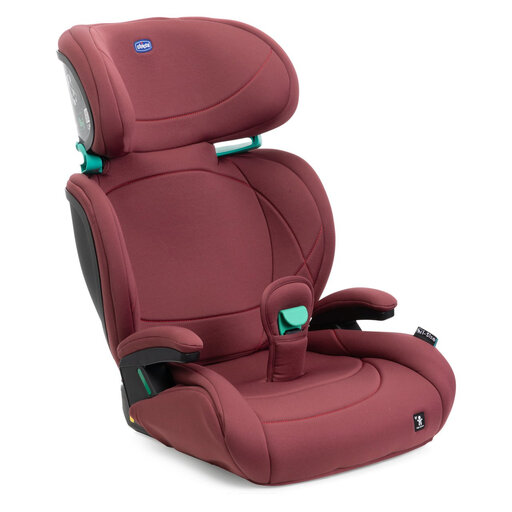
Why it suits this profile: With a stated weight of 4.5 kg, this model is aimed at families who regularly move the car seat between vehicles. The height range is 100 to 150 cm.
The seat is not intended for babies; its clear range of 100–150 cm helps prevent you from using a booster seat too early.
4.5 kg, adjustable headrest, two recline positions and a removable, washable cover according to the product details.
We have put together a complete, up-to-date list of products that fully meet these strict selection criteria and the applicable European safety regulations.
This varies by model. The range includes booster seats from 100 cm and models from 125 cm. Always use the range shown on the label and in the manual. The belt must lie flat across the shoulder and pelvis, not against the neck or stomach.
No. Some i-Size models use ISOFIX with a support leg or Top Tether, while other child car seats are installed using the three-point seat belt. On some models, ISOFIX is optional for older children. Therefore, check both the car seat and your car’s manual.
The useful lifespan depends on the permitted height range, the condition of the seat and the manufacturer’s instructions. A 40–150 cm model can support several stages of growth, while a 40–80 cm baby car seat will be replaced sooner. After a serious accident, a car seat must be replaced, even if there is no visible damage.
