
Vandaag of morgen in huis

Kwaliteit gegarandeerd

Welkomstaanbiedingen ontgrendelen: GRATIS bezorging | Tot 80% korting | Gratis 30 dagen JoyPlus-proefperiode
Download de app
An i-Size car seat may seem easy to choose at first glance. However, models vary considerably in terms of height range, installation method, rotation system and usable lifespan. A seat described on paper as suitable “from birth to 12 years” will not automatically fit every car or every child properly.
That is why you should focus on verifiable specifications, rather than relying solely on a prominent marketing claim.
The age stated on the packaging is usually an estimate. With i-Size, suitability is primarily linked to the child’s height. A 40-150 cm car seat is designed for a wide range, but the inserts, headrest and harness must be adjusted correctly at each stage of your child’s growth.
Always check:
An ISOFIX car seat is not automatically suitable for every seating position. Check whether your car has ISOFIX anchor points and whether there is enough room for a support leg or Top Tether. Some models use a support leg, others a Top Tether, while others use the three-point seat belt.
An ISOFIX fitting system can make installation more straightforward, but correct fitting is still essential. Before buying, check the installation method, indicators and compatibility with your vehicle.
A 360° rotating car seat can be useful when securing a baby or toddler. The feature makes getting your child in and out more practical, but it says nothing in itself about the correct fit or installation. Check that the seat can rotate fully in your car without touching the door, centre console or front seat.
Also check the locking mechanism: while driving, the seat must be in the prescribed travel position.
An ECE R129 car seat is approved under a European standard in which the child’s height plays an important role. The standard includes requirements for side-impact testing and requires young children to travel rear-facing until at least 15 months, depending on the type of seat and the instructions.
Certification is not a substitute for correct use. Before buying, check that the approval label and manual correspond to the model you receive.
Choose a seat that suits your child’s current height, rather than focusing only on the expected period of use. Common categories include:
A model suitable up to 12 years can be practical, but check that your child receives sufficient support around the head, shoulders and hips at every stage.
A car seat with a washable cover is not a minor detail. Babies spill things, children climb in with muddy shoes and snacks can easily end up between the cushions. Check whether the cover is completely removable and which washing temperature the manufacturer recommends.
Avoid thick coats under the harness. The harness should lie flat against the body and must not be twisted. Only use accessories designed for the relevant model.
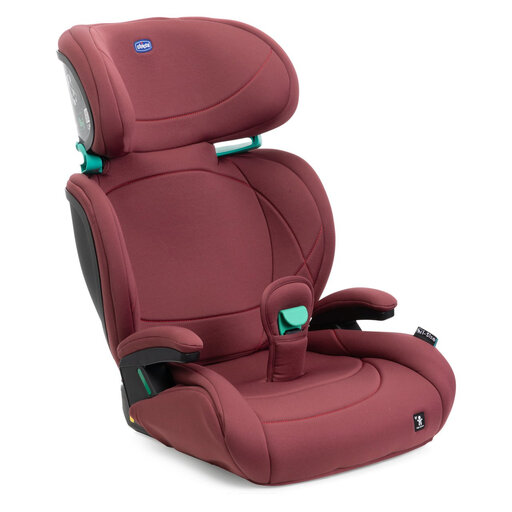
Why it suits this profile: This lightweight model is designed for children measuring 100 to 150 cm and weighs 4.5 kg according to the product information. That makes it practical when moving the seat between cars.
The clearly defined 100-150 cm range helps prevent you from buying a seat for a child who is still too small. The green belt guides assist with installation using the three-point seat belt.
ECE R129/04, adjustable headrest, two recline positions and removable, washable cover.
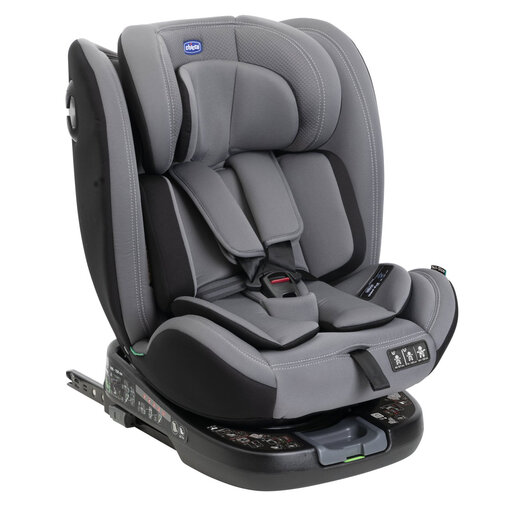
Why it suits this profile: Families looking for one system for several growth stages get a model covering 40-150 cm, with rear-facing and forward-facing installation and five adjustable recline positions.
The seat is not based on age alone: the different height stages and adjustable headrest make it easier to check the fit.
ECE R129/03, 360° rotation, ISOFIX with Top Tether and an insert for babies up to 60 cm.
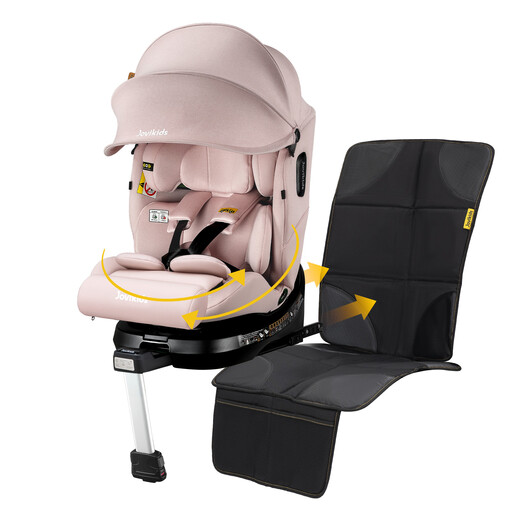
Why it suits this profile: According to the product information, this model is designed for long-term use from 40 to 150 cm, with ISOFIX, several recline positions and a large removable sun canopy.
The headrest’s 12 adjustment positions and removable inserts allow the seat to be adapted at each stage of your child’s growth. However, always check the current manual.
According to the product description: 360° rotation, ECE R129, ISOFIX, washable cover and a memory foam insert.
We have put together a complete, up-to-date list of products that fully meet these strict selection criteria and the applicable European safety regulations.
Use this quick checklist before setting off:
That depends on the maximum height and the seat’s construction. Some models are suitable up to 125 cm, while a 40-150 cm car seat can, according to the product specifications, be used up to approximately 12 years. Height, belt position and fit are more important than age alone.
No. Some booster seats and models for older children are used with the three-point seat belt. Other seats combine ISOFIX with a seat belt or Top Tether. Check the approved installation options for the specific model and your car.
A high-back booster seat is generally designed for children within a particular height range, such as 100-150 cm or 125-150 cm. Only switch when your child falls within the stated range and the car’s seat belt sits correctly across the shoulder and pelvis. Make sure your child is correctly secured with the harness or seat belt on every journey.
