
Vandaag of morgen in huis

Kwaliteit gegarandeerd

Welkomstaanbiedingen ontgrendelen: GRATIS bezorging | Tot 80% korting | Gratis 30 dagen JoyPlus-proefperiode
Download de app
Choosing an i-Size car seat seems simple until you start comparing height ranges, fixing systems and seating positions. A seat that promises to last “from birth to 12 years” won’t automatically fit every car or suit every child. Nor is a 360-degree swivel car seat necessarily suitable for newborns.
The most common pitfalls:
First, check the minimum and maximum height. A car seat from birth often starts at 40 cm, but it will need a suitable newborn insert and an approved rear-facing position. Many models require children to travel rear-facing until at least 15 months. Always check the instructions for the specific model.
For older children, seats are available for ranges such as 76–150 cm or 100–150 cm. An 0–12 years car seat can be a practical choice for long-term use, but the installation method and harness system usually change as your child grows.
An ECE R129 car seat is categorised by height and must meet requirements including those for side-impact collisions. However, the i-Size label doesn’t mean that every seat will fit every car. Check:
Certification is an important thing to check, but correct installation is still essential.
An adjustable headrest car seat should grow with your child without the harness sitting too high or too low. On some models, the headrest and five-point harness adjust together. After each adjustment, check that the belt lies flat and isn’t twisted.
“Side protection” can mean different things depending on the brand and model. Treat claims about extra protection as product information from the manufacturer, not as a guaranteed outcome. According to the product information provided by certain brands, their systems are designed to help absorb forces in a collision. In practice, how they work depends on factors including installation, the collision and how the seat is used.
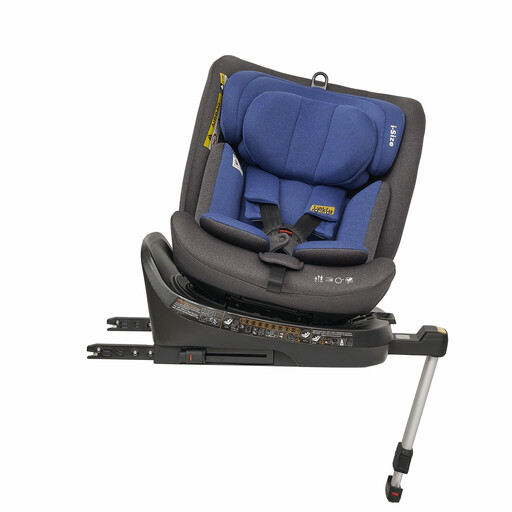
Why it suits this profile: According to the product information, this 360-degree swivel car seat is suitable for children measuring 40–150 cm and comes with ISOFIX and an adjustable support leg. It offers one solution for families who don’t want to buy several seats.
The stated height range makes it clear when the seat is intended to be used. Do check that the support leg and ISOFIX position fit your car.
Suitable for 40–150 cm, 360° rotation, 12 headrest positions and a removable, washable cover.
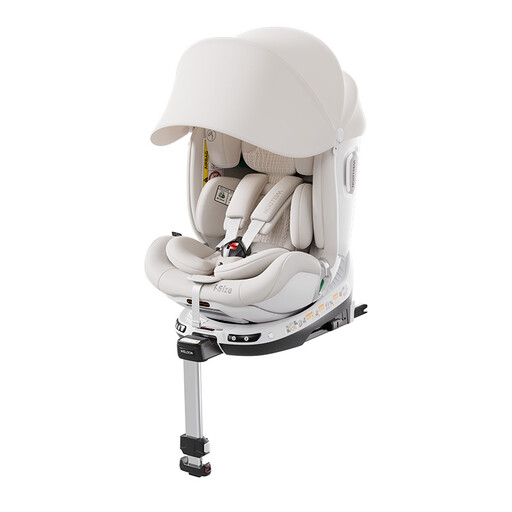
Why it suits this profile: The product information states that it’s suitable for children measuring 40–125 cm and has ISOFIX, a support leg and several recline positions. It’s a good fit for parents who value adjustability and control during everyday use.
The seat has a more clearly defined height range than models that go up to 150 cm, so you’ll know sooner when you may need another seating solution.
Suitable for 40–125 cm, 360° rotation, adjustable recline and removable upholstery. The manufacturer also states that it has installation indicators and sensors; check the instructions for details on how they work.
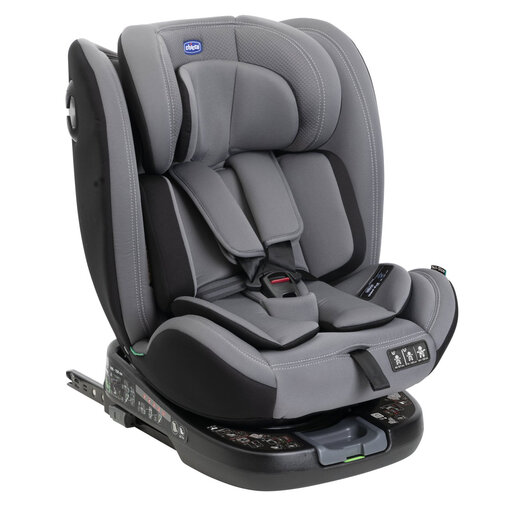
Why it suits this profile: This model is designed for families looking for a seat they can use for longer and who need different installation options. It’s specified for children measuring 40–150 cm.
The installation method changes as your child grows: ISOFIX and Top Tether for younger children, and, from 100 cm, the car’s three-point seat belt too, according to the product information.
Five recline positions, a five-point harness up to 105 cm and 360° rotation. The care information says the cover can be hand-washed.
We’ve put together a complete, up-to-date list of products that meet these strict selection criteria and the current European safety requirements.
Use this quick checklist before placing your order:
For an older child, a baby car seat or toddler seat can be replaced with a high-backed booster seat. The Quasar i-Size, for example, is specified for 125–150 cm and uses the car’s three-point seat belt. ISOFIX is optional on some versions; the seat belt is still required.
No. i-Size refers to European approval and the height category, but it doesn’t guarantee compatibility with every car. Check the ISOFIX points, support leg, Top Tether and the space available in the seating position.
It depends on the model, height range, use and maintenance. A seat for 40–150 cm can cover several stages of growth, while a baby car seat is often intended for children up to around 80–87 cm. Always follow the manufacturer’s maximum height, maximum weight and instructions.
No, but the swivel function can make getting your child in and out easier and help when fastening the harness. It doesn’t replace correct installation, the right direction of travel or a suitable fit.
