
Neat, precise ironing for uniform sleeves
You mainly want to get sleeves and cuffs looking smart, and can use a small board on a stable table. Brabantia and Leifheit offer sleeve boards with a narrow ironing surface.


For uniform sleeves that need a crisp finish, start with a folding sleeve board and an iron: its narrow surface is designed for sleeves, but it cannot replace a full-sized ironing surface. If you also want to iron larger uniform pieces, consider a table-top ironing board; a hybrid appliance or handheld steamer is a better fit if you mainly need quick touch-ups. Before use, check the garment care label and make sure you have a suitable, stable surface.
You mainly want to get sleeves and cuffs looking smart, and can use a small board on a stable table. Brabantia and Leifheit offer sleeve boards with a narrow ironing surface.
You also want to iron larger parts of your uniform, but don’t want to set up or store a full-size board. A table-top ironing board could be an option if you have a suitable table; the Consumentenbond cites limited storage space as a reason to consider a steam iron.
You want to deal with small creases and decide whether a quick touch-up will do, or whether you need a sharply pressed sleeve. Tefal describes steaming as a way to freshen clothes quickly.
Choose this when: you mainly want to press sleeves and cuffs neatly and have a stable tabletop available.
Bear in mind: a narrow sleeve board doesn’t provide a wide working surface for an entire uniform. You’ll also need a safe place to rest the hot iron.
Choose this when: you want to iron larger uniform pieces flat as well as sleeves, but can’t set up a full-size board.
Bear in mind: you’ll need a clear, stable table and enough room to rest the iron while using it and while it cools.
Choose this when: you want to switch between vertical touch-ups and horizontal ironing.
Bear in mind: Tefal describes the Duo Power JF4031E0 as having a precision tip and a supplied ironing mat. Check that the mat and your surface are suitable for your uniform.
Choose this when: quick touch-ups matter more than a sharply pressed sleeve and you don’t want to use a horizontal ironing surface.
Bear in mind: steaming isn’t automatically equivalent to pressing with an iron soleplate and sleeve board. Consider the finish you want for the uniform in question.
Choose this when: you iron lots of uniforms in one go and have enough space for the appliance, tank and a suitable board.
Bear in mind: according to the Consumentenbond, steam generators are generally larger and harder to store. So, if space is limited, they may not be the right choice.
| What to consider | What should you check? | Who is this important for? |
|---|---|---|
| Sleeve precision | Measure the sleeve and compare it with the board. Brabantia lists dimensions of 60 × 10 cm; Leifheit lists 57 × 8,5–10,5 cm. | If I mainly want to get sleeves and cuffs looking smart, I need the sleeve to fit properly over the board. Around 36% of consumers are likely to prioritise precision when ironing sleeves. |
| Floor and storage space | Measure the table space and the board both in use and when folded away. The Leifheit Air Board Table Compact has an ironing surface of 70 × 30 cm. | If I can’t set up a full-size board but also want to iron larger uniform pieces, saving space is a priority. Around 29% of consumers are likely to prioritise saving space. |
| Larger uniform pieces | Compare the ironing surface and tank capacity of the exact models. The Consumentenbond points out that a larger tank on a steam generator may require more storage space. | If I regularly iron the whole uniform, I consider whether the working surface is practical and how often I’ll need to refill the tank. Around 21% of consumers are likely to prioritise ironing larger uniform pieces or several pieces at once. |
| Quick touch-ups | Decide whether you need a sharply pressed sleeve. Tefal describes the Duo Power JF4031E0 as offering both vertical steaming and horizontal ironing; check which mat comes with the exact model. | Between wears, I sometimes just want a quick touch-up without setting up a full ironing station. Around 14% of consumers are likely to prioritise quick touch-ups. |
An iron on its own doesn’t provide a narrow support for a sleeve. Your setup also needs a suitable surface and a safe place to rest the hot iron.
First decide whether you’ll mainly iron sleeves or larger uniform pieces too. Then check that the board sits securely on your table and decide where you can safely rest the iron.
Vertical touch-ups and horizontal ironing are different ways of working; a steamer isn’t automatically a substitute for the pressure applied by an iron soleplate.
Choose steaming if a touch-up is all you need. If you want a crisp finish, check that you have a suitable iron soleplate and support.
According to the Consumentenbond, steam generators are larger and harder to store. The board also needs to suit the appliance and the way you iron.
Measure your available storage space and check that the board has enough room for the appliance and your ironing while in use.
A sleeve board for anyone who mainly irons narrow uniform pieces on a table.
Offers both a sleeve board and a wider table-top ironing board for different uniform pieces.
According to Tefal, the Duo Power JF4031E0 combines vertical touch-ups with horizontal ironing.
The TexStyle 7 Pro SI 7160 is a conventional steam iron for use with a suitable board.
The 3000 Series DST3031/20 is a steam iron for smaller loads of ironing.
This selection includes electric irons and hybrid or handheld steam appliances. For precise pressing of uniform sleeves, you may also need a suitable board. The Dutch government states that electrical appliances sold within the EU must carry a CE marking; check the marking on the item you buy and follow the uniform’s care label.
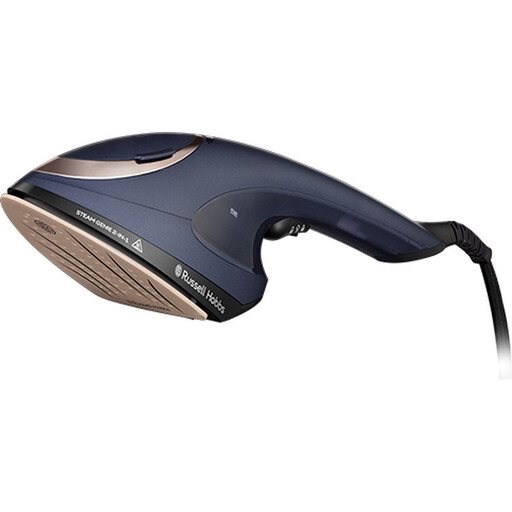 No image available
Suitable if you want to combine horizontal ironing and vertical steaming in one appliance; check whether you’ll also need a suitable board for the sleeves.
 No image available
A compact ironing and steaming appliance for anyone looking for a smaller setup; consider whether this way of working will give your sleeves the finish you want.
The product name mentions Dual Voltage; check that it’s electrically compatible with your intended use.
 No image available
A steam iron for anyone who wants to iron uniform pieces flat; bear in mind the space needed for a suitable board.
The product name mentions 2000 W.
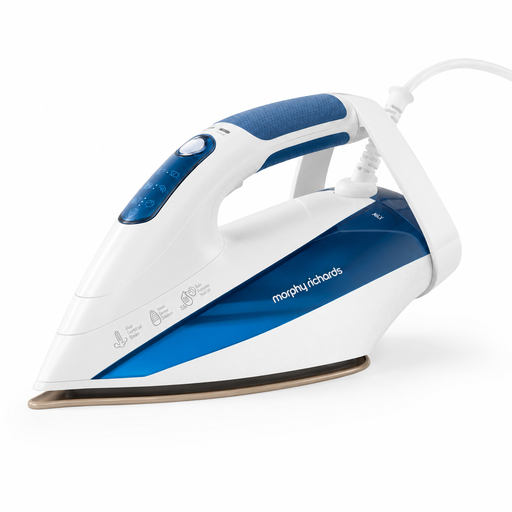 No image available
A steam iron for anyone who wants to work precisely around seams and collars; check that the board has enough room for both the sleeve and the hot iron.
The product name mentions 2400–2800 W, 50 g/min steam and a 350 ml water tank.
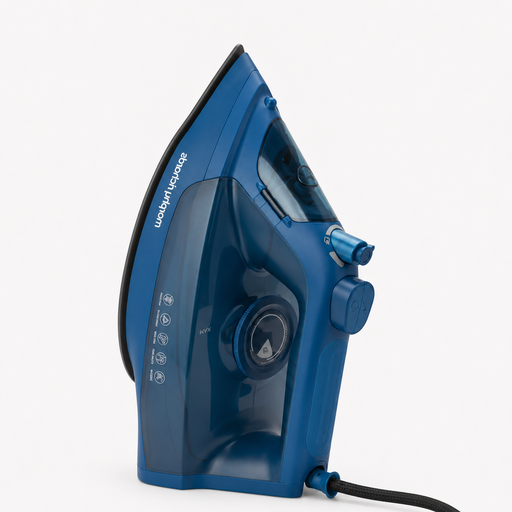 No image available
A steam iron for anyone who wants to iron uniform pieces flat; use a sleeve support that fits the size of the sleeve.
The product name mentions a ceramic soleplate and 2800 W.
No. Use a flat, stable surface and follow the board’s instructions. Leifheit warns against using its sleeve board on an uneven surface and against resting a hot iron on the board cover.
Follow the garment care label and don’t guess the temperature based on what you think the fabric is made from. GINETEX says you should choose the maximum temperature according to the care label.
Follow the descaling instructions for the exact model. Philips describes model-specific procedures, including Self Clean and Quick Calc Release; don’t automatically apply those instructions to another brand or a steam generator.
No. According to ACM ConsuWijzer, statutory rights in the Netherlands apply alongside a seller’s or manufacturer’s warranty. Whether you’re entitled to a remedy depends, among other things, on what you could reasonably expect from the product with normal use; there isn’t one fixed end date that applies to every appliance.
Yes. The Dutch government states that electrical appliances sold within the EU must carry a CE marking. Check the marking on the appliance you actually buy; a product listing doesn’t confirm it for an individual item.