
The collar perfectionist
You mainly want a neat, sharply pressed shirt collar and good access around the buttons. The shape of the iron’s tip and the care label matter more to you than a large water tank.


For the occasional shirt in a small rented home, a standard steam iron with a pointed tip that’s easy to manoeuvre is often a sensible place to start, provided you have a stable ironing surface and somewhere safe for the iron to cool. A clothes steamer is a better alternative if quick de-wrinkling matters more than a sharply pressed collar. A steam generator needs more space, so it’s better suited to anyone who also irons larger loads regularly.
You mainly want a neat, sharply pressed shirt collar and good access around the buttons. The shape of the iron’s tip and the care label matter more to you than a large water tank.
You iron one or a few items at a time and need to put away both the appliance and your ironing set-up after use.
You also iron larger loads regularly, and are weighing up the convenience of a separate water tank against the space the base takes up.
Choose this if: you want to press collars and the areas around buttons precisely, and have limited storage space.
Consider: you’ll need a suitable, stable ironing surface and a safe place for the appliance to cool down.
Choose this if: quick de-wrinkling or freshening up matters more than a sharply pressed collar.
Consider: according to the Consumentenbond, some steamers smooth lightweight fabrics reasonably well, but don’t always do the same for cotton or heavier fabrics.
Choose this if: you regularly iron larger loads as well as collars, and have room for a separate base.
Consider: the separate base takes up space, so assess the whole set-up rather than just the iron.
Choose this if: portability or a very small appliance is your main priority.
Consider: a small size doesn’t automatically make a model suitable as your everyday iron; check the instructions for the specific version.
| What to consider | What to look for | Who is this important for? |
|---|---|---|
| Collars and buttons | Look at the shape of the tip and whether it can reach small areas easily. Iron on a suitable, stable surface. | If I mainly want a sharply pressed collar and good access around buttons, I look at the shape of the tip; around 36% of consumers put collar precision first. |
| Working and storage space | Compare the dimensions of the appliance and any separate base with your available storage space. Remember to allow room for safe ironing and cooling. | If you live in a small home and need to put away the appliance and ironing set-up after use, space comes first; around 29% of consumers choose based on working and storage space. |
| Fabric care and maintenance | Follow the care label for the right temperature and steam settings. Check the maintenance instructions for the exact model. | If I iron different fabrics, I want to follow the instructions on their labels and maintain the appliance as directed; around 21% of consumers put fabric care and maintenance first. |
| Larger ironing loads | Think about how often you iron a large amount of laundry and whether a separate base will fit. Compare tank capacity and the space needed for the whole set-up, not just the steam figures. | If you regularly iron plenty of laundry as well as shirts, a larger tank may be important, and you may be happy to make extra room for it; around 14% of consumers put larger ironing loads first. |
Even a model described as compact has a separate base. In a small home, the extra space this set-up needs may outweigh the convenience of ironing for longer.
Measure your available working and storage space, and compare the whole set-up, not just the iron.
The Consumentenbond notes that some steamers smooth lightweight fabrics reasonably well, but don’t always do the same for cotton or heavier fabrics. Reducing creases isn’t the same as pressing a collar firmly into shape.
Choose a steamer if quick de-wrinkling is your main aim; choose an iron that presses directly against the fabric if a crisp collar crease is your priority.
Braun lists awards from 2022 for the TexStyle 3 range. These aren’t a current comparison of different versions, and don’t automatically tell you anything about another model number.
Check the full model number and version. Treat older awards as historical information.
The Dutch TexStyle 3 range includes standard steam irons, such as the SI 3030. Braun highlights this model’s tip shape for reaching collars.
The 3000 Series includes standard steam irons, such as the DST3041/30, for anyone looking for one appliance to handle collars and everyday ironing.
Tefal offers standard irons, steam generators and clothes steamers. The right choice depends in part on how precisely you want to iron and how much room you have for the set-up.
The Dutch range includes the First Class DA1510F2 travel iron, for anyone who prioritises portability or a very small appliance.
This selection of Joybuy products includes standard irons (including steam irons) and steam generators for anyone looking to press a shirt collar. Generators are mainly an option for longer ironing sessions if you have room for a separate base.
 No image available
An option if you’re looking for an appliance that’s easy to store and lets you adjust the temperature and steam settings manually.
Dimensions: 25 × 7,5 × 13,5 cm; weight: 0,77 kg. The tank has a capacity of 0,15 l. The product description mentions dry and steam ironing.
 No image available
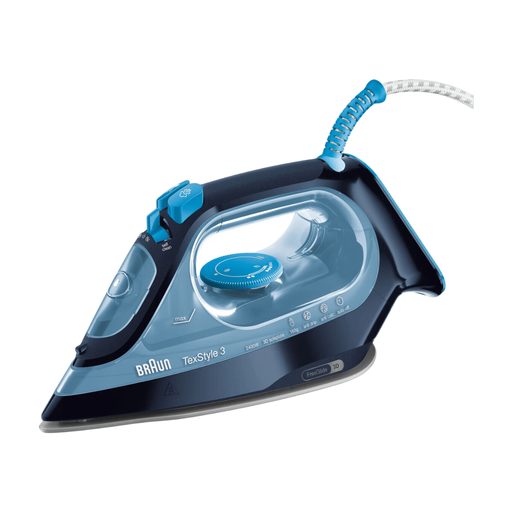
The product description highlights the precision tip for hard-to-reach areas, including collars and around buttons.
The description lists a ceramic soleplate, automatic shut-off and a steam shot of up to 170 g.
 No image available
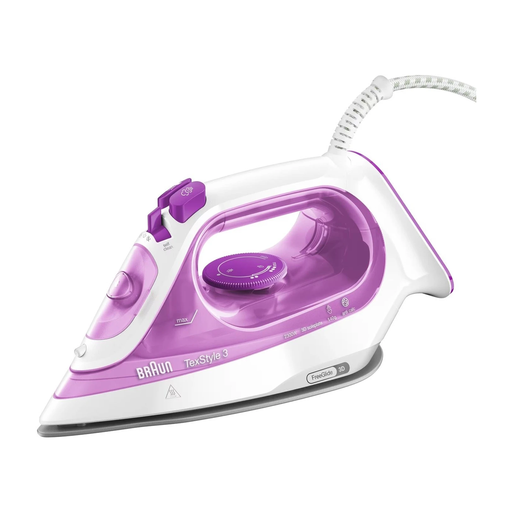
The product description links the triangular precision tip with ironing collars and seams.
The tank has a capacity of 270 ml. The description also lists a ceramic soleplate and a self-cleaning system.
 No image available
A steam generator to consider if you also have longer ironing sessions and can make room for the separate base.
The description lists 2400 W, a 1,4 l tank, continuous steam of 120 g/min and a steam shot of 350 g. Place the generator and iron on a flat, stable surface.
 No image available
An option for longer ironing sessions if the separate generator base fits in your available working and storage space.
The product description lists OptimalTEMP, a 1,3 l tank, a steam shot of 360 g and a SteamGlide soleplate. Place the generator on a stable, flat surface.
Yes, if the care label allows ironing. Don’t use steam if the steam symbol is crossed out. Philips recommends setting the temperature according to the dots on the label. If the iron symbol is crossed out, don’t iron the garment.
Not necessarily a full-size one, but pressing with a hot iron does require a suitable, stable ironing surface and a safe place for the hot appliance. Before buying, check that you have room for both. Don’t simply use an unprotected piece of furniture.
Follow the maintenance instructions for the exact model. Philips warns that limescale can build up and describes a self-cleaning process for its steam irons. Don’t assume the same process is suitable for other brands or a steam generator.
According to the Dutch government, the seller must provide a solution if there’s a problem with a product. For distance purchases, the seller must give you information about the cooling-off period, which is usually 14 days. Check the terms that apply to your purchase, even if the manufacturer offers its own warranty.
Electrical appliances placed on the EU market must have the applicable CE marking. Check the marking and product documentation for the specific iron; a listing on a webshop doesn’t, by itself, prove that the requirements have been met.