
Parents with limited storage space
You iron school trousers now and then and want an appliance that takes up little room. Remember to allow space for the trousers to dry after steaming, too.


If you iron just one or a few pairs of school trousers at a time, a compact steam iron is a sensible choice if you want to press them properly and have a suitable surface to iron on. A handheld steamer may suit you if you only need to remove light creases without an ironing board; a steam generator is more useful for larger ironing sessions, but takes up more space. Let the trousers dry after steaming before putting them away.
You iron school trousers now and then and want an appliance that takes up little room. Remember to allow space for the trousers to dry after steaming, too.
With thicker fabric or stubborn creases, a crisp finish may matter more than a compact set-up. You will need a suitable ironing surface, and should follow the trousers’ care label.
If you mainly want to freshen up trousers on a hanger, a handheld steamer may be a good option. Bear in mind that steaming does not give the same pressed finish as ironing.
First decide whether you want to press a sharp crease or simply reduce light creasing. The Consumers’ Association recommends a steam iron for smaller ironing sessions and limited storage space, while a steam generator is better suited to larger loads of washing or stubborn creases.
| What to consider | What to look for | Who is this most important to? |
|---|---|---|
| Putting trousers away dry | Check whether the steam output is adjustable, and think about where the trousers can dry afterwards. Once you have finished steaming, you can continue ironing without steam until the fabric is dry. | If you have little space to dry washing, you will want to avoid putting damp trousers in the wardrobe. Around 30% of consumers prioritise putting clothes away dry. |
| A crisp pressed finish | Read the care label and set the temperature to suit the fabric. Only compare steam figures when they refer to the same type of measurement. | If you mainly want smart-looking trousers or a sharp crease, how well you can press the fabric matters more than the steam setting alone. Around 30% of consumers prioritise the pressed finish. |
| Space for the appliance and ironing area | Measure both the storage space and the area available for ironing. You can use a handheld steamer without an ironing board, but it will not press fabric in the same way. | When every shelf in your cupboard matters, you will also want to know how much room the set-up takes. Around 20% of consumers want to use as little space as possible for the appliance and ironing area. |
| A quick ironing routine | Check the preparation required, how to fill the appliance and how long the specific model takes to heat up. A large tank is most useful for longer sessions. | If you usually only iron one pair of trousers, you will not want to set up more than necessary. Around 20% of consumers prioritise set-up time. |
Continuous steam and a temporary steam boost are different specifications. Too much steam can leave the trousers and ironing board damp.
Choose adjustable steam if you want to control the output, and compare like-for-like steam figures. Let the trousers dry before putting them away.
Allow extra drying time if the fabric is still damp after ironing.
A handheld steamer is designed to remove creases without an ironing board, but it will not give the same result as an iron that presses the fabric.
Decide in advance whether removing light creases will be enough. You will need a suitable ironing surface to press in a crease.
A steam generator needs more storage space, and horizontal ironing requires a suitable surface.
Measure the space for both the appliance and the ironing surface before choosing a type.
If you do not have a suitable surface, you may need to buy an ironing board or use a heat-resistant surface.
Tefal makes conventional steam irons, including the Express Steam FV2838.
Braun offers compact TexStyle 3 steam irons, as well as CareStyle steam generators.
Philips makes steam irons, steam generators and handheld steamers, as well as the hybrid OneTurn appliance.
These steam irons are for anyone who wants to iron school trousers horizontally. Before choosing, check the settings and any limitations of the exact model.
 No image available
A steam iron for pressing trousers horizontally. Check that the settings suit the fabric and your ironing routine.
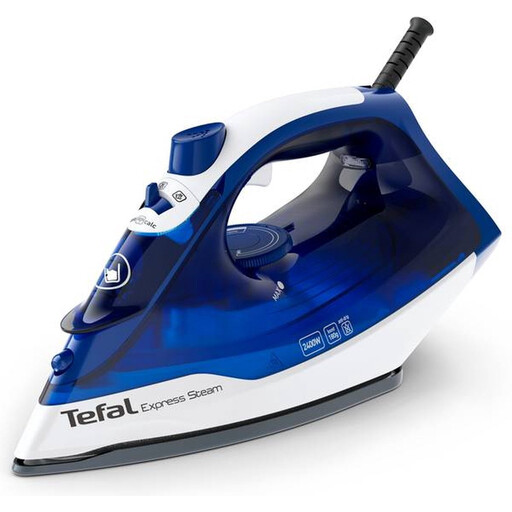 No image available
A steam iron for pressing horizontally. Joybuy states that this model does not have an automatic shut-off function.
Tefal specifies up to 40 g/min of continuous steam for the FV2838; this is a manufacturer figure.
 No image available
A handheld model to consider if you are looking for a compact option. Check whether its method of use is suitable for pressing school trousers horizontally.
 No image available
A steam iron for anyone who wants to press school-trouser fabric horizontally. Keep children away from the hot soleplate and steam outlet; according to the product information, this product is not intended for children under 8.
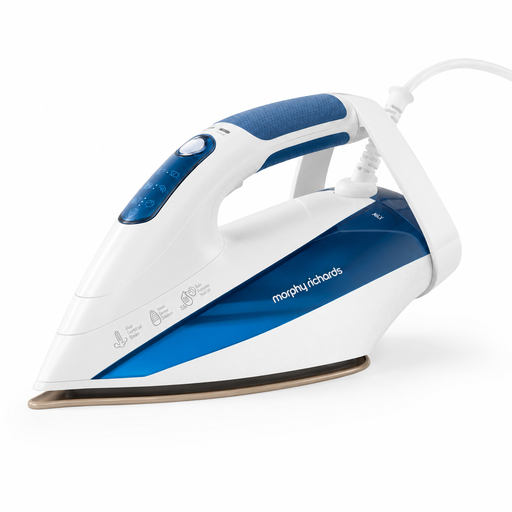 No image available
A steam iron for pressing horizontally. The product name specifies 2400-2800 W, 50 g/min of steam and a 350 ml water tank.
No, only put the trousers away once the fabric is dry. The Consumers’ Association recommends ironing first with steam and then without until the fabric is dry; also follow the trousers’ care label.
Do not assume that it can. Philips describes a handheld steamer as suitable for vertical and horizontal use, but notes that steaming does not give the same result as ironing. If you want a sharp crease, check whether the model allows horizontal pressing on a suitable surface.
Use only as much steam as you need, let the trousers dry and ventilate the room where you dry your washing. Milieu Centraal points out that drying washing indoors adds moisture to the air.
Follow the model-specific instructions for descaling and for the type of water you can use. The Consumers’ Association notes that limescale can reduce steam output over time in some appliances; maintenance methods vary by model.
Electrical equipment covered by the EU Low Voltage Directive must meet the relevant product requirements and carry the required CE marking. According to the European Union, CE is a declaration by the manufacturer, not an independent safety approval; check the marking and instructions for the specific appliance.