What should you look for when choosing?
Let the care label guide you on whether to iron or steam. Then compare the appliances’ capacity and practical demands for your ironing session.
Steam generator
A good fit if: you regularly iron larger loads or tackle stubborn creases as well as scarves, and the care label allows the treatment you have chosen.
Bear in mind: the larger base, the storage space required and the maintenance. Also check that your ironing board can support the appliance.
Regular steam iron
A good fit if: you mainly iron a few scarves and have limited space.
Bear in mind: the Consumentenbond points out that a regular steam iron has a smaller tank, so you’ll need to refill it more often when ironing a large load.
Don’t iron or steam
A good fit if: the care label says not to iron, or specifies ironing without steam at a low temperature.
Bear in mind: you won’t get the finish that permitted ironing may provide. If the care label is unclear, first check reliable guidance for that specific scarf.
| What to consider |
What to look for |
Who this matters most to |
| Fabric and steam |
Read the ironing symbol and check the finish; set the temperature and steam according to that scarf’s care label. |
I want to know first whether heat and steam are suitable for the fabric and finish; the fibre name alone isn’t ironing advice. Around 36% of consumers put suitability for the fabric first. |
| Capacity and convenience |
Compare continuous steam output in g/min and tank capacity in litres; treat a steam boost as separate from continuous steam. |
When ironing several scarves and other laundry, I don’t want to interrupt a long session often to refill the tank. Around 28% of consumers give capacity and convenience during the session top priority. |
| Space and purchase cost |
Measure the available storage space and check that your ironing board can support the generator. |
For just a few scarves, I don’t want an appliance that takes up more space than I have available. Space and purchase cost matter most to around 18% of consumers. |
| Descaling and maintenance |
Read the manual for the exact model for details of the descaling method, water requirements and any replacement cartridges. |
I want to know what maintenance my appliance needs and whether it uses any consumables. Around 18% of consumers prioritise easy maintenance and knowing which consumables they’ll need. |
Joybuy products for ironing scarves
This selection of Joybuy products includes steam generators for sessions involving several items, plus one regular steam iron as a more compact option for a few scarves.
 No image available
Philips 3000 Series steam generator PSG3000/20
An option for ironing several ironable items in one session, with temperature selection based on the fabric type.
2400 W; 1.4-litre tank; 120 g/min continuous steam; 350 g steam boost; Calc-Clean feature.
Joybuy
 No image available
Morphy Richards EasySteam+ MUH-ISE4B steam generator
A model with a removable tank for anyone who wants to refill less often during a longer ironing session.
2400 W; 1.8-litre tank; 70 g/min steam output in ECO mode; 120 g steam boost; 6 bar pressure.
Joybuy
 No image available
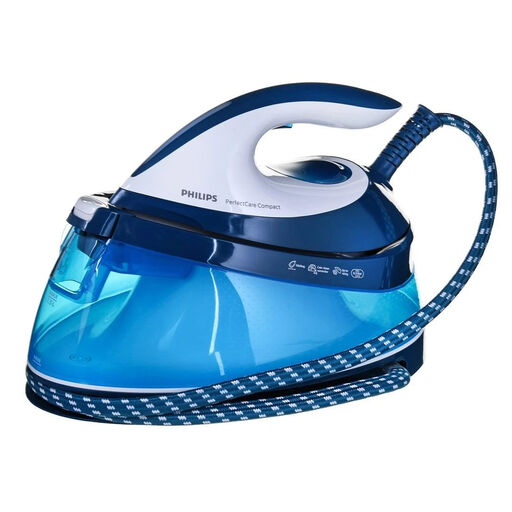
Philips PerfectCare Compact Essential GC6842/30
A steam generator for ironable items; check for each scarf whether the automatic temperature control is suitable for the care label instructions.
1.3-litre tank; 120 g/min continuous steam. No manual temperature setting.
Joybuy
 No image available
Philips GC7840/20 PerfectCare steam generator
An option for a session involving several ironable items; the automatic temperature and steam settings mean there’s no manual temperature control.
1.5-litre tank; 120 g/min continuous steam; Smart Calc-Clean with no cartridges.
Joybuy
 No image available
Philips 1000 Series DST1030/20 steam iron
A regular steam iron as a more compact option for a few scarves, provided the care label permits ironing and the chosen steam setting.
2000 W; 20 g/min continuous steam; variable steam settings and temperature selection. According to the instructions, steam isn’t available on the synthetic setting.
Joybuy
Frequently asked questions
Can I iron every linen scarf with plenty of steam?
No. The care label determines which treatment is allowed, not just the fibre name. GINETEX notes, for example, that an ironing instruction of up to 110 °C means ironing without steam; follow this instruction if it appears on your scarf.
What water and descaling method should you use?
Follow the manual for your exact model for water and descaling instructions. The Consumentenbond states that steam irons and steam generators are designed for tap water; Tefal advises against using vinegar or descaling products in its generators.
What can you do if a generator bought in the Netherlands turns out to be faulty?
Contact the seller: according to the Dutch government, they must offer a solution if a product doesn’t meet requirements. There is no fixed statutory two-year warranty period in the Netherlands; what you can expect from a product depends, among other things, on the product, its price and the information you were given.
Is CE marking mandatory, and does it mean my scarf is safe to iron?
The NVWA states that CE marking is mandatory for applicable electrical products placed on the market in the Netherlands. The marking doesn’t tell you what treatment a particular scarf can withstand: its care label remains the deciding factor.


