If you only have a few linen scarves to iron and limited storage space, a standard steam iron is the obvious choice, provided the care label allows ironing. If you iron frequently and have to tackle stubborn creases, a steam generator may suit you, as long as you have room for the larger appliance and a suitable ironing board. If you simply want to freshen up a scarf while it’s hanging, a clothes steamer is another option, but it won’t press the fabric flat with an iron soleplate.
Who is this advice for?
If you iron a few scarves now and then
You want to press an ironable scarf flat, then easily put the appliance away in your utility room. The Consumentenbond says a standard steam iron is an option if you do little ironing or have limited storage space.
If you often iron linen and other laundry
You iron scarves along with other laundry and want to refill less often during longer sessions. A steam generator has a separate water tank, so you’ll also need to consider how much space it takes up and whether your ironing board is suitable.
If you take extra care with your scarves
You prioritise the care instructions for the specific scarf, particularly if it has a delicate finish. GINETEX describes the care label as a guide to washing and ironing the item.
What should you look for when choosing?
Standard steam iron
Best for: pressing a few scarves flat and storing the appliance neatly away.
Bear in mind: an integrated tank may need refilling sooner during a long ironing session.
Steam generator
Best for: frequent ironing and stubborn creases, if you have room for the separate tank.
Bear in mind: the larger appliance needs more storage space and may be too heavy for a standard ironing board.
Clothes steamer
Best for: freshening up a suitable scarf while it’s hanging, without using an ironing board.
Bear in mind: without a hot, pressing iron soleplate, it isn’t the same as pressing fabric flat.
Start with what you want to do: pressing fabric flat calls for an iron soleplate and a suitable ironing board, while freshening up a hanging item is a different job. Then check the scarf’s care label and adjust the temperature and steam accordingly.
| What to consider |
What to look for when buying |
Who is this important for? |
| Care of the scarf |
Check whether the temperature and steam can be adjusted; follow the care label for the specific scarf. |
If I want to care for the fabric properly, I check the label first and adjust the settings accordingly. Around 33% of consumers prioritise this. |
| Pressing flat and removing creases |
Check that it has an iron soleplate and compare the adjustable steam and any steam boost, without treating these figures as a guarantee of results. |
If I want to press an ironable scarf flat, I look at the soleplate and the permitted steam settings. Around 33% of consumers prioritise crease-removal performance. |
| Short sessions and storage |
Measure the space available and consider how many scarves you usually iron in one go. |
For a few scarves, I want to be able to put the appliance away easily after use. Around 17% of consumers prioritise short sessions and storage space. |
| Maintenance |
Find out how to descale the appliance, what type of water is permitted and whether the system uses consumable parts. |
If I steam regularly, I want to know what maintenance is needed and how to prevent marks. Around 17% of consumers prioritise ease of maintenance. |
Common buying mistakes
-
Assuming linen can always withstand the highest temperature
The care label applies to the whole item; a finish or another component may require a lower temperature.
Check the ironing symbol on each scarf before setting the temperature or steam.
-
Choosing a clothes steamer to press fabric flat
A clothes steamer works vertically and doesn’t have a hot, pressing iron soleplate, so it can’t replace that function.
Decide in advance whether you want to freshen up the scarf while it’s hanging or press it flat on an ironing board.
If you want to press fabric flat, you may still need an iron and ironing board as well.
-
Judging a steam generator on its steam specifications alone
The separate tank makes the appliance larger and may affect whether it’s suitable for your ironing board.
Check how much storage space you have and whether your ironing board can support the appliance.
-
Assuming anti-scale features mean no maintenance
An anti-scale feature doesn’t automatically remove the need for the recommended maintenance.
Read the maintenance instructions before buying and check whether any consumable parts are needed.
Some systems require replacement cartridges.
Brands to consider
Philips
Philips describes the 3000 Series DST3031/20 as a standard steam iron for smaller loads.
- Philips specifies a ceramic soleplate and a 300 ml water tank for this model.
- These specifications alone don’t tell you what results you’ll get when ironing a particular scarf.
Tefal
Tefal offers a standard steam iron and a separate steam generator here, as two different types of appliance.
- Tefal lists adjustable steam of up to 60 g/min and a Micro-Calc filter for the FV9844; for the SV8026, the brand specifies a 1.8-litre tank.
- The larger tank is part of a separate generator, which needs more storage space. The filter’s performance and ironing results aren’t an independent assessment of how the appliance works on scarves.
Braun
Braun describes the TexStyle 7 Pro SI 7160 as a standard steam iron with a manual thermostat dial and precision tip.
- Braun specifies continuous steam of 50 g/min in Turbo mode and a steam boost of up to 225 g/min.
- The glide performance quoted by Braun isn’t an independent measurement on linen scarves.
Steam irons on Joybuy
These are standard steam irons for pressing fabric flat on an ironing board. Always check that your scarf’s care label allows ironing and, where relevant, steam.
 No image available
Philips 3000 Series DST3031/20
A standard steam iron for anyone who wants to press a scarf flat and follow the care label when choosing how to treat it.
Continuous steam: 40 g/min; steam boost: 180 g; water tank: 300 ml. The product description specifies manual temperature and steam settings.
View at Joybuy
 No image available
Tefal Easygliss Plus FV5736
A standard steam iron for pressing fabric flat when the scarf’s care label allows the selected temperature and steam settings.
Continuous steam: 45 g/min; steam boost: 220 g; water tank: 200 ml. The description specifies manual temperature and steam settings, and a weight of 1.59 kg.
View at Joybuy
 No image available
Xiaomi BHR9034EU Handheld Steam Iron
The product description specifies an iron soleplate and dry and steam ironing modes for anyone who wants to iron a scarf flat.
Steam output: 22 g/min; water tank: 0.15 litres; product weight: 0.77 kg. The description specifies manual temperature and steam controls.
View at Joybuy
 No image available
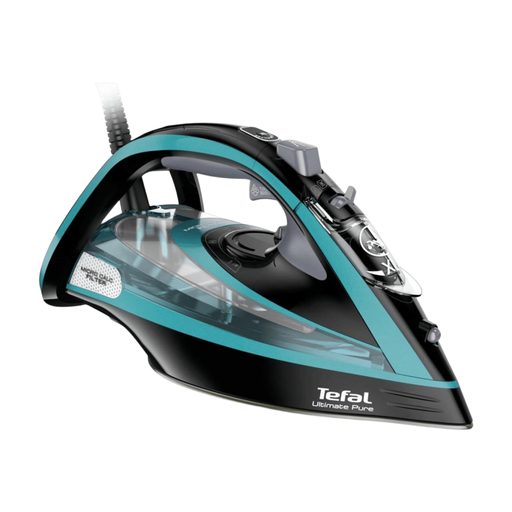
Tefal Ultimate Pure FV9844
A standard steam iron to compare if you want to assess additional steam settings, where steam is permitted.
Steam output: up to 60 g/min; steam boost: up to 250 g/min; integrated water tank: 0.35 litres. The description specifies manual temperature selection.
View at Joybuy
 No image available
Braun FreeStyle 5 SI5037 Violet
A steam iron with a precision tip, designed for hard-to-reach areas; first check that the scarf’s care label allows ironing.
Continuous steam: 50 g/min; water tank: 300 ml. The description specifies an open handle.
View at Joybuy
Frequently asked questions
Can I always iron a linen scarf on the hottest setting?
No. Follow the ironing symbol on the specific scarf. GINETEX explains the permitted care using the symbols, so don’t choose a temperature based on the word ‘linen’ alone.
Do I need special water for ironing?
Not usually: the Consumentenbond says steam irons are designed to use tap water, but you should follow the instructions for your model. Water containing perfume or other additives can cause problems and leave marks.
How can I prevent limescale marks on a clean scarf?
Maintain and descale the appliance according to the instructions. The Consumentenbond advises that, after descaling, you should first iron an old piece of fabric if necessary, so any loosened limescale particles don’t end up on your scarf.
Do I have to pay for an extended warranty if the appliance breaks?
No, you don’t need one to benefit from your statutory rights if a product is faulty. According to the Dutch Government, there is no fixed statutory two-year warranty period in the Netherlands; the seller must provide an appropriate solution. A paid extended warranty is mainly worth considering if its terms offer additional rights.
Which product marking should I look for when buying in the Netherlands?
Electrical equipment covered by the relevant harmonised EU rules must carry the CE mark. According to the European Union, this is a declaration by the manufacturer, not a quality certificate issued by a central EU body. Check the marking and product information for the specific appliance.


