
Occasional placemat ironer
You want to smooth out a few placemats without having to store a large appliance. Consumentenbond lists a standard steam iron as an option for people who iron infrequently or have limited storage space.


For a few linen placemats and a short ironing session, a standard steam iron is usually sufficient. A steam generator may be a good choice if you also iron plenty of other laundry during seasonal changes and want to refill less often. Always follow the care label on the specific placemat: the word ‘linen’ alone does not determine which heat or steam settings are safe.
You want to smooth out a few placemats without having to store a large appliance. Consumentenbond lists a standard steam iron as an option for people who iron infrequently or have limited storage space.
Your placemats may have a special finish or print, or their own care label. Consumentenbond and GINETEX emphasise that the care instructions for the fabric should always take precedence.
You iron more household textiles and clothes in one go, weighing up fewer refills against the size of the appliance. Consumentenbond describes a steam generator as an option for larger amounts of ironing.
Best for: ironing a few placemats and clothes from time to time, especially if you have limited storage space.
Trade-off: the tank is smaller than a steam generator’s, and the iron can feel heavier in your hand when full.
Best for: frequent ironing of larger loads, when fewer refills or a lighter hand unit are important.
Trade-off: the complete appliance takes up more space; also check that it fits on your ironing board.
Best for: placemats whose care label rules out steam but allows ironing.
Trade-off: creases in dry fabric may take more work to remove; only dampen the fabric if the care instructions allow it.
| What to consider | What should you look for? | Who should pay extra attention? |
|---|---|---|
| Smoothing out creases | Check whether steam and spray settings are adjustable, and whether the care label allows steam. Don’t compare continuous steam output with a separate steam boost. | I mainly want to smooth the creases in my placemats without using more steam than the care label allows. Around 40% of consumers prioritise this. |
| Protecting the fabric | Read the care label on the specific placemat and set the heat and steam accordingly. | I want to prevent heat or steam from damaging the finish or fabric of my placemats. Around 30% of consumers give fabric protection top priority. |
| Size and storage | Compare the appliance’s size and weight in use with your available storage space and the length of your ironing sessions. | I only iron occasionally and want to be able to put the appliance away easily after a few placemats. Around 20% of consumers choose with this kind of use and limited storage space in mind. |
| Longer ironing sessions | Consider the tank, the space needed on your ironing board, and the model’s descaling and water instructions. | I work through a larger pile during seasonal changes and want to refill less often without forgetting about maintenance. Around 10% of consumers mainly prioritise these longer sessions. |
The maximum permitted temperature depends on the finished placemat, not simply on the name of the fibre. A setting that is too high can damage the fabric.
Check the care symbol before ironing, and don’t automatically start on the highest setting.
A single steam boost and continuous steam output describe different features. A high steam-boost figure doesn’t tell you how much steam the appliance produces throughout an entire session.
Compare these specifications separately and choose according to the amount of ironing you do.
The Joybuy listing for the Tefal Easygliss Plus FV5736 gives different tank and soleplate details from Tefal’s information for model FV5736E0. So don’t assume without checking that they’re the same version.
Before buying, compare the full model number and the features that matter to you with the manufacturer’s information.
The length or terms of a manufacturer’s guarantee do not, by themselves, determine how long a product should last with normal use.
Keep your proof of purchase and contact the seller if the product is faulty. ACM ConsuWijzer explains that the legal guarantee applies in addition to the seller’s guarantee.
Tefal offers standard steam irons, including the Easygliss Plus FV5736E0, for anyone looking for an adjustable iron for shorter sessions.
Philips offers both standard steam irons, such as the 7000 Series DST7030/20R0, and steam generators, such as the PerfectCare 6000 PSG6064/80.
The Braun TexStyle 7 Pro SI 7181 is a standard steam iron worth comparing if temperature control and ease of handling are important to you.
This selection includes standard and portable steam irons for smoothing ironable placemats and other household textiles. Follow the care instructions for your fabric with every model.
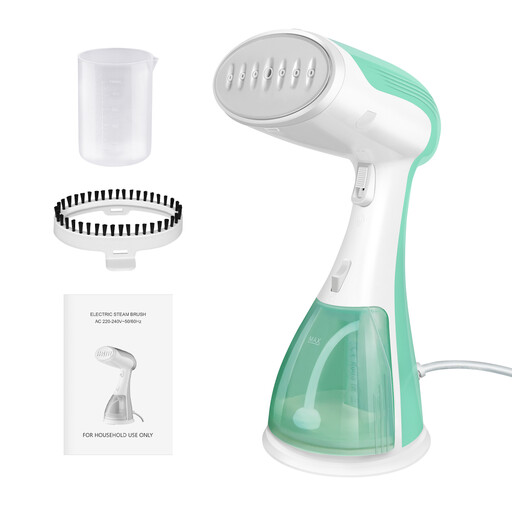 Image unavailable
This portable model is an option if you’re looking for a handheld steam iron for home or travel. Only use it on placemats if their care instructions allow ironing.
The product name lists 1500 W and a 25-second heat-up time.
 Image unavailable
A standard steam iron to consider for a short ironing session, if the care label on your placemats allows steam.
Check the full model number and version before buying: FV5736 and FV5736E0 should not automatically be assumed to be identical.
 Image unavailable
This handheld steam iron is an option if you’re looking for a compact model. Choose dry or steam ironing according to the placemat’s care label.
The product name lists Dual Voltage.
 Image unavailable
A standard steam iron to compare for occasional ironing; check that the settings are suitable for the care label.
The product name lists a power rating of 2000 W.
 Image unavailable
A standard steam iron to compare if you also iron other clothes and household textiles during seasonal changes.
Adjust the heat and steam to the care instructions for each item of clothing and each placemat.
Follow the care label on the specific placemat; the word ‘linen’ alone does not determine the temperature. GINETEX links the standard ironing symbols to maximum temperatures of 110, 150 or 200 °C; a crossed-out iron means you should not iron the fabric.
Don’t use the steam boost repeatedly in quick succession. Consumentenbond recommends ironing the fabric afterwards without steam and letting it cool while dry, if the care label allows ironing.
Consumentenbond says that tap water can generally be used in the Netherlands. Check your model’s manual before using a different type of water or a mixture, follow the model-specific descaling instructions and don’t use perfumed ironing water.
Electrical products placed on the market in the Netherlands must carry the applicable CE marking. Check the marking and safety information for the specific appliance; CE marking is not a comparative performance test.
For online purchases from a business, you generally have a 14-day cooling-off period, according to the Dutch government. The Dutch legal guarantee also applies: if the appliance does not perform as you could reasonably expect under normal use, the seller is responsible for providing an appropriate solution free of charge. A manufacturer’s guarantee does not replace this right, according to ACM ConsuWijzer.