
Pressing napkins neatly
You want to smooth out visible creases and create a crisp fold. Follow the napkin’s care label: GINETEX explains that the symbols indicate the maximum treatment permitted.


For a few napkins and limited shared storage, a compact steam iron is likely to be a better choice than a steam generator. The Consumers’ Association of the Netherlands recommends a steam iron if you have little to iron or limited storage; a generator may be more appealing if your housemates regularly iron larger loads. Always check the care label on each napkin first.
You want to smooth out visible creases and create a crisp fold. Follow the napkin’s care label: GINETEX explains that the symbols indicate the maximum treatment permitted.
You iron a few napkins at a time and share storage space with your housemates. According to the Consumers’ Association of the Netherlands, a steam iron may be suitable if you do little ironing or have limited space.
You want to agree on how to use a hot iron, unplug it and put it away once it has cooled. The Fire Service advises against overloading extension leads and connecting them to one another.
Suitable if: you occasionally iron a small number of napkins and need to store the appliance in a shared cupboard.
Trade-off: the water tank is built into the iron, so you may need to refill it sooner when ironing larger loads, according to the Consumers’ Association of the Netherlands.
Suitable if: your housemates regularly iron larger loads and you can make room for it.
Trade-off: a generator takes up more space than a compact iron; also check that your ironing board is suitable for it.
Suitable if: lightly removing creases without an ironing board matters more to you than creating a crisp, pressed fold.
Trade-off: Philips describes steaming without an ironing board, but this does not show that a clothes steamer can press linen napkins as neatly as an iron.
Start with the care label on your napkins, then consider how much you usually have to iron and where you’ll store the appliance.
| What to consider | What should you check? | Who is this most important for? |
|---|---|---|
| Creases and pressed folds | Check the care label and compare the adjustable steam settings and soleplate. The Consumers’ Association of the Netherlands also describes ironing with steam and then without steam. | I want smooth napkins and a neat fold, but don’t want to exceed the permitted treatment. Around 36% of consumers prioritise the result they want from pressing. |
| Storage space and refilling | Measure the available storage space and compare the tank and dimensions of the exact model. | If I only iron a few napkins and share a cupboard, compact storage matters more to me than ironing for long periods. Around 29% of consumers give storage space and purchase cost top priority. |
| Safe shared use | Check whether the specific model has automatic switch-off, and agree who will unplug it and put it away once it has cooled. Don’t overload an extension lead. | I share the hot appliance and want clear agreements about using it and putting it away. Around 21% of consumers prioritise safe shared use. |
| Limescale and maintenance | Compare the maintenance system and read the instructions for the exact model. | I want to know how to clean the appliance according to the manual, especially if I use steam regularly. Easy maintenance is a top priority for around 14% of consumers. |
A clothes steamer can help you remove light creases without an ironing board, but that doesn’t mean you can use it to press a linen napkin just as neatly.
Before buying, decide whether you mainly want to remove light creases or create a smooth napkin with a neat fold.
If you need a crisp pressed fold, you may still need an iron and an ironing surface as well.
The care label shows the permitted treatment for that particular napkin. IKEA states that the 100% linen STOCKHOLM 2025 napkin can be ironed at a maximum of 200 °C; this limit does not automatically apply to other napkins.
Check the care label on each napkin before use and choose a suitable setting. GINETEX explains that the symbols indicate the maximum treatment permitted.
These are different features. Joybuy’s product listing for the Tefal FV2838E0 mentions automatic temperature selection, but also states that it does not have automatic switch-off.
Check each feature separately against the full model code and the manufacturer’s product information.
Tefal’s range includes the compact Express Steam FV2838E0 and the Ultragliss Anti-Calc Plus FV6830E0, each with different features to consider.
The TexStyle 3 range includes steam irons whose tanks and features you can compare from model to model.
The 3000 Series includes the DST3041/80 steam iron; Philips provides separate care instructions for different model ranges.
This selection includes compact steam irons, a 2-in-1 steamer and iron, and a steam generator. For each electrical appliance, check that the applicable CE marking and EU declaration of conformity relate to the model being offered. The Dutch government and the European Union outline the requirements for electrical appliances covered by the applicable EU rules.
 No image available
The 2-in-1 design may suit you if you want to steam and iron in a shared space; check that the ironing function works for the way you press your napkins flat.
The soleplate and steam get hot. Don’t leave the appliance unattended, and unplug it after use.
 No image available
The title describes a compact, lightweight handheld steam iron. Check that its ironing method is suitable for pressing napkins flat, and always follow the care label.
The soleplate and steam may be hot; don’t leave the appliance unattended while it’s in use.
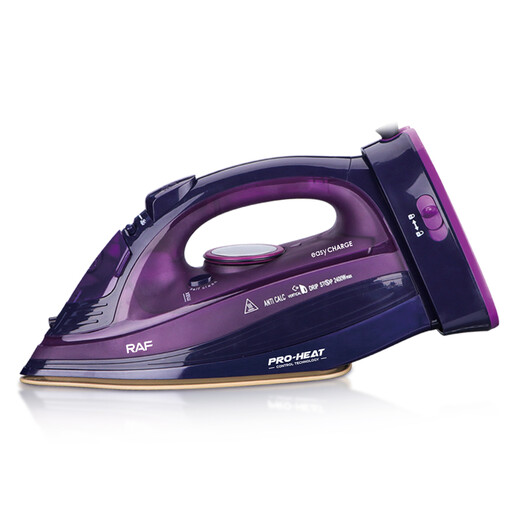 No image available
This model is described as a cordless steam iron. If several housemates will use it, think about where you can leave it safely while it cools down.
The soleplate stays hot after use. Stand the iron upright on its base and don’t leave it unattended.
 No image available
This steam iron may be a good option if you want to press your napkins flat on an ironing surface. Adjust the temperature and steam to suit the care label on each napkin.
The soleplate and steam get very hot. Don’t leave the iron unattended, and unplug it after use.
 No image available
A steam generator may be a better choice if your housemates regularly iron larger loads. According to the Consumers’ Association of the Netherlands, this type of appliance needs more storage space than a compact steam iron.
The soleplate and the steam it produces are hot. Don’t leave the appliance unattended.
No. Follow the care label on the napkin in question; the symbols show the maximum treatment permitted. IKEA states that the 100% linen STOCKHOLM 2025 napkin can be ironed at a maximum of 200 °C, but this guidance does not automatically apply to other linen napkins.
Not necessarily. According to the Consumers’ Association of the Netherlands, a steam iron may be suitable if you have little to iron or limited storage space. A generator is worth considering if your housemates regularly iron larger loads and you have room for it.
Agree who will use the hot iron, unplug it and put it away once it has cooled. The Fire Service advises students not to overload extension leads or connect them to one another. Check whether the specific model has automatic switch-off.
Follow the manual for the exact model and take water hardness and usage into account. Philips gives model-specific descaling procedures for its own steam irons; these instructions do not automatically apply to other brands or steam generators.
Electrical appliances covered by the applicable EU rules must meet requirements including CE marking and an EU declaration of conformity from the responsible market operator, as described by the Dutch government and the European Union. The Dutch government states that there is no fixed statutory warranty period in the Netherlands; if a product is faulty, contact the seller. When buying online from a business, you usually have a 14-day cooling-off period.