
A family with lots of linen napkins
Regularly irons several napkins after family meals and wants to smooth out creases without having to interrupt each ironing session.


A steam generator is worth considering if you regularly iron several linen napkins at home. For just a few napkins, a regular steam iron may be suitable too. Look for adjustable continuous steam, consider how much ironing you do and check the maintenance requirements. Always follow the care label: too much steam can leave the napkins and ironing board damp.
Regularly irons several napkins after family meals and wants to smooth out creases without having to interrupt each ironing session.
Wants crisp folds and a dry finish, and pays attention to steam control and the care label rather than focusing solely on the highest steam boost.
Irons smaller loads and weighs up the convenience of a more compact appliance against the footprint of a generator with a separate tank.
First compare how much ironing you do and how much control you want over the steam. Then check whether the tank, maintenance requirements and storage space suit your household.
| What to consider | What to look for when buying | Who should pay particular attention? |
|---|---|---|
| Stubborn creases | Compare adjustable continuous steam separately from the steam boost, and follow the napkins’ care labels. | If your main aim is to remove creases from linen, choose a suitable, controllable steam output. Around 33% of consumers say crease removal is their top priority. |
| Ironing a pile in one go | Check the tank capacity, how you can refill it and whether the base unit will fit in your ironing space. | If you iron several napkins in a row after a meal, you’ll want to minimise refill breaks without having an awkwardly large set-up. Around 27% of consumers give long ironing sessions the highest priority. |
| Fabric care and a dry finish | Check the ironing symbol and whether you can easily adjust or switch off the steam. | If you want to avoid leaving napkins too damp, follow the care label and look for the option to finish ironing without steam. Around 20% of consumers put fabric care first. |
| Maintenance and storage | Read the maintenance instructions for the exact model and compare the dimensions of the complete set-up. | If you have limited cupboard space or use the appliance regularly, check in advance how to maintain it and where the base unit will fit. Around 20% of consumers start by considering maintenance and storage space. |
Continuous steam and a separate steam boost are different specifications. More moisture isn’t always better: napkins and the ironing board can be left damp.
Compare the continuous output in g/min and the steam control separately from the steam boost. If necessary, finish ironing without steam until the fabric is dry.
A generator has a separate base unit. For small or occasional ironing loads, a regular steam iron may be worth considering too.
Compare both types based on the number of napkins you actually iron before choosing an appliance with a base unit.
An additional manufacturer’s or retailer’s guarantee is on top of your statutory rights.
Read what cover is offered and keep the seller’s details.
The 3000 Series PSG3000/20 is worth a look if continuous steam and a ceramic soleplate matter for regular ironing.
The Express Vision SV8151E0 is worth comparing if you’re looking for a refillable tank and an accessible limescale collector for longer sessions.
The CareStyle 3 IS3132WH is worth comparing if both session length and storage space are important.
When considering a Rowenta steam generator, check the exact model number alongside the maintenance parts available.
These products are suited to regular ironing sessions with a steam generator. A regular steam iron for a few napkins is also included as an alternative.
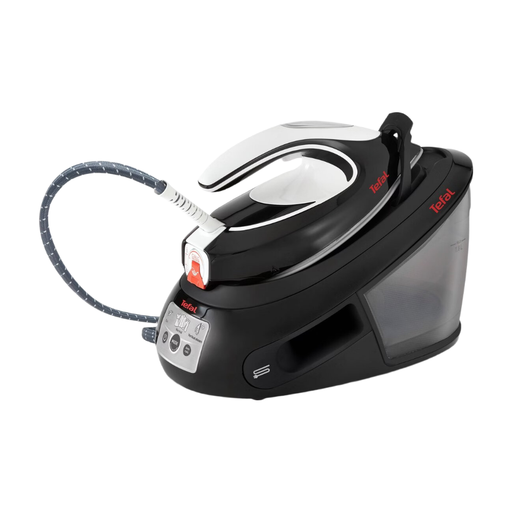 No image available
A steam generator to compare if you regularly iron several napkins at home.
Listed pressure: 6,5 bar.
 No image available
A model to include in your comparison if you regularly iron several linen napkins.
2400 W; 120 g/min of continuous steam and a separate 350 g steam boost according to Philips; 1,4 L tank.
 No image available
A steam generator to compare if you regularly iron several napkins.
Model: SV8026.
 No image available
A steam generator to compare if you iron several napkins in a row.
2400 W; 70 g steam output and a separate 120 g steam boost; 6 bar; removable 1,8 L tank; Eco mode.
 No image available
A regular steam iron to compare if you only iron a few napkins.
40 g/min of continuous steam; a separate 180 g steam boost; 300 ml tank.
No. Choose the highest suitable setting based on the ironing symbol on the specific napkin, not just the name of the fibre. Follow the label when setting the temperature and steam.
Too much steam can leave moisture behind. Adjust the steam and, if necessary, finish ironing without steam until the fabric is dry, as advised by the Consumers’ Association.
Follow the maintenance instructions for the exact model. Philips recommends regular cleaning to maintain steam output; this isn’t a universal descaling schedule for all brands.
No. An additional guarantee is on top of your statutory rights. If a product doesn’t meet the applicable requirements, you can contact the seller for a solution. ACM ConsuWijzer explains that statutory guarantees exist alongside the seller’s guarantee.
Check who the seller is and whether the appliance complies with the applicable CE marking rules for electrical appliances on the EU market, as explained by the Dutch government. When you buy online from a business, you usually have a 14-day cooling-off period, although exceptions may apply.