
People who wear delicate cotton ties
You want to remove creases without leaving shiny patches or marks. GINETEX advises setting the maximum temperature according to the care label for the whole garment.


For the occasional touch-up to a cotton tie, a standard compact steam iron is usually a practical choice. A large steam generator makes more sense if your housemates also regularly iron large loads of laundry. The care label for the whole tie determines whether ironing and steam are allowed, not just the cotton outer fabric. Automatic shut-off can be an extra safety feature when sharing an iron, but it doesn’t replace supervision.
You want to remove creases without leaving shiny patches or marks. GINETEX advises setting the maximum temperature according to the care label for the whole garment.
You want straightforward controls and can consider automatic shut-off as an extra safety net. Braun describes this feature for specific models; safe placement, supervision and agreeing how to cool and store the iron remain important.
You occasionally iron a tie or another small item of clothing and don’t want to store a separate tank and base. The Consumentenbond says a standard steam iron is a good choice if you do little ironing or have limited storage space.
Choose this if: you occasionally smooth out an ironable tie and want to use the appliance for small items of clothing too.
Consider: a smaller water tank may need refilling sooner during longer ironing sessions.
Choose this if: the care label allows ironing but not steam, or if you want to avoid moisture.
Consider: cotton creases can be harder to remove without moisture; pressing harder is no substitute for using an approved temperature.
Choose this if: you want to freshen up a tie and the care label allows steaming.
Consider: the Consumentenbond reports that some tested steamers failed to smooth cotton, so a steamer isn’t a proven substitute for pressing.
Choose this if: your housemates often iron larger loads of laundry as well as ties, and you have space for the separate tank.
Consider: a generator takes up more storage space than a standard iron if you only iron a few ties.
For cotton ties in a shared home, the key factors are how to care for the whole tie, safe shared use, storage space and how much other ironing needs doing.
| What to consider | What should you look for? | Who should consider this most? |
|---|---|---|
| Protecting the tie | Check the care label for the whole tie to see what temperature and steam are allowed; check whether you can switch the steam off. | When I iron a tie, I want to tackle creases without leaving shine or marks. Around 36% of consumers prioritise ironing precisely without causing damage. |
| Shared use | Check whether the exact model has automatic shut-off and think about where the iron can cool down safely. | In a shared home, I want my housemates to be able to use the appliance easily and put it away safely. Around 29% of consumers prioritise safe use by multiple people. |
| Storage space | Compare the dimensions and consider whether an integrated reservoir suits your ironing sessions. | With limited storage space, I’d rather not have a separate tank or base for a few small ironing jobs. Around 21% of consumers say compact storage is their top priority. |
| Larger loads of laundry | Consider how much laundry you iron in one go, then compare tank capacity and adjustable steam. | If your housemates also iron a lot of laundry, greater capacity may matter more than compact storage. Around 14% of consumers say larger shared loads of laundry are their top priority. |
The care label applies to the whole tie. Too much heat or pressure can damage the fabric or make it shiny.
Read the care label before you start and use only the permitted heat and steam settings. A pressing cloth can help protect an ironable tie that is prone to shine.
The Consumentenbond reports that some tested steamers failed to smooth cotton.
Choose a steamer mainly for freshening up a tie, and only if the care label allows steaming. If you want a neatly pressed tie, a suitable iron is another option, provided the care label allows ironing.
How the feature works varies by model, and it doesn’t remove the risk of leaving a hot appliance within reach.
Check that the exact model has this feature, stay nearby while using it and agree with your housemates on a safe place for the iron to cool down.
The TexStyle SI 1009 and SI 3055 are examples of steam irons suited to smaller ironing jobs.
The Easygliss Plus FV5736E0 is a steam iron for anyone who wants to iron other laundry as well as ties.
The Philips 3000 Series includes the DST3041/30, a steam iron with an integrated reservoir.
These product picks are aimed at ironable ties and short ironing sessions; check which settings are permitted for each model and tie.
 No image available
The manual controls and dry-ironing option are useful if you want to adjust the settings to suit the care label.
The product information lists manual temperature and steam control, a dry-ironing function, automatic shut-off and a 0,15 l reservoir. The title mentions Dual Voltage.
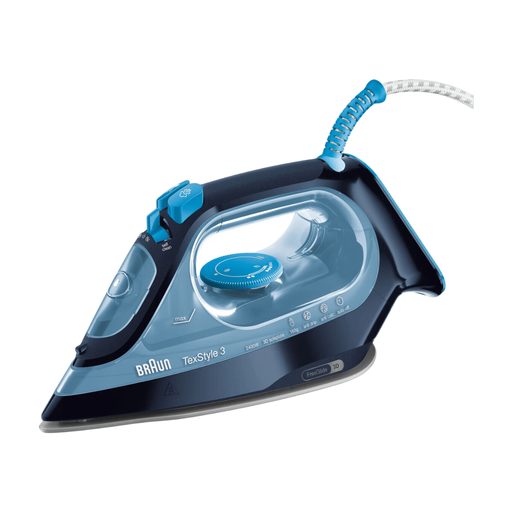 No image available
A precision tip can be useful when ironing small areas, while automatic shut-off is worth considering for shared use.
The product information lists a precision tip and automatic shut-off.
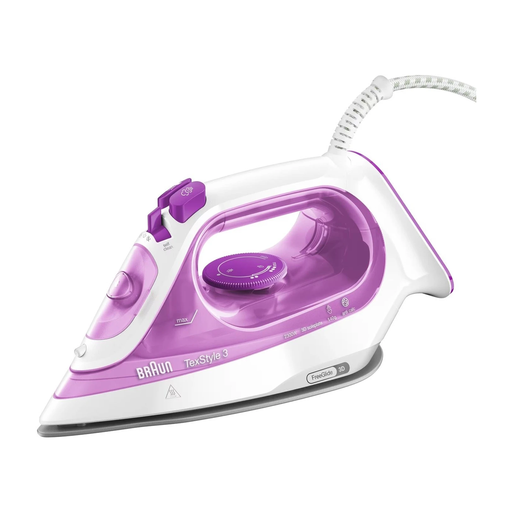 No image available
The precision tip is worth considering if you iron around seams or collars.
The product information lists a ceramic soleplate and a 270 ml reservoir.
 No image available
Automatic shut-off may be worth considering when several housemates use the iron.
The product information lists automatic shut-off and a precision tip.
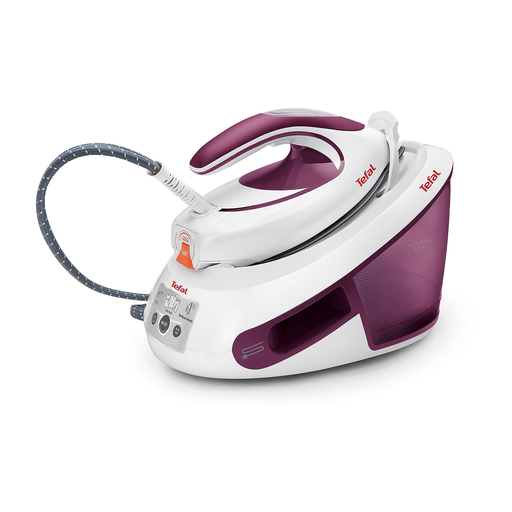 No image available
The stated adjustable steam control may be useful if you want to tailor the amount of steam to each ironing session.
The product name lists 2800 W, a 1,8 l reservoir and a Durilium soleplate. The product information also mentions a precision tip, adjustable steam control and automatic shut-off.
No. The care label for the whole tie tells you whether and how you can iron it. If ironing isn’t allowed, don’t use an iron; if steam isn’t allowed, switch it off. A pressing cloth can help protect an ironable tie with areas that are prone to shine or marks.
Never leave a plugged-in iron unattended. Keep it stable and out of reach of children and pets. Unplug it after use and let it cool completely before putting it away; automatic shut-off is just an extra safety net.
Follow the instructions for the exact model. Philips recommends descaling its steam irons regularly and notes that limescale can build up more quickly in hard water. Don’t assume that Philips’ descaling instructions apply to other brands.
According to the Dutch government, you’re entitled to a product that works as it should, and the Netherlands has no fixed statutory warranty period. If there’s a fault, contact the seller; a manufacturer’s or extra paid-for warranty is in addition to your statutory rights.
When you buy from a business at a distance, you usually have 14 days to change your mind. The Dutch government lists some exceptions and distinguishes these purchases from buying online from a private individual, so check who the seller is and which terms apply to your purchase.