
Wearers of cotton skirts
You want to press hems or pleats precisely, and set the temperature according to the care label rather than the fabric name alone. GINETEX recommends basing the maximum temperature on the care label.


If you only press a cotton skirt occasionally and have limited storage space, a standard steam iron with adjustable temperature and steam settings is usually the best fit. A steam generator is worth considering if you have a large pile of ironing to get through; a garment steamer is mainly useful for freshening up clothes and tackling light creases, rather than creating sharp hems or pleats. Always follow the ironing symbols on each skirt’s care label.
You want to press hems or pleats precisely, and set the temperature according to the care label rather than the fabric name alone. GINETEX recommends basing the maximum temperature on the care label.
You iron small loads and want to be able to put the appliance and ironing area away easily. The Consumers’ Association recommends a standard steam iron if you do little ironing or have limited storage space.
You need a stable, clear space for a hot appliance and want to use shared sockets safely. The Netherlands Fire Service advises, among other things, not to connect extension leads to one another or plug too many appliances into a single extension block.
Best for: one or a few skirts at a time, and limited storage space.
Bear in mind: the smaller tank may need refilling more often during longer ironing sessions.
Best for: large loads of ironing or frequent stubborn creases, provided you have space for the appliance and a suitable ironing board.
Bear in mind: a larger appliance needs more storage space and may be noisier and take longer to heat up.
Best for: freshening up lightly creased skirts while they’re hanging, without setting up an ironing board.
Bear in mind: Philips says a garment steamer won’t give the same results as an iron on thick cotton, so don’t assume it will create sharp creases.
| What to consider | What to look for | Who should consider this? |
|---|---|---|
| Pressing results | Check the temperature and steam controls, and whether the soleplate tip is suitable for working around hems and seams. Always follow the care label. | If I want to press hems or pleats neatly, I look at the controls and the shape of the soleplate tip. Around 36% of consumers prioritise pressing results. |
| Storage space | Compare the appliance’s dimensions and think about where you can iron safely. A larger tank may mean fewer refills when you have a big load, but it usually takes up more space. | If my room has little wardrobe space, I also want to be able to put the appliance and ironing area away easily. Around 29% of consumers give storage space top priority. |
| Shared ironing area | Check that there’s a stable, clear space and a safe power connection available. Don’t connect extension leads to one another. | If I share the space and sockets with housemates, I want an area where I can use the hot appliance safely. Around 21% of consumers prioritise shared and safe use. |
| Maintenance | Check which descaling method applies to the exact model and follow the instructions; methods can vary between versions. | If I share the iron with housemates, I want to know how to keep it clean and ready to use according to the model’s instructions. Around 14% of consumers name ease of maintenance as their main concern. |
A quoted steam boost is not the same as continuous steam output or the ironing results on cotton.
Compare the settings too and, if the information is available, look for an independent cotton test of the exact model.
Philips says a garment steamer won’t give the same results as an iron on thick cotton.
Choose a steamer mainly for freshening up clothes; use an iron for a crisp finish if the care label allows it.
You may still need an iron and a suitable ironing area to achieve the finish you want.
A generator may be too large or heavy for a standard ironing board.
Check the dimensions of the complete appliance in advance and make sure the available board is suitable for it.
You may need a larger or sturdier ironing board and extra storage space.
The 3000 Series includes standard steam irons. For the DST3031/20 model, Philips lists a ceramic soleplate and a 300 ml water tank.
The Express Steam FV2837 is a standard steam iron. Tefal lists 2400 W and a steam boost of up to 165 g/min for this model.
Braun describes the purple TexStyle 3 SI 3030 as a model with a manual thermostat, precision tip and self-cleaning function.
For the ST-8350, Tristar lists an adjustable temperature, a ceramic soleplate and a continuous steam output of 30 g/min.
These Joybuy products are standard steam irons for smaller ironing sessions, with a range of controls, tank capacities and soleplate features.
 Image unavailable
The five temperature settings may be useful if you want to match the setting to the care label.
The product description lists a 350 ml tank, dry and steam ironing, vertical steaming and a 1,95 m cord.
 Image unavailable
The manual temperature and steam controls may suit you if you want to adjust the settings yourself for each ironing session.
The product description lists a 0,15-litre tank, a steam output of 22 g/min, a weight of 0,77 kg and dual voltage.
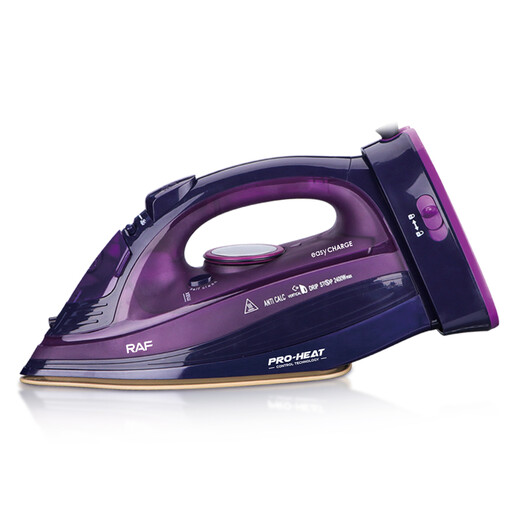 Image unavailable
The cordless design may suit you if you don’t want a cord attached to the iron while you’re ironing.
The product title lists 2400 W and a 320 ml tank; the description mentions a ceramic soleplate and a steam output of 15–25 g/min. The iron needs to sit on the 360° charging base to heat up.
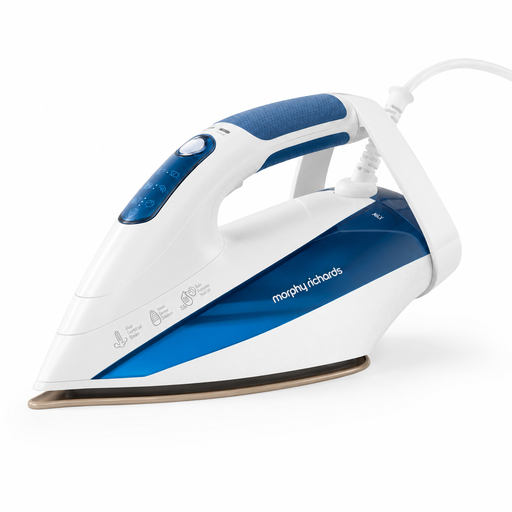 Image unavailable
The variable steam settings and precision tip may be useful if you want to adjust the steam and work around hems.
The product title lists 2400–2800 W, 50 g/min steam and a 350 ml tank. The description mentions six steam settings, a ceramic soleplate, an anti-drip function and self-cleaning.
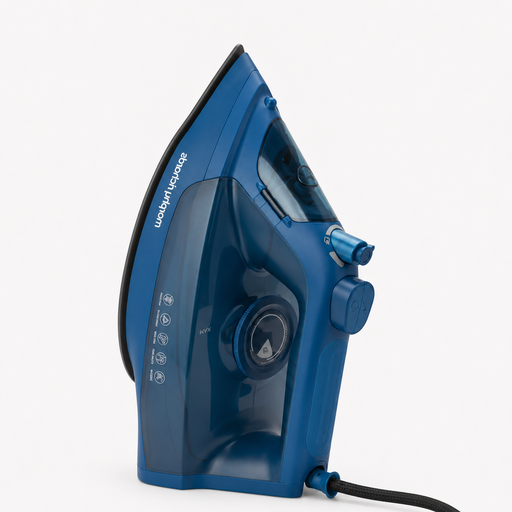 Image unavailable
The precision tip may come in handy if you want to work around hems and seams.
The product title lists 2800 W and a ceramic soleplate. The description mentions a 350 ml tank, variable steam, a lightweight design and a 2 m cord.
No. Choose the maximum permitted temperature based on the skirt’s care label, not just the word ‘cotton’.
A steam generator is most worth considering if you iron a lot at once or often deal with stubborn creases. Bear in mind its dimensions, the need for a suitable ironing board and the extra storage space it requires.
Follow the instructions for the exact model, as descaling methods can vary between versions.
Electrical equipment that falls within the applicable European requirements must meet product safety rules, including requirements for CE marking and an EU Declaration of Conformity. Business.gov.nl describes these obligations; they do not, on their own, establish that an individual model complies.
No. According to the Dutch government, there is no fixed statutory warranty period in the Netherlands. However, you can expect a product to be of satisfactory quality, depending on what you can reasonably expect from it. The seller is your point of contact if there’s a problem, while a manufacturer’s warranty is a separate arrangement.