
Someone ironing cotton with limited cupboard space
You want to smooth out cotton shorts from time to time, but don’t want to store a large steam generator.


If you only iron cotton shorts occasionally and have limited cupboard space, a standard steam iron is a sensible place to start. You can press horizontally without having to store a separate generator base. A folding travel iron takes up less space, but the Severin BA 3234 mentioned here has a small water tank. And if you rely on vertical steaming alone, a crisp finish on cotton is less certain. Check the care label, the ironing surface available to you and the product markings before choosing.
You want to smooth out cotton shorts from time to time, but don’t want to store a large steam generator.
You can’t leave an ironing board set up, so you need to put away both the appliance and a suitable ironing surface after use.
You also regularly iron larger or heavier cotton items, and need to weigh up storage space against longer ironing sessions.
Choose this if: you want to press cotton horizontally, only iron occasionally and have a safe ironing surface.
Bear in mind: you may need to refill the tank during longer sessions. Also measure the appliance and the space available for storing its cord.
Choose this if: taking up as little space as possible is your top priority and you only iron one or a few garments at a time.
Bear in mind: according to the manufacturer, the Severin BA 3234 has a 0.05-litre tank, so you’ll need to refill it sooner when ironing several garments.
Choose this if: you mainly want to freshen up clothes, or can use a combination appliance horizontally with a suitable ironing mat.
Bear in mind: the Dutch Consumers’ Association reports that some garment steamers failed to smooth cotton, so vertical steaming is not a reliable substitute for pressing.
Choose this if: as well as shorts, you regularly iron large quantities or heavily creased fabrics, and have room for the separate water tank.
Bear in mind: the separate base takes up extra storage space, so measure the whole set, not just the iron.
| What to consider | What should you check? | Who is this important for? |
|---|---|---|
| A smooth finish on cotton | First check the ironing symbol, then compare adjustable steam with a steam shot. The shot alone tells you nothing about the continuous steam output. | I want my cotton shorts to look properly smooth, so I pay attention to how they are pressed. Around 36% of consumers prioritise a smooth finish on cotton. |
| Storing the appliance | Measure the cupboard space and compare the full appliance dimensions and tank capacity. | With limited cupboard space, I want to be able to put the appliance away easily after use. Around 29% of consumers give minimising storage space their highest priority. |
| Setting up an ironing space | Check whether horizontal ironing is permitted and whether a suitable heat-resistant mat is included. Follow the instructions for the surface you use. | I don’t have a permanent place for an ironing board and want to be able to put everything away afterwards. Around 21% of consumers say not having a permanent ironing surface is their main concern. |
| Maintenance and running costs | Check the model manual for guidance on water and descaling, and see whether the appliance uses a replaceable anti-scale cartridge. | I want to know what maintenance my iron needs and whether I’ll need to buy consumables. Around 14% of consumers prioritise easy maintenance. |
The Dutch Consumers’ Association reports that some garment steamers failed to smooth cotton. Vertical steaming alone is therefore best suited to you if a less crisp finish is acceptable.
Check whether you want to freshen up clothes or press them horizontally, then choose an appliance that suits the way you want to use it.
Even a small iron needs a suitable surface for horizontal pressing. An ironing mat may be an alternative with a specific combination appliance, but check exactly what’s included.
Measure both the storage space and the place where you want to use the appliance safely, and follow the instructions for setting up your ironing area.
A temporary steam shot and the continuous steam supply are different specifications. A steam-shot figure in g/min does not automatically describe the continuous output.
Compare the same type of steam specification across models, and also check the tank capacity.
An anti-scale function doesn’t eliminate the need for maintenance. Models with a replaceable anti-scale cartridge may incur recurring replacement costs, though this doesn’t apply to every appliance.
Before buying, check which descaling method your chosen model uses and what maintenance the manufacturer recommends.
According to Philips’ product specifications, the Philips 3000 Series DST3031/20 is a standard steam iron with a ceramic soleplate and a 300 ml tank.
The Severin BA 3234 is a travel steam iron with a folding handle. Severin lists its dimensions as 11 × 20 × 9.2 cm and says it can switch between 115/230 V.
Tefal offers several types, including the standard Express Steam FV2838E0, the Duo Power JF4031E0 with ironing mat, and the Express Easy SV6131E0 steam generator.
According to Braun, the Braun TexStyle 3 SI 3054 GY is a standard steam iron with a 270 ml tank and a manually adjustable thermostat.
These are standard steam irons for anyone who wants to press cotton garments horizontally without storing a separate generator base.
 No image available
The listed temperature settings and adjustable steam give you options to suit the fabric. Check the care label before ironing.
Power: 2400 W. Tank: 350 ml. Five temperature settings, adjustable steam and vertical steaming are listed.
 No image available
A standard steam iron for horizontal ironing. Check that the settings suit the care label on your shorts.
Tank: 300 ml. The product specifications list a steam output of 40 g/min and a steam shot of 180 g; these are different functions.
 No image available
Manual temperature and steam controls may suit you if you want to adjust the settings yourself. Follow the care label and product manual.
Removable tank: 0.15 litres. Vertical steaming and a steam shot are listed. The smaller tank may mean you need to refill it sooner when ironing several garments.
 No image available
This standard steam iron is an option for horizontal ironing. Adjust the temperature and steam to suit the care label.
Power: 2000 W. Tank: 300 ml. The description lists a ceramic soleplate and horizontal and vertical steaming.
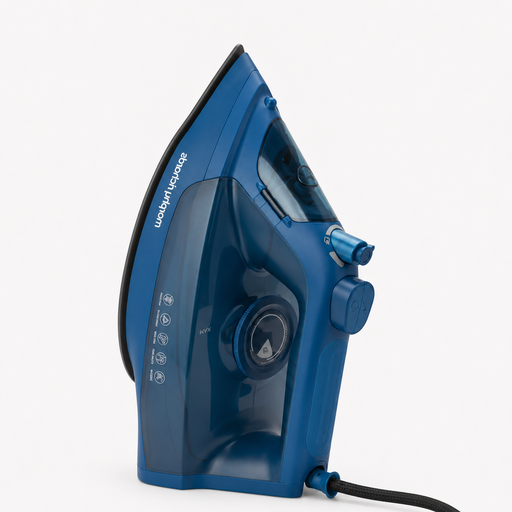 No image available
The variable steam setting may be useful if you want to adjust the steam output. Check the care instructions for your shorts.
Power: 2800 W. Tank: 350 ml. The description lists a ceramic soleplate, variable steam and a cord storage clip.
No, follow the care label on the specific garment. According to GINETEX, the ironing symbol indicates the maximum permitted soleplate temperature, so don’t choose a setting based on the word ‘cotton’ alone.
If the label allows steam, use a suitable temperature and amount of steam, then finish ironing without steam until the fabric is dry. The Dutch Consumers’ Association warns that too much steam can leave fabric damp.
Follow the manual for your chosen model for advice on water and descaling. The Dutch Consumers’ Association says that Dutch tap water is generally suitable, but advises following the model-specific instructions if you have unusual or softened water. Don’t use perfumed ironing water unless the manufacturer explicitly allows it.
According to the Netherlands Food and Consumer Product Safety Authority, CE marking is mandatory for electrical products covered by the relevant rules. This general requirement does not confirm that a specific item for sale carries the marking, so check the product identification and marking when you buy.
According to the Dutch Government, you can return an old, similar appliance to the retailer when you buy a new one. Collection points and local council services may also be available.