If you mainly iron a few pairs of cotton shorts and storage space is limited, a standard steam iron with a soleplate is the most practical choice. You can press garments horizontally with it, and it usually takes up less room than a steam generator. A generator may suit larger piles of laundry if you have space for the separate base. A handheld steamer is an alternative when there’s no room for an ironing board, but it isn’t designed to press sharp creases. The Consumers’ Association (Consumentenbond) recommends taking the fabric into account when ironing. You should also follow the care label on your shorts.
Who is this advice for?
For anyone with a small laundry area
You iron shorts from time to time and put the appliance and ironing surface away afterwards. A compact appliance may matter more than a large water tank. The Consumers’ Association says limited storage space is one reason to consider a standard steam iron.
For anyone who wants a sharp crease
You want to press cotton shorts flat rather than simply freshen them up on a hanger. Check the care label, the soleplate and whether you can adjust the steam output.
For anyone who regularly irons larger piles
You iron thicker fabrics or lots of clothes as well as shorts, and can weigh up the extra space needed for use and storage against having to refill less often. The Consumers’ Association explains the differences between a standard iron and a steam generator.
What should you look for when choosing?
Standard steam iron
A good fit if: you want to press small amounts of laundry horizontally and have limited storage space.
The trade-off: the water tank is inside the iron, so you may need to refill it sooner during longer ironing sessions.
Steam generator
A good fit if: you regularly iron large loads or thicker, stubbornly creased fabrics and have room for the separate base.
The trade-off: the base takes up more room to store and move around; also check that your ironing surface is suitable.
Handheld steamer
A good fit if: there’s no room for an ironing board and freshening clothes vertically matters more than pressing a sharp crease.
The trade-off: you use a handheld steamer vertically, without the pressure of a soleplate. Tefal describes this as a different way to care for clothes from ironing with an iron.
| What to consider |
What should you check? |
Who is this important for? |
| Storage |
Measure the space for both the appliance and the ironing surface; check the cord and any separate parts too. |
If I have very little space, I want to be able to put the appliance away easily after a short ironing session. Storage is the main priority for around 27% of consumers. |
| Pressing cotton smooth |
Check the care label and, where available, how the exact model performs on cotton; see whether you can adjust the steam output. |
If I want a smooth finish or a sharp crease, I’m looking for a soleplate and a suitable ironing surface. Around 27% of consumers put pressing performance first. |
| Short ironing sessions |
Compare the water tank, how it’s filled and the water level with the amount of laundry you iron. |
For a few pairs of shorts, I don’t want to get a larger appliance ready unnecessarily. Around 20% of consumers mainly prioritise short ironing sessions. |
| No ironing board |
Decide whether freshening clothes vertically is enough or whether you want to press a sharp crease. |
If I don’t have room for an ironing board, vertical steaming may be a solution, as long as a pressed crease isn’t essential. This is the main priority for around 13% of consumers. |
| Maintenance |
Check the instructions for the specific model on filling, cleaning and descaling. |
I want to know how to maintain the appliance before using it in a small laundry area. Around 13% of consumers put ease of maintenance first. |
Common mistakes when choosing
-
Treating a compact generator like a standard iron
Even a compact steam generator has a separate base. It takes up room alongside the iron, and you may need a suitable ironing surface.
Measure the space for both the base and the ironing surface beforehand. Don’t choose based on the word ‘compact’ alone.
-
Choosing a handheld steamer when you want a sharp crease
Removing creases vertically from clothes on a hanger is different from pressing them horizontally with a soleplate. Tefal describes a handheld steamer as a different choice from an iron for creating sharp lines.
Choose a steamer mainly if being able to work without an ironing board matters more than a pressed crease.
-
Comparing only the stated steam shot
A manufacturer’s stated steam shot isn’t an independent assessment of how well a specific model smooths cotton. The Consumers’ Association assesses cotton as a separate fabric type.
Where available, compare the cotton results for the exact model and also check the steam settings and ease of handling.
-
Skipping the care label and maintenance instructions
The permitted temperature depends on the garment. Philips points out that limescale can affect steam output.
Read the care label before ironing and follow the maintenance instructions for the exact appliance.
Brands to consider
Philips
Philips offers information on both standard 3000 Series steam irons and PerfectCare Compact steam generators.
- Philips lists a ceramic soleplate and a 300 ml water tank for the DST3031/20.
- These specifications alone don’t show how well the appliance smooths cotton shorts. A generator has a separate base.
Tefal
Tefal offers information on compact Virtuo steam irons and handheld steamers for vertical use.
- For the Virtuo FV1710E0, Tefal lists a compact design, continuous steam of up to 20 g/min and a steam shot of 80 g/min.
- These are manufacturer specifications, not the results of a comparative cotton test. Tefal describes a handheld steamer as a different choice from an iron for creating sharp creases.
Braun
The TexStyle 3 range includes standard steam irons; the SI 3055 is a specific model with published details.
- Braun lists a 270 ml water tank, manual temperature control, self-cleaning and automatic shut-off for the SI 3055.
- These features alone don’t tell you how well the iron presses cotton shorts.
Products for ironing in a small laundry area
These product picks are irons and steam irons for anyone who wants to press shorts on an ironing surface. Compare their dimensions and settings with the space you have and the ironing you do.
 No image available
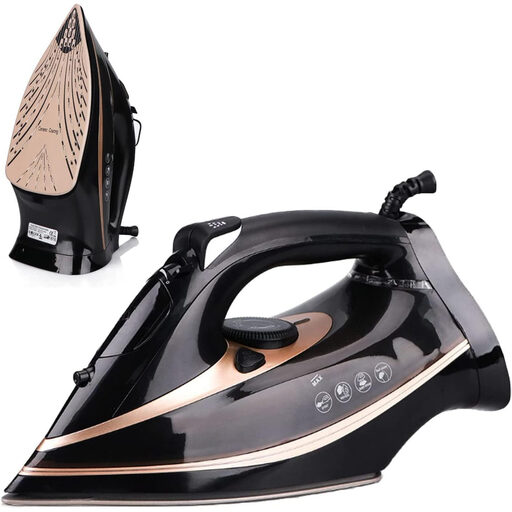
Steam iron, 2600 W, ceramic soleplate
An option for pressing shorts horizontally with a ceramic soleplate.
Continuous steam: 70 g/min; steam shot: 120 g/min; water tank: 300 ml; self-cleaning.
View at Joybuy
 No image available
Steam iron, 2400 W, non-stick soleplate
An iron with a soleplate for anyone who wants to press shorts on an ironing surface.
Automatic cleaning function and anti-drip system.
View at Joybuy
 No image available
Philips 3000 Series DST3031/20
The ceramic soleplate and adjustable steam, including a no-steam setting, are useful if you want to adjust the steam output while ironing.
Steam shot: 180 g; steam: 40 g/min; water tank: 300 ml; automatic shut-off.
View at Joybuy
 No image available
Xiaomi BHR9034EU handheld steam iron
The product description calls it a 2-in-1 appliance for dry and steam ironing, with manual temperature and steam controls.
Water tank: 0,15 l; vertical steam function; automatic shut-off; dual voltage.
View at Joybuy
 No image available
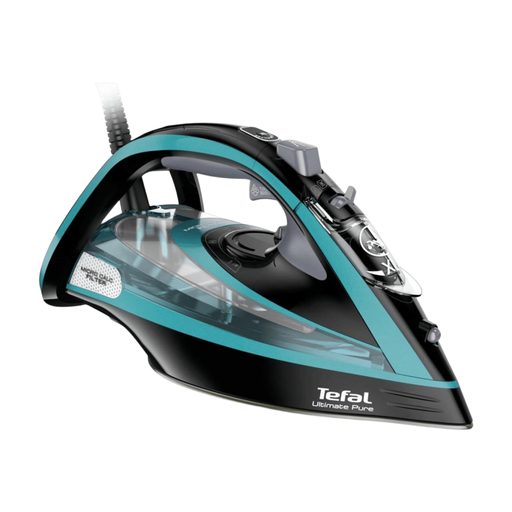
Tefal Ultimate Pure FV9844
The soleplate and variable steam output are useful if you want to adjust the steam setting while ironing.
Water tank: 0,35 l; steam output of up to 60 g/min; manual temperature control; filter to trap limescale particles.
View at Joybuy
Frequently asked questions
Can I simply iron cotton shorts on a high heat?
No. Follow the care label on your shorts: the permitted temperature and any restrictions on ironing or steaming depend on the garment, not just the fabric name ‘cotton’.
How can I stop shorts staying damp after steaming?
After steaming, iron without steam and let the fabric cool while dry, as the Consumers’ Association recommends. Check whether you can switch off the steam on the model you choose.
How often should I descale a steam iron?
Follow the instructions for your exact appliance. Philips explains that hard water can lead to limescale build-up more quickly and provides instructions for specific models. Don’t automatically use instructions for a Philips model with another brand or a generator.
What can I do if an iron I bought online is faulty?
In the Netherlands, you’re entitled to a product that works properly, and the seller is your point of contact for a solution. According to the Dutch government, there isn’t one fixed statutory two-year warranty period for all products; factors including the product’s normal lifespan and the circumstances also matter.
Is CE marking compulsory for an iron in the Netherlands?
Yes. The Netherlands Food and Consumer Product Safety Authority says CE marking is compulsory for electrical products that fall within the relevant product category. Check the marking on the specific appliance; the general requirement alone doesn’t confirm that an individual model has the marking.


