
Ironing a shirt after a journey
You want to neatly iron one damp, creased cotton shirt, then leave it to cool and dry. The Dutch Consumers’ Association says slightly damp fabric is easier to iron.


For one slightly damp cotton shirt after a wet journey, a steam iron is usually the practical choice. Follow the care label and don’t make the fabric any wetter than necessary. A steam generator is worth considering if you regularly iron several shirts in a row. A clothes steamer can be useful for freshening up garments, but according to the Dutch Consumers’ Association, some steamers don’t smooth cotton.
You want to neatly iron one damp, creased cotton shirt, then leave it to cool and dry. The Dutch Consumers’ Association says slightly damp fabric is easier to iron.
You don’t iron much at once, and it’s important to you that you can get started quickly and store the appliance easily. The Dutch Consumers’ Association recommends a steam iron for smaller loads and limited storage space.
You regularly iron a pile of shirts and want to refill less often during longer sessions. A larger tank could be useful, provided you have room for the base.
For one slightly damp cotton shirt, the ironing results and control over the steam matter most. If you’re ironing several shirts in a row, refilling, storage space and maintenance become more important.
| What to consider | What to look for | Who should prioritise this? |
|---|---|---|
| Results on cotton | Check the care label, the steam settings and the information on ironing cotton; don’t look only at the quoted steam output. | I want to smooth one cotton shirt after a wet journey without making it wetter each time; around 36% of consumers put results on cotton first. |
| Quickly ironing one shirt | Compare the heat-up time, how heavy it feels in your hand and how much space it takes up; a smaller tank may mean more frequent refills during longer sessions. | If I want to iron one shirt between other tasks, I want to be able to pick up and put away the appliance easily; around 29% of consumers prioritise speed and limited storage space. |
| Ironing several shirts in a row | Consider the tank capacity, the space needed for the base and whether your ironing board is suitable for a steam generator. | When ironing a pile of shirts, I want to stop less often to refill the water; around 21% of consumers want to make longer ironing sessions easier. |
| Maintaining the steam channels | Check the descaling method and whether the model uses replaceable cartridges; follow the instructions for water and maintenance. | I want a descaling routine I can stick to that’s suitable for the appliance; around 14% of consumers put ease of maintenance first. |
A steamer can be useful for freshening up garments, but the Dutch Consumers’ Association says some steamers don’t smooth cotton. That makes a steamer less suitable if your main aim is a crisply ironed shirt.
For that, start with an iron. Consider a steamer as an extra way to freshen up clothes when you don’t need a pressed finish.
The larger tank can help during longer ironing sessions, but the separate base takes up more room and can be harder to store.
Measure your available storage space and check that your ironing board is suitable before choosing a generator.
According to the Dutch Consumers’ Association, limescale can block the steam channels and reduce steam output. An anti-scale feature doesn’t remove the need for maintenance.
Read the descaling instructions before you buy and check whether the model uses replaceable cartridges. Follow the guidance on water and permitted additives.
The Easygliss Plus FV5736 is an example of a steam iron for smaller ironing sessions.
The TexStyle 7 Pro SI 7149 is a steam iron to consider if you want to work precisely around buttons and pockets.
The PerfectCare PSG7200/20 is an example of a steam generator for ironing several garments in a row.
The Steamforce DW9240D1 is a steam iron to compare if you also come across dry, stubborn creases.
These Joybuy products are steam irons for ironing shirts. Compare the features of each model with your ironing routine.
 No image available
An option if you want to adjust the steam output and tackle stubborn creases more precisely.
The product information lists a Durilium Airglide soleplate, anti-drip function, 200 ml tank and 30 s heat-up time.
The product information lists adjustable steam output and a 220 g/min steam boost.
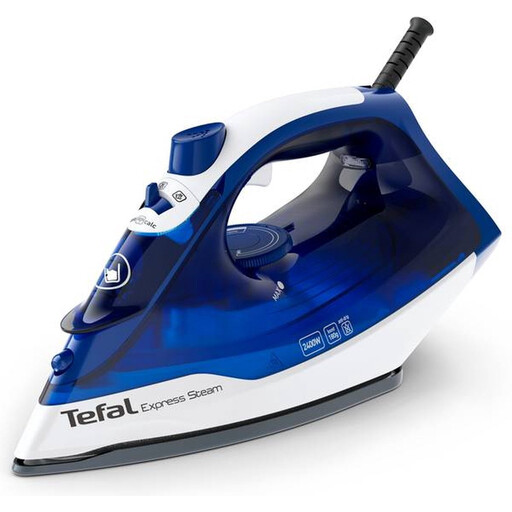 No image available
An option if you want to choose the temperature while ironing; check which setting is suitable for the care label.
The product information lists a ceramic soleplate, anti-drip function, 0,27 l tank and automatic temperature selection.
The stated steam boost is 180 g/min.
 No image available
A compact option to consider if portability matters; the product title says it’s for use both when travelling and at home.
The product information describes dry and steam ironing, adjustable steam and a steam boost function. The title also mentions dual voltage.
 No image available
An option if you want a precision tip for harder-to-reach areas, such as around buttons.
The product information lists a 300 ml tank, precision tip, anti-drip function and self-cleaning.
The stated continuous steam output is 50 g/min, with a 180 g steam boost.
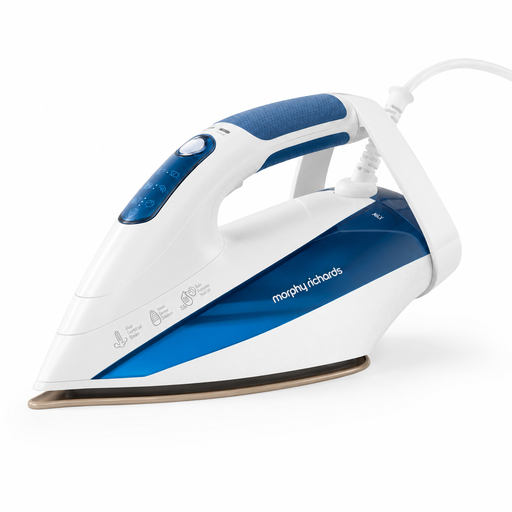 No image available
An option if you want to adjust the steam setting and use a precision tip around the collar and buttons.
The product name lists 2400–2800 W; the product information specifies a 350 ml tank, anti-drip function and self-cleaning.
The product information lists six steam settings plus an eco setting and a precision tip.
Ideally, iron the shirt when the fabric is slightly damp, as the Dutch Consumers’ Association advises. Check the care label first and don’t keep adding steam to fabric that’s already wet. After ironing, leave the shirt to cool and dry before wearing or storing it.
Follow the instructions for your specific model regarding water and any additives. According to the Dutch Consumers’ Association, limescale can block the steam channels, so also follow the recommended descaling routine.
Contact the retailer. According to the Dutch government, they can’t send you to the manufacturer for a solution to a faulty product.
No. The European Commission describes CE marking as the manufacturer’s declaration that the product complies with the relevant EU product rules. Mains-powered ironing appliances with a rated AC voltage of 50 to 1.000 V are subject to the applicable requirements of the Low Voltage Directive 2014/35/EU and the Dutch Commodities Act Decree on Electrical Equipment, as explained by the Netherlands Food and Consumer Product Safety Authority. This does not, on its own, establish that a specific model meets those requirements.