
If you iron a pile of dresses
You want to smooth several cotton dresses one after another, with as few breaks as possible to refill the water tank.


If you have a few cotton dresses and limited storage space, a steam iron is usually the better fit. For a large pile and longer ironing sessions, a steam generator with a larger tank may be more practical. Check the care label for the whole dress and compare how easy it is to reach seams, as well as the maintenance requirements and space needed. Before buying, also check the appliance’s CE marking and product-specific safety documentation.
You want to smooth several cotton dresses one after another, with as few breaks as possible to refill the water tank.
You only take a few dresses out of the wardrobe and don’t want to store a large appliance after ironing.
You want to be able to reach seams and pleats easily, and follow the care label’s instructions for the different materials.
Start by considering how much laundry you have and how much space is available. Then compare how suitable appliances handle the fabric, how often they need refilling and what maintenance they require.
| What to consider | What should you look for? | Who is this important for? |
|---|---|---|
| Ironing a large pile | Compare the steam output and tank capacity of the exact model. Where available, look at test results for cotton; the Consumentenbond assesses smoothing cotton separately from other fabric tests. | If I iron lots of dresses one after another, I want to know how often I’ll need to refill the tank and how the model handles cotton. This is the main concern for around 36% of consumers. |
| A few dresses and limited storage space | Check the dimensions, tank capacity and ease of handling of the model you’re considering. The Consumentenbond recommends a standard steam iron if you have little ironing to do or limited storage space. | I only iron a few dresses and want to be able to put the appliance away easily afterwards. Compact use is the main priority for around 29% of consumers. |
| Seams, pleats and different materials | Check the care label for the whole dress, along with the model’s temperature controls and any precision tip. GINETEX explains the permitted treatment for each item using its ironing symbol. | If my dresses have seams, pleats or delicate details, I want to treat them in line with the care label. Fabric and details are the top priority for around 21% of consumers. |
| Limescale and maintenance | Read the maintenance instructions for the exact model and check whether any parts need replacing. The Consumentenbond points out that anti-scale features don’t eliminate the need for maintenance. | After the appliance has been stored for a while, I want to know how to maintain it before ironing clean dresses. Maintenance is the top priority for around 14% of consumers. |
Wattage, a short burst of steam and continuous steam output describe different features. None of these figures alone shows how well a model smooths cotton.
Compare figures that use the same definition and, where available, look at a model test for cotton, such as the Consumentenbond’s separate fabric tests.
A generator needs space for both the appliance and its separate tank. Depending on the model, a standard ironing board may also be too small or too lightweight.
Measure your storage space in advance and check that your ironing board is suitable for the model you’re considering.
An anti-scale feature can slow the build-up of limescale, but it doesn’t remove the need for model-specific maintenance.
Read the manual before buying and check which anti-scale system the appliance uses.
The Philips Azur 8000 DST8050/20 is a steam iron with a single temperature setting and automatic steam.
The FV9851E0 and SV8055E0 offer two different options: a steam iron and a steam generator.
The Braun TexStyle 3 SI 3043 GR has a manual thermostat, making it a suitable option if you want to set the temperature yourself.
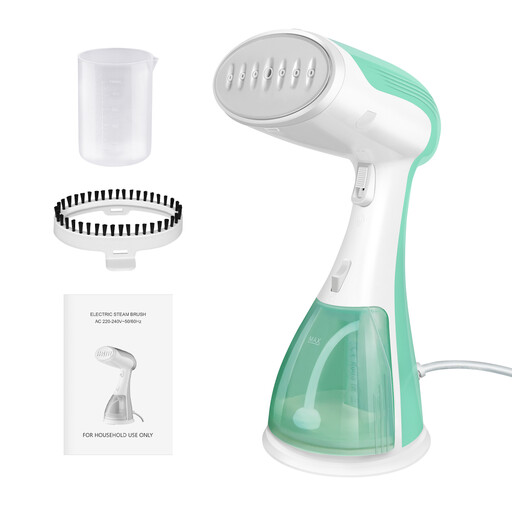
This selection includes a handheld garment steamer and steam generators for clothes and longer ironing sessions. Compare the product specifications listed with the amount of laundry you have, the space available and your maintenance preferences.
 No image available
Product information at Joybuy lists this steamer for use on clothes and for ironing on a flat surface.
Joybuy lists a removable 300 ml tank, continuous steam output of 27 g/min, a 1.5 m cord and up to 20 minutes of steaming.
Before buying, check the CE marking and product-specific safety documentation.
 No image available
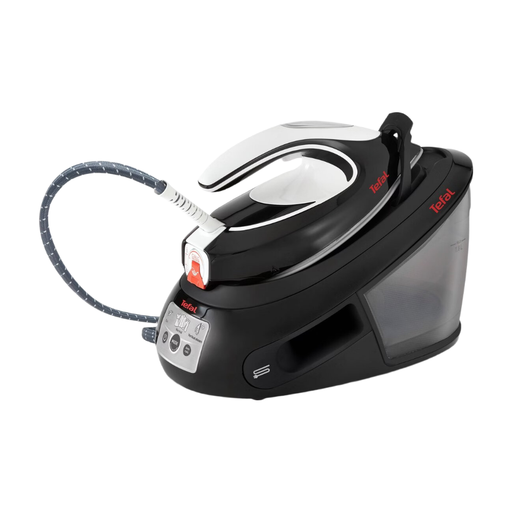
This model may suit longer ironing sessions; compare the space a steam generator takes up with the space available for ironing.
Product information at Joybuy lists continuous steam output of 120 g/min, a 450 g steam boost and a removable limescale collector. These are product specifications, not an independent assessment of performance on cotton.
Before buying, check the CE marking and product-specific safety documentation.
 No image available
Product information at Joybuy lists automatic temperature control, which may be useful if you switch between different ironable fabrics.
Joybuy lists a 1.4 l tank, continuous steam output of 120 g/min, a 350 g steam boost and vertical steaming.
Before buying, check the CE marking and product-specific safety documentation.
 No image available
This model may suit you if you’re looking for automatic temperature control; check that the instructions cover the fabrics and finishes of your dresses.
Product information at Joybuy lists a 1.3 l tank, continuous steam output of 120 g/min, a 360 g steam boost and vertical steaming.
Before buying, check the CE marking and product-specific safety documentation.
 No image available
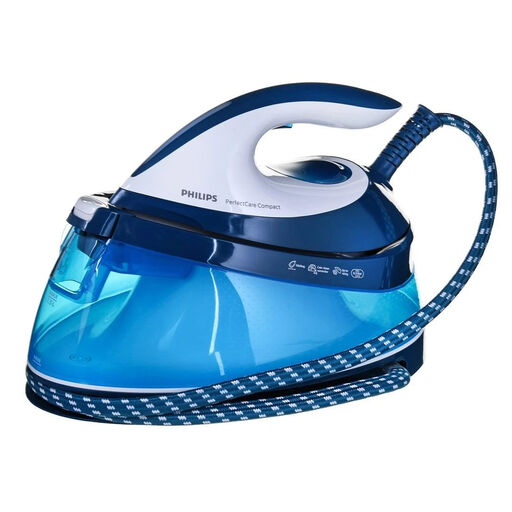
Product information at Joybuy lists automatic temperature control for different ironable fabrics.
Joybuy lists a 1.5 l tank, continuous steam output of 120 g/min, a 400 g steam boost and a Smart Calc-Clean system.
Before buying, check the CE marking and product-specific safety documentation.
No. Check the care label for the whole dress, including any delicate sections, finishes and embellishments. GINETEX lists maximum soleplate temperatures of 200 °C, 150 °C and 110 °C; the lowest setting means ironing without steam.
Not for every appliance. With a steam generator, you’ll need space for the separate tank and should check that your ironing board is large and sturdy enough for the model you’ve chosen. A standard board may be too small or too lightweight for some generators.
The Consumentenbond says that irons are designed for tap water; if you have hard water or other circumstances apply, follow the instructions for your model. Clean the tank and descale the appliance if needed, following those instructions. After descaling, iron an old cloth first to prevent any loose limescale particles from ending up on a dress.
Your statutory rights exist alongside any manufacturer’s guarantee. If a product develops a fault after normal use, the retailer is responsible for providing an appropriate solution at no cost. Some anti-scale systems use replaceable cartridges; check whether the exact model requires them.
The Netherlands Food and Consumer Product Safety Authority explains that the EU Low Voltage Directive applies to electrical equipment with a nominal AC voltage of 50–1000 V. According to the official EU guidance, equipment within this range sold in the EU must bear the applicable CE marking. Check the appliance’s marking and product-specific documentation.