
If you want precision around collars
You want to finish collars and cuffs neatly, including around seams and buttons. The Consumentenbond advises following the care label when ironing.


For neatly pressing collars and cuffs during short ironing sessions, a compact steam iron with an easy-to-reach precision tip and adjustable steam is the obvious choice. The Consumentenbond considers a steam iron suitable if you don’t do much ironing; a handheld steamer is an alternative if quickly removing creases without an ironing board matters more than achieving a crisp, pressed finish. For any appliance, check the settings for your fabrics and the information for the exact model.
You want to finish collars and cuffs neatly, including around seams and buttons. The Consumentenbond advises following the care label when ironing.
You want to keep set-up to a minimum for a quick session and put the appliance away easily afterwards. The Consumentenbond considers a steam iron suitable if you don’t do much ironing.
You want to adjust the heat and steam to suit the care instructions for different shirts. The Consumentenbond advises checking the care label.
Choose this when: You usually iron one or a few shirts and want to press the collar flat.
Trade-off: The built-in tank keeps the appliance compact, but you’ll need to refill it sooner when ironing larger loads. A standard iron is heavier than the iron on a steam generator.
Choose this when: You mainly want to remove light creases without having to set up an ironing board each time.
Trade-off: Steaming out creases isn’t the same as pressing a collar firmly with an iron soleplate. Philips lists the GC360/36R1 as suitable for horizontal use; the product page referred to a refurbished model.
Choose this when: Short sessions often turn into ironing a large load or tackling stubborn creases.
Trade-off: A larger tank means fewer refills, but the set-up takes up more space and may take longer to heat up. The Consumentenbond sees a steam generator as an option mainly if you do a lot of ironing.
For small loads, the shape of the soleplate tip, ease of set-up and controls can matter more than a high steam boost on its own.
| What to consider | What to look for | Who is this important for? |
|---|---|---|
| Pressing collars and cuffs precisely | Look at the shape of the soleplate tip and check that the steam settings suit the finish you want. | If I mainly want to finish small areas around buttons and seams, I look for precise controls. Around 36% of consumers prioritise pressing collars and cuffs neatly. |
| Getting started quickly for small loads | Compare the size, model-specific heat-up time and water tank capacity. | When I’m ironing one shirt, I don’t want to spend ages setting up and putting everything away. Around 29% of consumers give short ironing sessions top priority. |
| Controlling fabric and steam | Check the temperature settings and steam control, and follow the care label. | If I iron different fabrics, I want to adjust the heat and steam to suit the care instructions. Around 21% of consumers prioritise fabric care. |
| Capacity for larger ironing sessions | Consider how often you iron large loads, then compare tank capacity, set-up and the weight of the iron. | When my small load often turns into a large one or involves stubborn creases, the extra capacity may be worth the larger set-up. Around 14% of consumers prioritise these kinds of ironing sessions. |
A temperature setting is no substitute for checking the care label; too much heat can damage fabric.
Follow the care label and check the settings and manual for the exact model.
A steam boost and continuous steam output are different specifications. For a small load, precision and ease of set-up matter too.
Compare like-for-like steam specifications and choose a generator only if you’ll use the extra capacity regularly.
Horizontal use is listed for the Philips GC360/36R1, but this doesn’t apply to every handheld steamer. Steaming out creases is also different from pressing a collar firmly.
Check the permitted direction of use for the exact model. Choose an iron if a crisp, pressed finish is your priority.
According to the Dutch government, the Netherlands has no fixed statutory warranty period. If a product is faulty, contact the seller.
Keep your proof of purchase and consider what a paid-for extended warranty offers in addition to your statutory rights.
The Express Steam FV2838E0 is a compact steam iron with a precision tip for detailed ironing.
The TexStyle 3 SI 3053 is worth comparing if you’re looking for a precision tip and automatic shut-off.
The 3000 Series DST3031/20 is a steam iron for small loads; the Steam&Go GC360/36R1 offers a different approach with a handheld steamer.
The Autosteam DW4020D1 is another steam iron with a precision tip to compare.
This selection features compact steam irons for precision ironing around collars and other small areas. The Netherlands Food and Consumer Product Safety Authority states that CE marking is mandatory for electrical products; check the marking and product information for the exact appliance.
 No image available
A steam iron with a soleplate for precision ironing; check that the settings suit your fabrics.
Power: 2000 W.
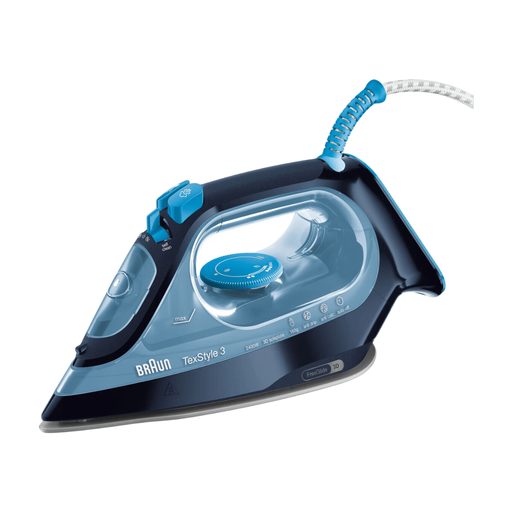 No image available
A steam iron with a soleplate for precision ironing; check that the settings suit your fabrics.
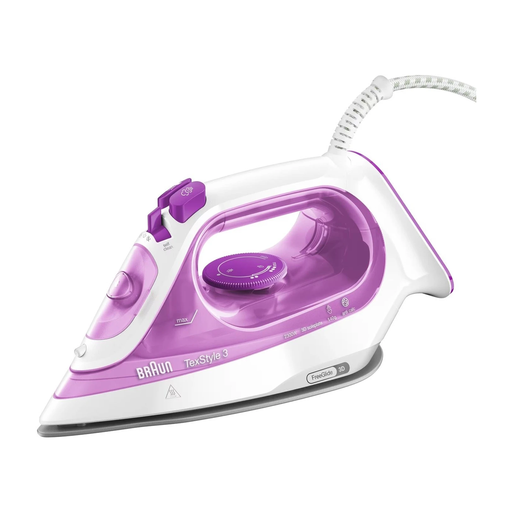 No image available
A steam iron with a soleplate for precision ironing; check that the settings suit your fabrics.
 No image available
A steam iron with a soleplate for precision ironing; check that the settings suit your fabrics.
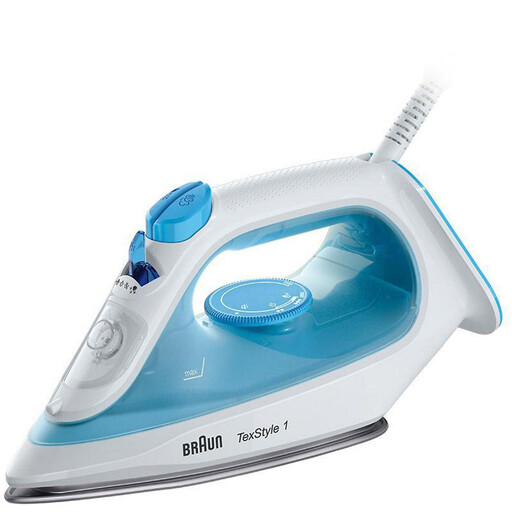 No image available
A steam iron with a soleplate for precision ironing; check that the settings suit your fabrics.
Check the care label first and adjust the heat and steam to suit the fabric. Philips advises laying the collar flat and ironing the underside first, followed by the outer side.
A handheld steamer may suit you if you mainly want to remove creases without setting up an ironing board. Philips lists the GC360/36R1 as suitable for horizontal use, but using an iron soleplate is a different approach for a sharply pressed collar; check the permitted direction of use for the exact model.
Follow the instructions for your exact model. Philips says that hard water can lead to limescale building up more quickly and provides model-specific cleaning instructions; don’t assume these apply to another brand or a steam generator.
According to the Netherlands Food and Consumer Product Safety Authority, CE marking is mandatory for electrical products. Check the marking and accompanying information for the appliance on offer; a general product description doesn’t confirm that a specific item carries the marking.
No. According to the Dutch government, the Netherlands has no fixed statutory warranty period; what you can reasonably expect depends, among other things, on the product, its price and how it is used. If a product is faulty, contact the seller. A manufacturer’s warranty is separate.