
Careful tie owner
Wants to remove creases from a cotton tie without damaging the fabric or its shape. Checks the label first and considers steaming rather than pressing directly; The Tie Bar recommends steaming its own ties to remove deep creases.


For smaller, mixed weekly loads, a standard steam iron with adjustable steam is usually a good fit. For large piles of laundry and stubborn creases in cotton, a steam generator may be a better choice. Always check the care label before treating a tie: a cotton label alone does not mean you can iron it directly. The Tie Bar recommends steaming rather than ironing its own ties to remove deep creases.
Wants to remove creases from a cotton tie without damaging the fabric or its shape. Checks the label first and considers steaming rather than pressing directly; The Tie Bar recommends steaming its own ties to remove deep creases.
Gets shirts and other fabrics ironed in shorter sessions. The Consumentenbond recommends following the care instructions and adjusting the temperature and steam to suit each fabric.
Often irons a lot of laundry in one go or deals with thick cotton that is difficult to smooth out. In this case, a larger water tank may matter more than a compact appliance.
Choose this when: you have smaller, mixed weekly loads, limited storage space and want adjustable steam.
Trade-off: the tank is usually smaller than a steam generator’s, so you may need to refill it more often during longer ironing sessions.
Choose this when: you have large weekly piles of laundry or lots of stubborn creases in cotton and thick fabrics.
Trade-off: the larger, separate tank means fewer refills, but takes up more storage space. Extra steam is no reason to ignore a tie’s care label.
Choose this when: gently removing creases from ties is your priority and you do not need to press sharp creases into the rest of your laundry.
Trade-off: Philips notes that a garment steamer does not give the same ironing results, especially on thick cotton shirts.
| Concern | What to check before buying | Who might find this most relevant? |
|---|---|---|
| Removing creases from a tie carefully | Check the care label for the whole tie and whether the temperature and steam can be adjusted. Do not press directly if the label does not allow it. | I want to remove creases from my tie without damaging its shape or fabric, so I check what the label allows first. Around 36% of consumers put this concern first. |
| Switching between fabrics | Check the temperature control and whether you can adjust or switch off the steam for dry finishing. | When ironing a weekly load of shirts and other fabrics, I want to be able to match the settings to the care instructions. Around 29% of consumers prioritise being able to switch easily between fabrics. |
| Lots of cotton or stubborn creases | Compare tank capacity and continuous steam output separately; a steam boost is a different specification. | When I iron lots of cotton in one go, I want to refill less often. Around 21% of consumers put large ironing sessions at the top of their buying concerns. |
| Maintenance | Check the anti-scale system, whether it uses replaceable cartridges and the water and cleaning instructions for the exact model. | I want to know what cleaning the appliance needs and whether any parts have to be replaced periodically. Around 14% of consumers prioritise easy maintenance. |
The care instructions apply to the whole tie. The Tie Bar advises against ironing its own ties; pressing directly can damage the tie or affect its shape.
Check the label and only use a method it allows. If the care instructions permit it, consider steaming first to remove creases.
A steam boost and continuous output describe different functions. The Consumentenbond compares continuous steam in grams per minute.
Check both specifications separately and choose according to the length and type of your ironing sessions.
The Consumentenbond points out that anti-scale systems slow the build-up of limescale, but do not replace maintenance.
Check whether the exact model needs cleaning or replaceable cartridges, and follow the water instructions in the manual.
Systems with replaceable cartridges require periodic replacement.
Tefal lists a 270 ml tank for the Tefal Easygliss Plus FV5736, while the Joybuy product listing states 200 ml.
Before buying, check the full model and version against the manufacturer’s information and the current product listing.
The DST3041/30 is a standard steam iron, while the PSG3000/20 is a steam generator. Your choice will largely depend on how much laundry you have and how much storage space is available.
The Easygliss Plus FV5736 is an example of a standard steam iron with a precision tip and adjustable steam.
The TexStyle 7 Pro SI 7181 is worth a look if you need to work around buttons, pockets and other clothing details.
These Joybuy products are steam irons and steam generators for mixed laundry or larger ironing sessions. Before buying, check that the specific appliance has the required CE marking and EU Declaration of Conformity.
 No image available
A steam generator may suit you if you often have large ironing sessions and want to refill less often.
Listed specification: 2400 W, 1.4 l water tank, 350 g steam boost and vertical steaming.
 No image available
A standard steam iron may suit smaller, mixed ironing sessions. Check the tank capacity for this model, as product listings give different figures.
Tefal lists a continuous steam output of 45 g/min; the Joybuy listing states a 200 ml tank, compared with 270 ml from Tefal.
 No image available
This standard steam iron is worth considering for a mixed weekly load. Adjust how you use it and its settings to suit the care instructions for each garment.
Listed power: 2000 W.
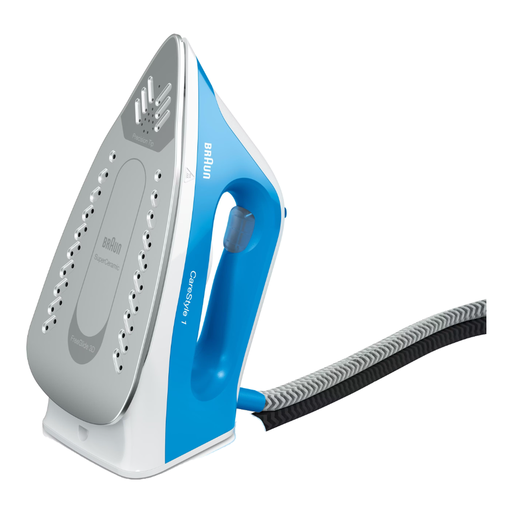 No image available
This ironing system is an option in the steam generator category if you’re considering larger ironing sessions. Check that the tank, controls and storage requirements suit the way you’ll use it.
 No image available
A steam generator is particularly relevant if you regularly have longer ironing sessions; check that the larger tank will fit your storage space.
Listed specification: 2400 W, 120 g steam boost, 6 bar pressure, removable 1.8 l tank and ECO mode.
Not just because it is made of cotton. Read the care label for the whole tie; The Tie Bar advises against ironing its own ties and recommends steaming to remove deep creases. If the label allows direct ironing, use the specified temperature.
A standard steam iron is often a good fit for smaller, mixed loads; a steam generator is more relevant for large piles or stubborn creases in cotton. The Consumentenbond lists smaller amounts of ironing and limited storage space as reasons to consider a standard steam iron. A generator’s larger tank may mean fewer refills during longer sessions.
Follow the laundry symbols and adjust the temperature and steam to suit the fabric. The Consumentenbond recommends using steam appropriately, then finishing without steam to dry the fabric; check whether your appliance lets you switch the steam off.
The Consumentenbond says that Dutch tap water is generally suitable, but recommends checking the model’s instructions if your water is unusual or harder than average. Descale the appliance as described in the manual and do not use water containing perfume or other additives.
European product safety rules apply to relevant electrical appliances. According to Ondernemersplein, the manufacturer must apply the required CE marking and draw up an EU Declaration of Conformity. Check this for the specific appliance; its product category or brand name alone does not prove that it meets these requirements.