
For anyone who wants to iron sleeves precisely
You mainly want to press sleeves, cuffs and seams neatly. An easy-to-reach tip and a narrow, stable ironing surface can help you work on small areas with precision.


For sharply pressed uniform sleeves without taking up much storage space, a standard steam iron with an easy-to-reach tip and a narrow, stable support is a sensible starting point. A handheld steamer takes up less space and is handy for quick de-wrinkling, but it doesn’t automatically provide the same support for pressing horizontally. A steam generator is worth considering if you have a lot of laundry or thicker fabrics, although it takes up more room.
You mainly want to press sleeves, cuffs and seams neatly. An easy-to-reach tip and a narrow, stable ironing surface can help you work on small areas with precision.
You iron for short periods and want to put the appliance and support away easily afterwards. A standard iron, compact steamer and hybrid appliance each call for a different approach.
You iron several uniform items or thicker fabrics, and are weighing up a larger water tank against the extra space a steam generator takes up.
Choose this if: a sharply pressed sleeve, cuff or seam matters more to you than simply removing creases quickly.
Bear in mind: you may need to refill the tank sooner during longer sessions. Also measure the space needed for the cord and any sleeve board.
Choose this if: you mainly want to remove creases quickly from hanging clothes and keeping storage space to a minimum is your priority.
Bear in mind: steaming clothes on a hanger isn’t the same as pressing them horizontally on a supported surface.
Choose this if: you want to iron horizontally as well as steam vertically.
Bear in mind: Philips describes the OneTurn GC215/20 as coming with a soft ironing surface. Check that the support included is suitable for the sleeve shape you want to achieve.
Choose this if: you often have a large load or thicker fabrics to iron and want to refill less often.
Bear in mind: the separate tank and hose need extra storage and set-up space. Also check that your ironing board is suitable.
First decide whether you want to press a sleeve horizontally or mainly remove creases from hanging clothes. Then measure the space available for both the appliance and its support.
| What to consider | What to look for | Who should give this extra thought? |
|---|---|---|
| Precise pressing | Look at the shape of the soleplate tip and check whether a narrow, stable sleeve board will fit on your table or ironing board. | If I want to press seams and cuffs neatly, I need to be able to support the sleeve properly. Around 40% of consumers in this decision-making context make precise pressing their top priority. |
| Storage and set-up | Measure the space needed for the appliance, cord and support, and consider whether you want to iron horizontally. | If I have little cupboard space, I want to be able to put everything away easily after a short ironing session. Around 30% of consumers prioritise compact storage. |
| Protecting uniform fabric | Follow the care label and check that the appliance offers the temperature and steam settings you need. | If my uniform’s care label is the deciding factor, I don’t want to expose the fabric to too much heat. Around 20% of consumers put fabric protection first. |
| Large loads or thicker fabrics | Weigh the amount of ironing against the tank capacity, how often you’ll need to refill, and the storage and set-up space available. | If I regularly iron several uniform items or thicker fabrics, I want to refill less often, even if the set takes up more space. Around 10% of consumers prioritise longer ironing sessions. |
A handheld steamer is designed for a different way of working from horizontal pressing with support. Quickly removing creases isn’t automatically the same as pressing a sleeve neatly.
Before you buy, decide whether removing creases is enough or whether you want to press the sleeve horizontally.
A steam generator has a separate tank and hose. This means the complete set may need more storage and set-up space than the iron alone might suggest.
Check the dimensions of the whole set and the space where you plan to use and store it.
Too much heat can damage fabric or make it shiny. The right temperature and amount of steam depend on the garment.
Follow your uniform’s care label and choose the corresponding temperature and steam settings.
The Braun TexStyle 3 is a standard steam iron for details and shorter ironing sessions.
The Tefal product ranges mentioned include a standard steam iron, a clothes steamer and a steam generator, each designed for a different way of working.
According to Philips, the OneTurn GC215/20 combines horizontal ironing with vertical steaming.
Brabantia makes sleeve supports for use with a standard or steam iron; they aren’t an alternative to an ironing appliance.
This selection focuses on ironing uniform sleeves horizontally; some models also offer vertical steaming.
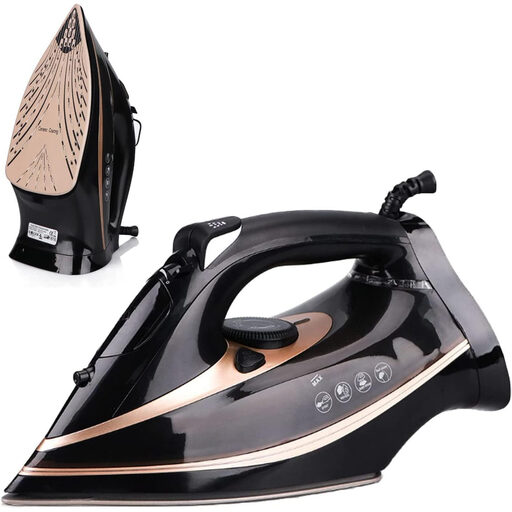 No image available
A steam iron for ironing uniform sleeves horizontally.
The product name lists 70 g/min of steam, a 120 g steam boost, a 300 ml tank and a self-cleaning function.
 No image available
A handheld steam iron for anyone who wants a compact appliance for ironing and steaming.
The product name lists an automatic cleaning function and an anti-drip function.
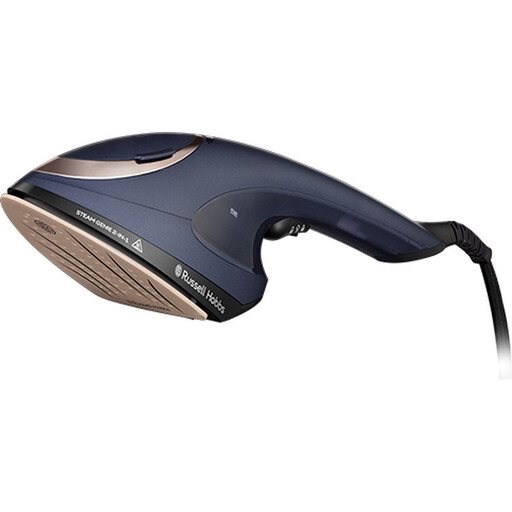 No image available
This hybrid model is designed to combine horizontal ironing and steaming.
The product details list a heated soleplate and steam and ironing functions. With the trigger lock in use, up to 7 minutes of continuous use is stated.
 No image available
This compact model is an option if you want to iron and also steam vertically.
The product name lists a lightweight design and dual voltage.
 No image available
A steam iron with a narrow tip for ironing carefully around details.
The product name lists 2000 W. According to the product details, steam isn’t available on the synthetic temperature setting.
Slide the sleeve over a narrow sleeve board on a stable table or ironing board. Brabantia describes this use for its foldable board; check that its dimensions suit your sleeve and ironing space.
Follow the care label for the specific garment. The Consumentenbond warns that excessive heat can damage fabric or make it shiny, so choose the setting based on your uniform’s label.
Yes. Follow the manual for your exact model when maintaining it. For example, Philips distinguishes between Self Clean and Quick Calc Release in its instructions; the right method depends on the appliance.
According to the Rijksoverheid, the seller must offer a solution under the statutory guarantee; there’s no fixed statutory guarantee period in the Netherlands. For an eligible online purchase from a business, you’ll generally also have a 14-day cooling-off period, subject to legal exceptions.
The NVWA describes safety requirements for electrical equipment and mandatory CE marking for products covered by the Warenwetbesluit elektrisch materiaal. Whether these apply depends, among other things, on the rated voltage and product category; a statement on a sales page alone doesn’t confirm that a particular item meets the requirements.