Who is this buying guide for?

Occasional hem presser

You want to press a trouser hem flat or secure it with hemming web from time to time, but have little room for the appliance and the garment. Vlieseline provides separate instructions for pressing and cooling flat when using Wundaweb.

Ironer with limited space

You also iron other clothes, but have little room for a larger base unit or to leave garments out for long. The Consumers’ Association lists limited storage space as a reason to consider a conventional steam iron.

Ironer of delicate trousers

You want to adjust the temperature and treatment to suit the care label on each pair of trousers. GINETEX emphasises that the care label determines the maximum ironing temperature.

What should you look for when buying?

Conventional steam iron

Choose this if: you mainly press individual trouser hems and have limited storage space; adjustable steam can help you press again without steam after damp pressing.

The trade-off: for larger ironing loads, you may need to refill a smaller built-in tank sooner; you’ll still need space for the garment to cool flat.

Steam generator

Choose this if: you iron frequently as well as pressing trouser hems, often tackle stubborn creases and have room for the base unit.

The trade-off: the larger tank and base unit need more storage space; extra steam won’t eliminate the need for room to let hemming web cool flat.

Handheld clothes steamer

Choose this if: you mainly want to remove creases from hanging trousers without using an ironing board.

The trade-off: a clothes steamer isn’t designed for the same flat pressing as an iron, such as securing hemming web.

What to consider What should you look for? Who is this most important for?
Securing a hem flat Check the hemming web instructions and whether you can leave the hem lying flat during the specified cooling time. If I use hemming web, I need to be able to leave the hem to cool flat after pressing; around 33% of consumers say securing the hem flat is their main concern when buying.
Working, drying and storage space Consider the space needed for both the whole appliance and the trousers; check whether the steam output is adjustable. If I have little space, I want to be able to lay out both the appliance and the trousers and leave them to dry; around 27% of consumers say space is their main concern when buying.
Protecting the fabric Check the ironing symbol and make sure the fabric and hemming web you’ve chosen are both suitable for the treatment. When trousers have different care labels, I want to tailor the treatment to the garment; around 27% of consumers prioritise fabric protection.
Ironing larger loads too Before making room for a larger base unit, consider how often you iron and whether you tackle stubborn creases. If I iron a lot of laundry as well as hems, I want to know whether the extra capacity is worth making room for the base unit; around 13% of consumers say additional ironing is their main concern when buying.

Common pitfalls

  • Assuming a clothes steamer can replace flat pressing

    Removing creases from hanging clothes is different from securing a hem flat with heat and pressure.

    Choose a handheld steamer for clothes you want to de-crease while hanging; for hemming web, check whether you need an iron and a flat work surface.

    Flat pressing may still require an iron and a suitable work surface.

  • Looking only at the appliance’s dimensions

    When using hemming web, the garment may need to cool flat for a while after pressing. Vlieseline specifies a 20-minute cooling time flat for Wundaweb.

    Plan where you’ll leave it to cool before choosing hemming web, and follow the instructions for that specific product.

    You’ll also need a flat surface for a while after pressing.

  • Assuming more steam will give better results on every pair of trousers

    The care label determines which ironing treatment is allowed; some garments must not be ironed.

    Check the ironing symbol first, then choose a temperature and steam setting that follows the instructions.

Brands to consider

Philips

The 3000 Series includes conventional steam irons with a built-in tank, including the DST3031/20.

  • Philips Netherlands lists a 300 ml tank for the DST3031/20 and suggests it for smaller ironing loads.
  • Tank capacity alone doesn’t tell you how well it will press a particular pair of trousers; follow the care label and check the settings on the specific model.

Tefal

The range includes conventional steam irons and steam generators; the Express Steam FV2837E0 is a conventional model.

  • Tefal Netherlands lists a ceramic soleplate and a steam boost of up to 165 g/min for the FV2837E0.
  • These are manufacturer specifications, not an independent assessment of how it performs on hemming web or delicate trousers.

Braun

The FreeStyle 7 range includes steam irons you can compare for their controls and handles.

  • Braun Household Netherlands lists automatic shut-off and an anti-scale system for the FI7255GR.
  • These features don’t determine how a trouser fabric should be treated; use the care label as your guide.

Joybuy products

These Joybuy products are irons for flat ironing; compare the model and stated specifications with the space you have and the way you press.

Philips 3000 Series steam iron DST3031/20

Philips 3000 Series steam iron DST3031/20

An option to consider if you’re looking for a conventional steam iron for flat pressing and want to be able to adjust the steam output.

Steam boost 180 g; 40 g/min; 300 ml water tank.

View at Joybuy
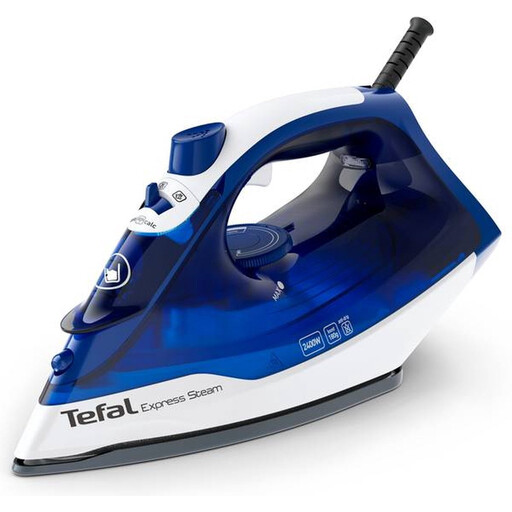
Tefal FV2838E0 steam iron

Tefal FV2838E0 steam iron

A conventional iron to add to your comparison if you’re looking for a model with automatic temperature selection.

2400 W; automatic temperature selection.

View at Joybuy

Xiaomi handheld steam iron BHR9034EU

Xiaomi handheld steam iron BHR9034EU

An option to compare if a handheld model and use with different mains voltages suit your needs.

Dual voltage.

View at Joybuy
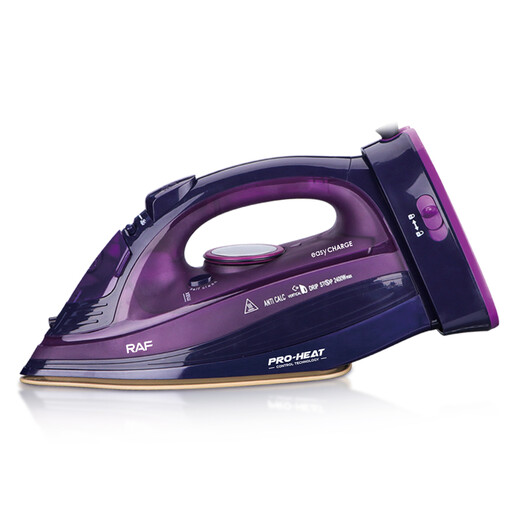
RAF R.1210B cordless steam iron in purple

RAF R.1210B cordless steam iron, purple

A cordless model to compare if you’d rather not use a mains cable while flat ironing.

2400 W; 320 ml water tank; steam output 15–25 g/min; ceramic soleplate.

View at Joybuy
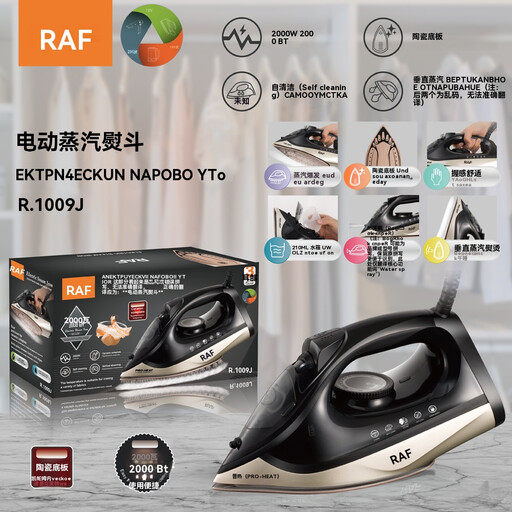
RAF 2000W electric steam iron

RAF 2000W electric steam iron

A conventional steam iron to compare if you’re looking for a model with a steam boost function.

2000 W; ceramic soleplate; vertical steaming; 210 ml water tank.

View at Joybuy

Frequently asked questions

Can I put away trousers with iron-on hemming web straight after pressing?

Not until you’ve checked the instructions for the hemming web you’ve chosen. For Wundaweb, Vlieseline says to leave the fabric to cool flat for 20 minutes after securing it, so make sure you have a flat space available during that time.

Should I avoid all steam if I have little drying space?

Not necessarily: if the fabric can be ironed, adjustable steam lets you switch between ironing with and without steam. The care label and hemming web instructions should always guide you; don’t assume damp fabric will be dry or ready to put away straight away.

How should I maintain a steam iron?

Follow the instructions for your model. Tefal recommends emptying the tank after use, closing the steam control, setting the thermostat to minimum and storing the iron upright.

How does the guarantee work when buying in the Netherlands?

According to the Dutch government, you’re entitled to a product that meets reasonable expectations, but the Netherlands has no fixed statutory guarantee period. If a product is faulty, the retailer is your point of contact, even if the manufacturer’s guarantee has expired; also check any terms for returns and additional cover.

Is CE marking an independent quality mark for an electric iron?

No. According to the European Commission, the manufacturer uses CE marking to declare that the product complies with the relevant EU product rules; it’s not an independent assessment of ironing performance.
