
If you press trouser hems occasionally
You want to press a folded trouser hem neatly and only get the iron out briefly. Look for adjustable temperature and steam, and check whether the tip of the soleplate can reach seams.


For pressing a couple of trouser hems in an upper-floor flat, a standard steam iron with adjustable temperature and steam is often the practical choice. It’s usually easier to store and move than a steam generator. A generator may suit you if you also regularly iron large loads of laundry, but its separate base takes up more space. Follow the care label for each pair of trousers, and follow the instructions for the specific hemming tape if you’re using it.
You want to press a folded trouser hem neatly and only get the iron out briefly. Look for adjustable temperature and steam, and check whether the tip of the soleplate can reach seams.
You store the appliance in an upper-floor flat or carry it upstairs. So consider the size and weight of the whole system, not just the iron.
You work with trousers carrying different care labels, or sometimes use hemming tape. Check in advance which temperature and amount of moisture are suitable for the fabric and tape.
Best for: a couple of trouser hems, limited storage space or an appliance you often carry upstairs.
Trade-off: the water is held in the iron itself, and a smaller tank may need refilling sooner during longer sessions.
Best for: anyone who regularly irons large loads as well as hems, and has room for a separate base.
Trade-off: the separate tank makes the whole system larger and less convenient to store or move.
Start by considering the hemming task and where you’ll store the appliance. Extra steam capacity is mainly useful if you also do long ironing sessions.
| What to consider | What should you check? | Who should pay particular attention? |
|---|---|---|
| Pressing a hem precisely | Check the temperature and steam controls, and whether the soleplate tip is suitable for the seams on the trousers. | If I mainly want to press a folded hem neatly, I look for control around the edge and seam. Around 36% of consumers put precise pressing first. |
| Storage and moving the appliance | Compare the dimensions and weight of the whole appliance; with a generator, also consider the base and hose. | If I put the iron away after a quick task or carry it upstairs, the whole system matters. Around 29% of consumers say storage and moving the appliance are their main concerns. |
| Fabric and hemming tape | Follow the garment care label and the instructions for the hemming tape you’re using; check whether you can adjust or turn off the steam. | When working with different fabrics or hemming tape, I want to be able to use the specified heat and moisture levels. Around 21% of consumers prioritise looking after the fabric and using the right pressing method. |
| Long ironing sessions too | Compare tank capacity, the space needed for the base and the care required for the descaling system. | If I often iron large loads as well as trouser hems, refilling less often may matter more than compact storage. Around 14% of consumers give capacity for longer sessions top priority. |
The Consumentenbond describes a standard steam iron as a suitable option if you do little ironing or have limited storage space; a steam generator may be more suitable if you iron frequently and in large quantities. More steam isn’t automatically better for a trouser hem: use the temperature specified on the garment care label. GINETEX stresses that the maximum temperature is determined by the care label.
Continuous steam and a steam boost are different product specifications. Too much moisture can wet the fabric and ironing board, while hemming tape has its own pressing instructions.
Check whether you can adjust the steam, and follow both the garment care label and the tape instructions before pressing.
A larger system may need more storage space, and extra moisture may mean you have to leave the fabric to dry for longer.
The iron may feel light during long ironing sessions, but the base makes the whole system larger and harder to move.
For an upper-floor flat, compare the whole appliance and consider where you can use and store it safely.
Allow space to store the base and hose, as well as a suitable ironing board.
An anti-scale system can slow the build-up of limescale, but it doesn’t replace the recommended maintenance.
Before buying, check the maintenance method and whether the system uses replaceable parts.
A system with replaceable parts may need extra maintenance steps; follow the instruction manual.
Braun features both a standard steam iron and a steam generator in this comparison: two different types of appliance for a quick hemming task or longer ironing sessions.
The 1000 Series DST1030/20 is a standard steam iron to compare if you’re looking for a straightforward option for a quick ironing task.
According to Tefal, the Smart Protect Plus FV6870E0 is a steam iron with an automatic temperature setting for ironable fabrics.
This selection focuses on standard, portable steam irons for hemming in an upper-floor flat. Compare the controls, dimensions and model version with the fabrics you work with and the storage space that matters to you.
 No image available
A portable model to consider if you’re looking for an iron for a quick task and have limited storage space.
The product name includes Dual Voltage. Check that the temperature and steam controls, and the dry ironing function, are suitable for the fabrics you want to press.
 No image available
A standard steam iron to compare if you’re looking for adjustable steam and a dry ironing setting.
The product name lists 2000 W. According to the instructions, steam isn’t available on the synthetic setting; check the garment care label and use the dry ironing setting if necessary.
 No image available
Worth considering if you want to compare automatic temperature control and access to hard-to-reach areas in a standard iron.
According to the product information, the automatic temperature setting is for ironable fabrics. Also follow the care label and the instructions for any hemming tape you use.
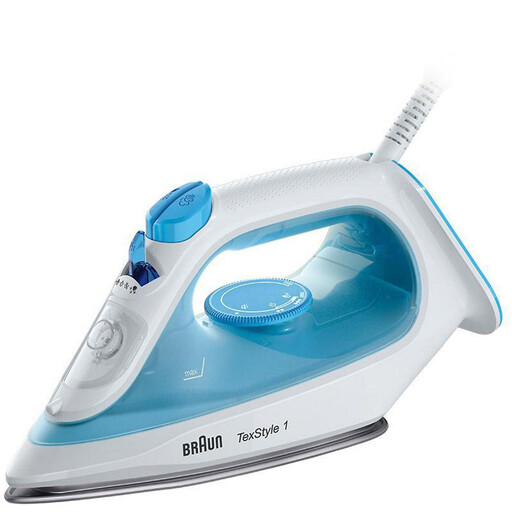 No image available
A standard iron to compare for a quick hemming task where a precision tip may be useful.
According to the instructions, the temperature must be set to at least medium for steam ironing. For dry ironing, choose the temperature suitable for the fabric.
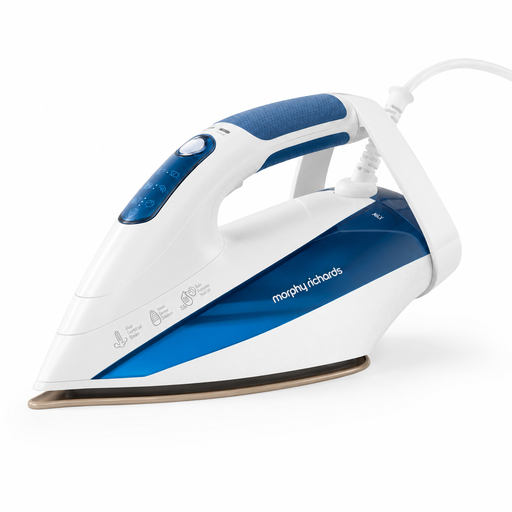 No image available
A standard steam iron to compare if you want to adjust the steam setting to suit the task.
The product name lists 2400–2800 W, 50 g/min steam and a 350 ml water tank. Check that the stated settings and maintenance requirements suit how you’ll use it.
Not as a general rule: follow the garment care label and the instructions for the specific hemming tape. For Wundaweb, Vlieseline recommends using a damp cloth, pressing each section for about 10 seconds and allowing it to cool flat. These instructions don’t automatically apply to other hemming tapes.
Only use steam if the fabric and the process allow it. For standard ironing, the Consumentenbond recommends ironing with steam first, then without steam until the fabric is dry. If you’re using hemming tape, follow its specific instructions.
Check the instruction manual for the right water and maintenance guidance. The Consumentenbond says that steam irons in the Netherlands are generally designed for tap water; if your water is hard, the manual may say whether you need to mix it with demineralised water. Don’t add perfumed ironing water or chemicals.
No. A fixed two-year statutory guarantee doesn’t, by itself, determine whether you’re still entitled to a remedy. According to the Dutch government, this depends, among other things, on what you could reasonably expect from the product and the cause of the fault. Contact the seller if you have a problem.
For an appliance covered by the relevant European rules, the manufacturer must carry out the required conformity assessment, draw up an EU declaration of conformity and apply the CE marking. If in doubt, ask the seller for information relating to the specific model.