
Careful tie owner
You want to remove creases without unnecessarily flattening the shape of your tie. Check the care instructions for the whole tie; The Tie Bar provides specific care advice for its own ties.


Start with the care label for the entire tie: cotton on the outside doesn’t, by itself, mean it’s safe to press directly. The Tie Bar advises against ironing its own ties, even to remove deep creases, and recommends steaming instead. For smaller family laundry loads, the Consumers’ Association of the Netherlands considers a standard steam iron a suitable option, while a steam generator is more relevant for larger loads or stubborn creases. Choose a garment steamer only if the care label permits steaming, and take the rest of your family laundry into account too.
You want to remove creases without unnecessarily flattening the shape of your tie. Check the care instructions for the whole tie; The Tie Bar provides specific care advice for its own ties.
You’re looking for an appliance that can handle permitted tie care as well as everyday laundry. The size of your ironing loads and how stubborn the creases are will help you decide which type of appliance is right; the Consumers’ Association of the Netherlands discusses this choice.
You only treat a garment now and then, so storage space or use without an ironing board matters to you. Philips describes its garment steamers as suitable for vertical steaming without an ironing board.
| What to consider | What to check | Who it matters to |
|---|---|---|
| The tie’s shape and material | Read the care label for the whole tie, including any lining, before using heat or steam. | If I’m removing creases from a tie, I want to avoid heat spoiling its shape. Around 40% of consumers put preserving their ties first. |
| The rest of the family laundry | Consider how much you iron in one session and whether you have room for the appliance and ironing board. | I want an appliance that suits the amount of family laundry I actually iron. Consumers who prioritise family laundry account for around 30%. |
| Small, quick jobs | Compare the surface you need and whether horizontal or vertical use is permitted. | For a small job, I want an appliance that’s easy to get out and put away. Around 20% of consumers prioritise speed and easy storage. |
| Care and safety | Check the manual for guidance on water and descaling, and see whether the exact model has an automatic shut-off function. | I want to know what maintenance is needed and which safety features the appliance has. Around 10% of consumers prioritise maintenance and practical, long-term use. |
The outer fabric alone doesn’t tell you how the lining and the whole tie will react to heat. The Tie Bar even advises against ironing its own ties to remove deep creases.
Check the care label on your tie first, and don’t start on the appliance’s highest setting.
A steam generator’s larger, separate water tank takes up more storage space. It may offer little practical benefit if you only iron small loads.
Let the size of your other family laundry loads and how stubborn the creases are determine whether a generator suits your needs.
For the Tefal FV2838E0, the product details and information about automatic shut-off appear to contradict one another.
Before buying, check the model number against the manual and product specifications, especially if a particular safety feature is important to you.
The TexStyle 3 range includes standard steam irons. The SI 3054 is worth considering if a precision tip and automatic shut-off are important to you.
The Easygliss Plus range consists of standard steam irons for anyone who also irons family laundry; the FV5735 is one specific model.
The 3000 Series DST3041/30 is a standard steam iron for smaller loads. Philips also offers separate garment steamers for removing creases vertically.
This selection includes steam generators, a compact steam iron and a garment steamer for family laundry and smaller garment-care jobs. Press or steam a tie only if the care label for the whole tie allows it.
 Image unavailable
A steam generator for households that also iron family laundry. Use it on a tie only if the care label permits this method.
The product name lists 2400 W, a 350 g steam boost, a 1,4 L water tank and vertical ironing.
 Image unavailable
A steam generator to consider if you iron family laundry as well as caring for ties. Whether you can use it on a tie depends on that tie’s care label.
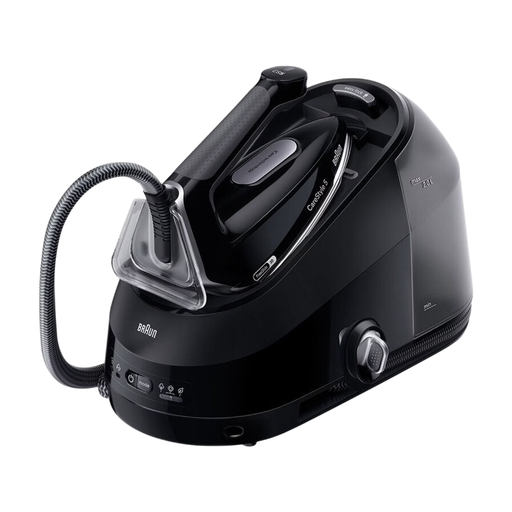 Image unavailable
A steam generator for anyone who also irons family laundry. Press or steam a tie only if the care label for the whole tie allows it.
 Image unavailable
A compact steam iron for small garment-care jobs. Vertical steaming on a tie is only an option if its care label allows it.
The product name lists Dual Voltage and fast steam generation.
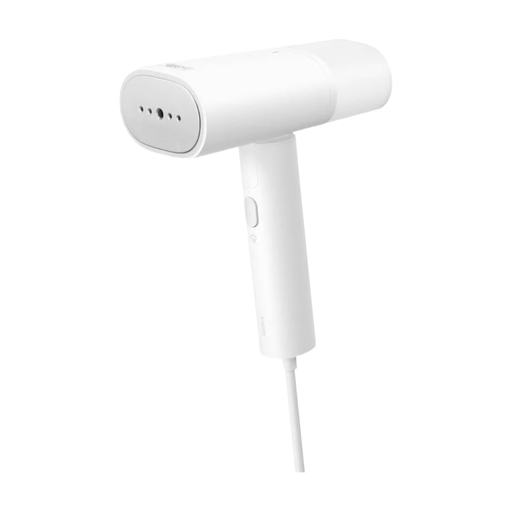 Image unavailable
A handheld steamer for hanging clothes and small jobs without an ironing board. Steam a tie only if its care label allows it.
The product name lists a 30-second heat-up time and a 160 ml water tank.
Not based on the outer fabric alone. Check the instructions for the whole tie. The Tie Bar recommends steaming its own ties to remove deep creases and advises against ironing them; don’t automatically apply this advice to a tie from another brand.
That depends on the permitted method and the appliance. Philips describes its garment steamers as suitable for vertical use without an ironing board. Use a standard iron or steam generator according to its manual and on a suitable surface.
Follow the manual for your exact appliance for guidance on water and cleaning; a self-cleaning function doesn’t mean maintenance can be skipped. According to ACM ConsuWijzer, if a product doesn’t meet legal requirements under normal use, the seller must provide an appropriate remedy free of charge. A manufacturer’s guarantee doesn’t replace this legal right.
For a mains-powered household appliance covered by the EU Low Voltage Directive, with a rated AC voltage between 50 V and 1.000 V, the relevant requirements apply and CE marking is required. The European Union describes CE marking as the manufacturer’s declaration that the product complies with the applicable product rules, not as an independent quality assessment. Check the details of the specific appliance.