
If you iron a few handkerchiefs
You want a quick ironing session without a complicated set-up. A standard steam iron is a sensible option to compare.


For ironing a few cotton handkerchiefs at a time, a standard steam iron is the practical first choice: there’s no separate water tank to set up. A steam generator may suit you if you regularly iron larger piles and have room to use and store one. Always set the temperature according to the handkerchief’s care label, not just the fact that it’s made from cotton.
You want a quick ironing session without a complicated set-up. A standard steam iron is a sensible option to compare.
You want to leave the work surface clear and safe after use. So, check the controls, cord and auto shut-off function of the model you choose.
You regularly iron lots of handkerchiefs or other cotton items in one go, and can make room for an appliance with a separate water tank.
Suitable for: quick ironing sessions and a workspace you want to clear again straight away.
Bear in mind: you may need to refill the built-in water tank sooner during longer ironing sessions.
Suitable for: regularly ironing larger amounts of laundry and having room for a separate water tank.
Bear in mind: the tank takes up space while you’re using it and needs to be put away afterwards.
| What to consider | What to look for | Who is this important for? |
|---|---|---|
| Quick to set up and put away | Check the dimensions, find a stable place for the hot appliance, and consider where the cord and any separate tank can be stored. | I want to iron for a short time and quickly clear the shared table afterwards. That’s why around 36% of consumers prioritise quick set-up and storage. |
| Pressing handkerchiefs precisely | Check the temperature control and the shape of the soleplate tip; follow the temperature guidance on the care label. GINETEX symbols indicate different maximum temperatures. | When ironing small hems and folds, I want to position the soleplate precisely and adjust the heat according to the care label. Around 29% of consumers prioritise precise ironing. |
| Safe to use in a shared space | Check whether the exact model has an automatic shut-off function, and where it can be rested safely to cool down. | If other people use the same space, I want to know how to put down and leave the hot iron safely. Around 21% of consumers say safe use in a shared space is their main reason for buying. |
| Longer ironing sessions | Compare the amount of laundry you usually iron with the model’s tank design, available storage space and care instructions. | When I have a larger pile, I don’t want to keep interrupting my ironing, and I have room for a separate tank. Around 14% of consumers prioritise ironing larger loads in one go. |
In a shared space, it’s important to know the safety features of the exact model. Tefal states that the FV2838E0 does not have an automatic shut-off function.
Check the specifications of the model you’re considering. Don’t assume it has the same features as another version in the range.
A steam generator is most worth considering if you regularly iron larger amounts of laundry and have space for its separate water tank. A higher stated steam output alone doesn’t prove it will give better results on a single handkerchief.
First, compare the amount of laundry you usually iron with the space you have available during and after ironing.
The separate tank needs extra space for use and storage.
The permitted ironing temperature depends on the individual textile item; ironing symbols can indicate different maximum temperatures.
Read the care label and adjust the temperature and steam settings accordingly.
The Express Steam FV2838E0 is a standard steam iron worth comparing for quick ironing sessions when you want to adjust the temperature.
The TexStyle 3 SI 3030 is a standard steam iron worth comparing if a manual thermostat and self-cleaning are important to you.
Philips offers several options: a steam generator for larger ironing sessions and standard steam irons for smaller amounts.
Below are steam irons to compare for quick ironing sessions. If you share your space, check the temperature control and shut-off function for each model.
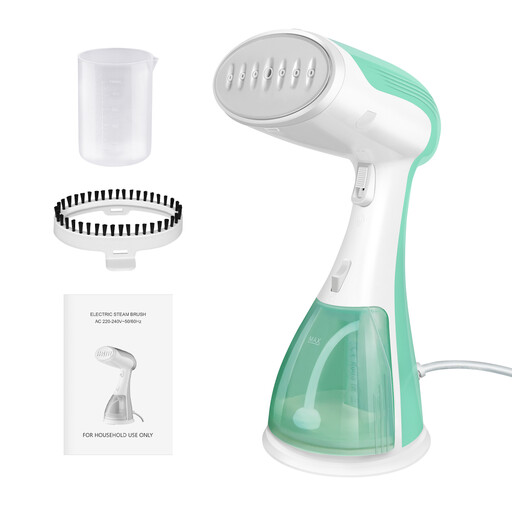 No image available
An option to compare if you’re looking for a compact appliance and want to iron handkerchiefs on a flat surface.
The product name lists 1500 W.
 No image available
Compare this standard steam iron if you want to adjust the temperature and steam to suit the care label, and iron small hems precisely.
The product name lists 2000 W.
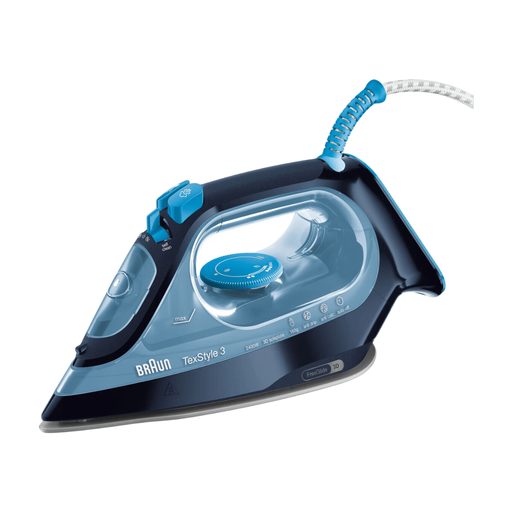 No image available
A model to compare if a precision tip and safety features for use in a shared space matter to you. Check the shut-off function for this version.
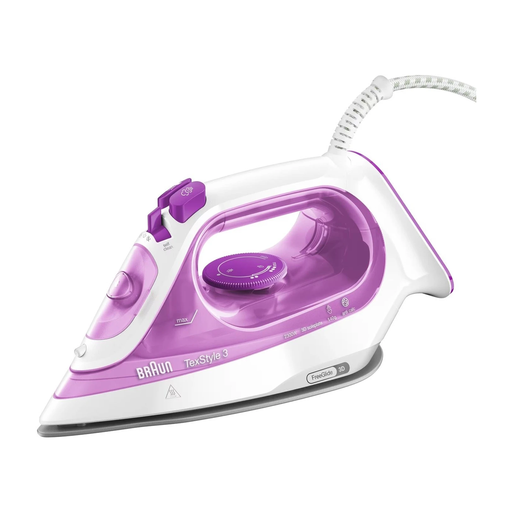 No image available
Compare this standard steam iron if you want to iron small hems and folds precisely.
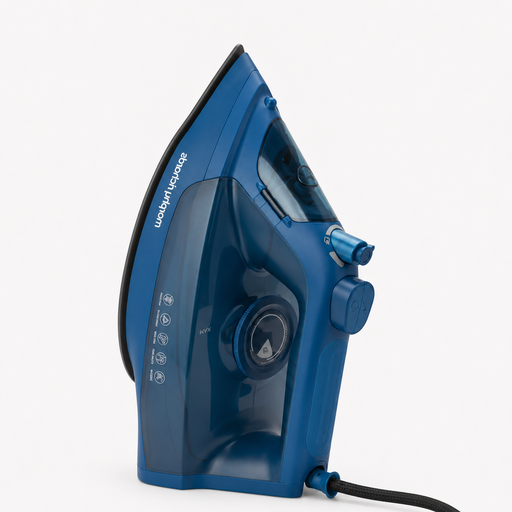 No image available
Compare this version if you want to adjust the steam to suit your ironing session.
The product name lists 2800 W and a ceramic soleplate.
No, follow the care label on the handkerchief. GINETEX describes ironing symbols for maximum temperatures of 200 °C, 150 °C and 110 °C. The 110 °C symbol also indicates that you should iron without steam. So don’t work out the maximum temperature from the word ‘cotton’ alone.
Make sure there’s a stable place for the hot iron to rest and cool down, and only clear the work surface once it’s safe to do so. Check the automatic shut-off function for each model: Tefal doesn’t list this feature for the FV2838E0.
Follow the instructions for your model. Philips recommends descaling its steam irons every one to two months; this advice doesn’t automatically apply to other brands or to a steam generator.
No. According to ACM ConsuWijzer, statutory rights exist alongside any seller’s or manufacturer’s warranty. If a product breaks during normal use sooner than you could reasonably expect, the seller must offer a solution in line with the applicable conditions. There’s no set statutory warranty period that applies to every iron.
The NVWA describes safety requirements under the Low Voltage Directive for electrical equipment with a rated AC voltage of 50 to 1000 V. For products covered by EU CE marking rules, the manufacturer uses the mark to declare that the product meets the applicable requirements. Check the product information for the version you’re buying.